
The DualSense stick drift issue is not a software glitch you can "patch" away; it is a mechanical failure rooted in the potentiometer architecture of the joystick module. If your input is registering ghost movements, hardware cleaning or calibration resets are your first line of defense, though permanent fixes often require a soldering iron or a warranty claim.
The Anatomy of Failure: Potentiometers and Mechanical Wear
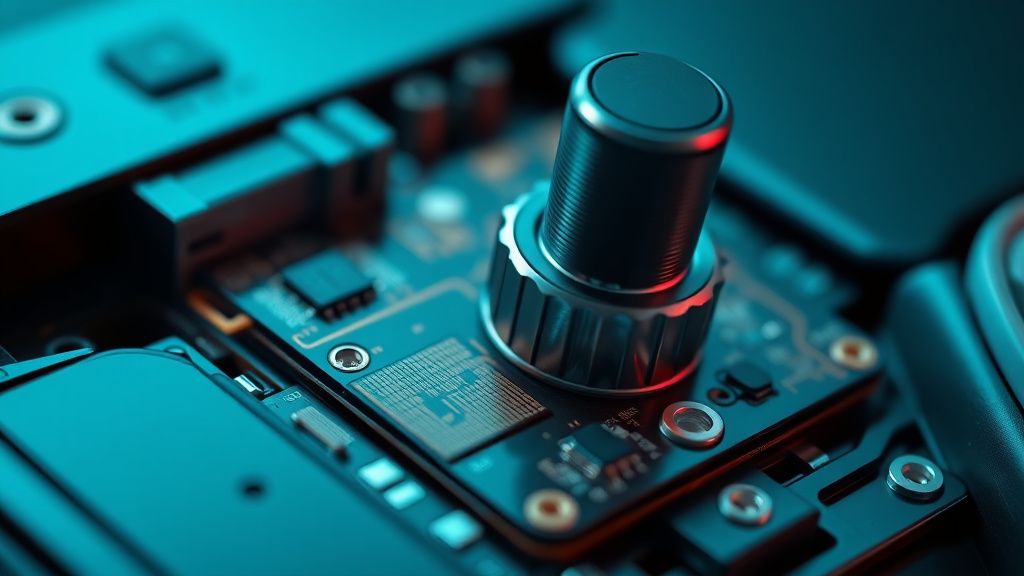
To understand why your character in Helldivers 2 suddenly starts walking toward a cliff without your input, you have to look at the Alps Alpine joystick modules hidden under the plastic shell of the DualSense. These modules rely on two small potentiometers—variable resistors that measure the position of the stick on the X and Y axes.
The "drift" occurs when the conductive material inside these potentiometers wears down over time, shedding microscopic debris that disrupts the electrical path. Alternatively, the tensioning springs can lose their integrity. When these contact points become contaminated by dust or oxidized metal shavings, the controller misinterprets the voltage, leading to phantom inputs.
Why "Calibration" Is Often a Myth
Sony has been criticized heavily—most notably in the class-action lawsuits initiated shortly after the console's launch for issues ranging from controller drift to PS5 Black Screen issues—for failing to include a native deadzone calibration tool within the PS5 system settings. Unlike high-end PC controllers or the Xbox Elite Wireless series, the DualSense lacks a software-based "re-centering" utility.
Most "calibration" guides you find online are, frankly, placebo. Resetting your controller using the pinhole button on the back only forces a handshake re-negotiation with the console’s Bluetooth stack. It does nothing to account for the physical offset of a worn-out sensor. If your stick is physically leaning because of a degraded spring, no firmware update will fix the physical reality that the "neutral" position has shifted.
The Lifecycle of a DualSense: From Hype to Drift
When the PS5 launched in 2020, the marketing focused on haptic feedback and adaptive triggers. What Sony’s engineering team arguably overlooked was the duty cycle of these potentiometers.
- The Early Adopter Trap: Users playing high-intensity games like Returnal or Call of Duty—which require constant, aggressive thumbstick inputs—often report drift within 6 to 12 months.
- The Dust Factor: The DualSense is not hermetically sealed. Hair, skin cells, and ambient dust settle into the stick housing, much like how dust buildup can lead to console issues such as PS5 Pro overheating. Over time, these act as an abrasive, accelerating the degradation of the carbon track.
Field Report: The "Contact Cleaner" Debate
A common DIY workaround involves injecting electronic contact cleaner (like DeoxIT) into the stick housing.
"I tried the contact cleaner method after seeing a popular video on YouTube. It worked perfectly for exactly three weeks. Then the drift came back worse than before because the cleaner likely dissolved some of the factory lubricant inside the sensor, making the wear even faster." — User feedback on r/PS5Fixes
This highlights the primary conflict in the repair community: DIY fixes are rarely permanent. Electronic contact cleaner is a solvent; if it isn't specifically formulated for conductive tracks, it strips the necessary friction-reducing grease, leading to a "dry" potentiometer that grinds itself into oblivion faster.
Advanced Troubleshooting: When Software Fails
If you are determined to avoid a repair shop, you must move beyond basic settings.
- Deadzone Adjustment: If the game you are playing allows it, always increase your inner deadzone. This tells the game engine to ignore minor voltage fluctuations. Most modern shooters have this; if you are playing older titles or games without this setting, you are unfortunately at the mercy of the hardware.
- Compressed Air (The "Dry" Method): Before resorting to liquids, use a high-pressure air duster. Push the stick fully to one side and blast air into the gap. This can dislodge particles that might be causing a bridge between contact points.
- The Warranty Gambit: Sony’s support process is notorious for being a "black hole." Many users report that sending a controller in involves a multi-week turnaround, and you often receive a refurbished unit that may have its own, different set of issues.
The Conflict of Design vs. Durability
The industry-wide reliance on off-the-shelf ALPS joystick modules is a cost-saving measure that forces a "disposable" culture. Because these parts are inexpensive to buy in bulk but time-consuming to replace, Sony and other manufacturers have effectively priced the repair out of the reach of the average consumer.
- Engineering Trade-offs: To make the controller feel "premium," manufacturers keep the resistance spring tension high. Higher tension equals higher friction, which equals faster wear.
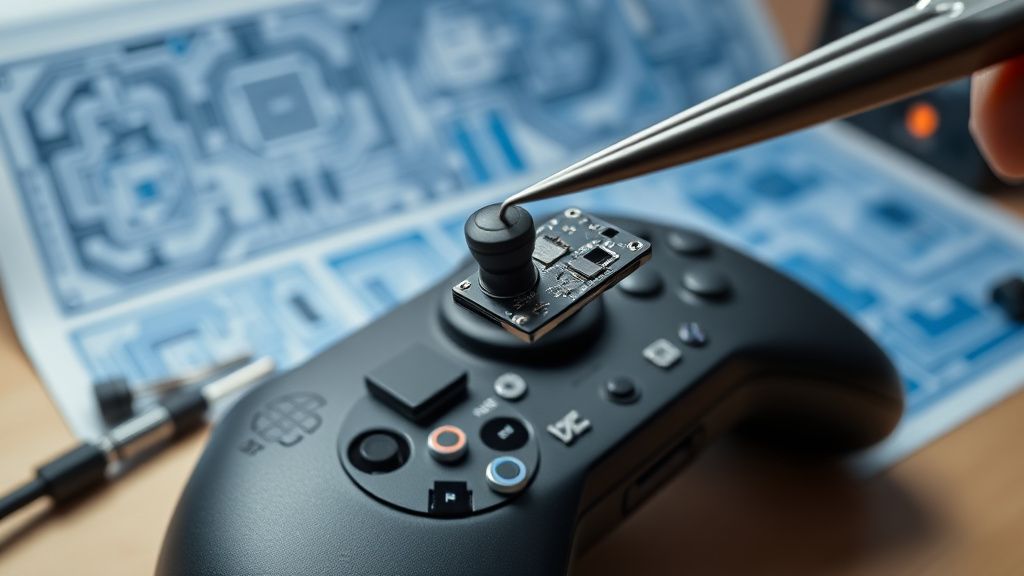
- Modularity Issues: The DualSense is not designed for serviceability. The ribbon cables are fragile, and the housing is secured with specialized clips that are prone to snapping during disassembly.
The Future: Hall Effect Sensors
The only real solution currently being discussed in the enthusiast space is the move to Hall Effect sensors—joysticks that use magnets instead of physical potentiometers. Because magnets do not touch, they theoretically cannot wear out in the same way. Companies like Gulikit have started manufacturing these for other controllers, but the DualSense remains stubbornly analog.
Frequently Asked Questions
Is there a software update from Sony to fix drift?
No. Sony has released firmware updates to improve Bluetooth connectivity and charging cycles, but drift is a mechanical hardware issue. No amount of code can fix a physically worn-out conductive track inside a potentiometer.
Does blowing air into the stick actually work?
It works if the drift is caused by a loose piece of debris or dust inside the module. It is a temporary solution that acts as a band-aid. If the conductive track itself is worn away, compressed air will have zero effect.
Will opening the controller void my warranty?
In many regions, yes. Unless you live in a jurisdiction with strong "Right to Repair" protections, breaking the factory seal or disassembling the chassis will void your official warranty. Always check your local consumer rights before attempting a physical repair.
Why do some controllers drift after only a few months?
High-intensity gaming, excessive moisture (hand sweat), and ambient environment (dust) are the primary culprits. Some users report that "clicking" the L3/R3 buttons excessively for sprinting or melee also puts undue stress on the physical mounting of the module, leading to drift.
Should I buy a new controller or try to solder a new module?
If you have experience with micro-soldering, replacing the stick module is cheaper than a new controller. If you have never soldered before, the risk of tearing a trace on the DualSense motherboard is extremely high. In that case, a new controller is the safer, albeit more expensive, route.
What is the "Hall Effect" upgrade I hear about?
Hall Effect sensors replace the friction-based potentiometer with magnetic fields. This removes the "wear and tear" aspect of the stick. While you can find third-party controllers with these, modifying a stock DualSense to use Hall Effect sensors is a difficult engineering project requiring custom PCB adapters.
Is "Deadzone" settings a real fix?
It is an effective workaround. By increasing the deadzone in your game’s sensitivity settings, you are effectively telling the console to ignore the small, erratic signals sent by the damaged potentiometer. It is not a repair, but it makes the controller usable for much longer.
Why is Sony being sued over this?
The class-action lawsuits focus on the fact that Sony was allegedly aware of the premature failure rate of the ALPS modules and chose to continue using them without providing a calibration fix in their software, effectively forcing consumers to buy a new product.
The Verdict: Maintenance vs. Replacement
If your DualSense is drifting, approach the problem logically. If the drift is minor, increase your deadzones and learn to live with the hardware’s limitations. If the drift is severe, you have three paths:
- The Warranty Route: Start the support process early, be prepared to wait, and have a backup controller.
- The DIY Clean: Use compressed air or professional-grade contact cleaner, but accept that this is a temporary fix that might need to be repeated.
- The Professional Repair: Find a local independent shop that specializes in console board repair. They have the skill to desolder the old modules and drop in new ones without destroying your mainboard.
Ultimately, we are currently living in a period of controller fragility. Until the industry shifts toward Hall Effect sensors as a standard, drift will remain the single largest "hidden tax" of console gaming. Don't let the marketing hype about haptics distract you from the fact that the underlying stick mechanism is a 1990s-era technology struggling to keep up with the demands of modern, high-precision gaming.
Bu makale affiliate linkleri içermektedir.