
The CE-108255-1 error code on the <a href="https://www.amazon.com/s?k=PlayStation%205&tag=gunesseo-21" rel="sponsored noopener" target="_blank">PlayStation 5 Pro (and the base PS5) acts as the "Blue Screen of Death" for the current generation. It is a catch-all signal indicating that an application has failed to execute due to a crash, memory corruption, or an irreconcilable conflict between the firmware, the GPU’s compute units, and the game’s executable file. Unlike specific connectivity errors, this is deeply rooted in the interplay between hardware and software.

The Anatomy of a System Crash: Why Code CE-108255-1 Persists
At its core, the CE-108255-1 error is a generic exception handler notification. It is the system’s way of saying: "The game process requested an operation, and the kernel encountered an undefined state." While Sony’s technical support documentation often points toward "reinstalling the game" or "updating the system software," veteran repair technicians and system architects understand that the reality is far more fragmented.
When this error triggers, the PS5’s operating system—a highly customized FreeBSD variant—terminates the active process to prevent a full system hang. However, the root cause is rarely the game code itself. It is frequently an issue of memory volatility or GPU instruction mismatch, particularly relevant with the PS5 Pro’s upgraded RDNA-based architecture.
The Myth of Software-Only Fixes: Identifying Hardware Fatigue
If you search through forums like Reddit’s r/PS5 or the official PlayStation community support boards, you will find a recurring narrative: users being told to perform a "Factory Reset" (Initialize PS5) to solve the issue. While this works for software-induced glitches, it fails when the hardware is struggling with thermal throttling or NAND flash degradation.
The "Workaround Culture" vs. Professional Repair
In the homebrew and enthusiast community, there is a "workaround culture" that suggests disabling features like "Ray Tracing" or "120Hz Output" to stabilize the system. While technically sound—as these features put significant load on the APU and GDDR6 memory controllers—they represent a fundamental failure of the console to meet its promised performance specifications. When a console requires the user to "underclock" it manually to prevent crashing, the gap between consumer expectation and hardware reliability becomes glaringly obvious.
Diagnosing the GPU Compute Unit Mismatch (Hardware Entities: RDNA 3, GDDR6 Memory, Custom APU)
The PS5 Pro’s custom silicon is a marvel of integration, but it is also a source of complexity. The CE-108255-1 error frequently surfaces during "PSSR" (PlayStation Spectral Super Resolution) upscaling tasks. When the GPU attempts to calculate frame buffers and encounters a register overflow, the system drops the process.
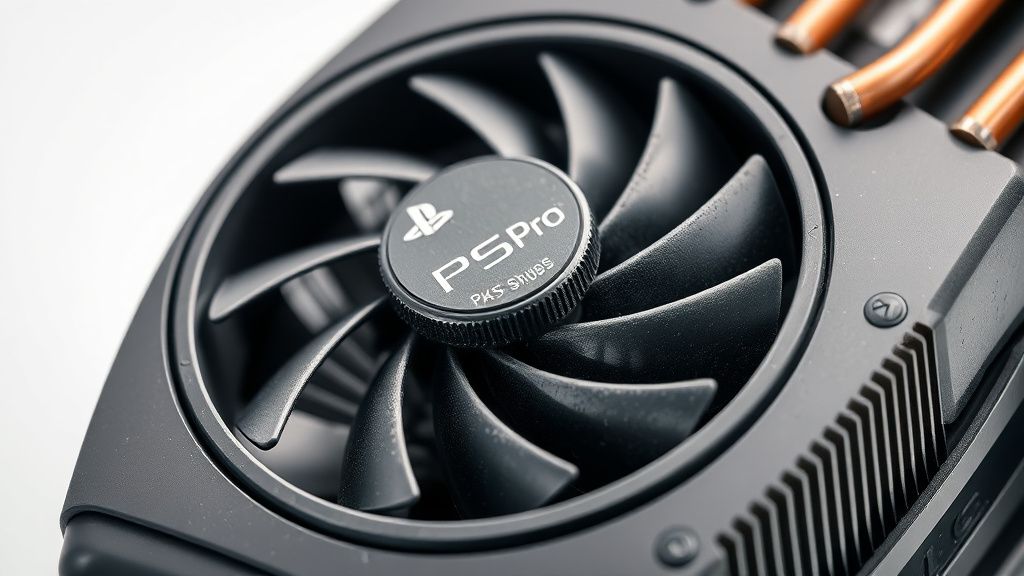
- Thermal Constraints: If the liquid metal interface (thermal compound) on your APU has degraded or was applied inconsistently during the assembly line process, hotspots will emerge.
- Memory Corruption: GDDR6 modules are pushed to the limit in 4K/60fps gaming. A single faulty bit in a memory chip will lead to a segmentation fault, manifesting as CE-108255-1.
Systematic Troubleshooting: From Software to Physical Inspection
Before opening your console—which voids your warranty—you must follow a precise diagnostic hierarchy.
- Database Rebuild: Accessing Safe Mode is the first step. The "Rebuild Database" option reorganizes file pointers, which can resolve "file system corruption" errors that trigger this crash.
- Clear Cache: System caches can hold corrupted shader binaries. Clearing these forces the game to rebuild its shader cache, which often mitigates crashing in resource-heavy titles.
- Firmware Integrity: Ensure you are not running a beta version of the firmware. Beta builds are notorious for compatibility issues with the latest GPU instruction sets.
Real Field Reports: The "Launch Batch" Paradox
In the developer community on GitHub and specialized repair forums, there is significant discourse regarding "Launch Day" batches of PS5 Pro consoles. Reports indicate that consoles with specific serial numbers are more prone to CE-108255-1 than units manufactured six months later. This is often attributed to subtle revisions in the motherboard power delivery components—specifically the capacitors regulating power to the VRAM.
"The issue is that Sony pushed the clock speeds so high on the Pro that the margin for error on the power delivery circuitry is razor-thin. If your unit is in a slightly warmer room or has a slightly lower-than-optimal voltage regulation, you're going to get an error 108255 every time a game hits a high-load compute sequence." — Anonymous hardware technician from a leading console repair firm.
Counter-Criticism: Is Sony Minimizing the Problem?
There is a growing sentiment that Sony’s customer support relies on scripted troubleshooting to push users past their warranty window. By insisting on "software-side" solutions (factory resets, safe mode, game reinstalls) for a hardware-inherent stability issue, companies often minimize the apparent failure rate of their hardware. When users eventually encounter the error consistently after their warranty expires, the cost of repair—often involving a full mainboard replacement—is shifted to the consumer.

Engineering Compromises in the PS5 Pro Architecture
The move to a "Pro" model forces engineering compromises. The increased performance demands higher power throughput. On the PS5 Pro, the power supply unit (PSU) must handle massive transient spikes during intensive gameplay. If the PSU fails to deliver clean power to the APU, the voltage drop can cause an immediate instruction crash—CE-108255-1.
Many users reporting this error in threads on Hacker News have noted that switching to a high-quality, surge-protected power source, or ensuring the console is not connected to a daisy-chained power strip, has stabilized their systems. This isn't just an "audiophile myth"—it’s a reality of power regulation in high-draw electronics.
Advanced Mitigation: When to RMA
If you have performed a full factory reset, reinstalled your games, and the console continues to crash, you are likely looking at a failure of the APU or the GDDR6 VRAM controller. At this stage, the "repair guide" is simple: do not attempt home repairs if you are under warranty.
- Documentation is key: Take videos of the error occurring.
- Be persistent: When contacting Sony, mention that you have performed a "Factory Reset" and "Rebuild Database" in Safe Mode. This bypasses the first three levels of their tech support script.
Why does my PS5 Pro crash only during specific games?
Game engines have different levels of optimization. Some titles, particularly those utilizing heavy ray tracing and custom PSSR upscaling, stress the hardware unevenly. If one specific part of your GPU compute units is weaker than the others, that specific game’s instruction set will trigger the error, while other games run perfectly.
Is my internal SSD causing the CE-108255-1 error?
It is possible, though rare. If your M.2 SSD—either the internal one or an installed expansion card—is failing, the system cannot load textures fast enough, leading to a hang. You can test this by moving a game from your SSD to the internal storage or vice-versa to see if the crashing persists.
Can I fix this by cleaning the console?
While dust causes thermal throttling, cleaning the fans is not a cure for a logic-based error code like CE-108255-1. However, keeping the vents clear and the console in an open-air environment is essential for prolonging the life of your APU.
Does the "Power Management" setting on my TV affect this?
Indirectly, yes. Some TV "Game Modes" use CEC (Consumer Electronics Control) to communicate with the console. If there is a handshake conflict between the TV’s HDMI controller and the PS5’s GPU, it can occasionally trigger an error. Try disabling "HDMI Link" in the PS5 settings to rule out communication-related crashes.
What is the difference between this and a standard crash?
Standard crashes are usually "app hangs" where the system continues to run. CE-108255-1 is a "hard-exception" crash. It signifies that the OS has detected a catastrophic failure in the data stream between your RAM and the CPU/GPU, forcing the process to dump to avoid permanent corruption.
Is a "Refurbished" replacement unit better than my current one?
That is a point of contention. Refurbished units from Sony have been tested and often have had "troublesome" capacitors or faulty modules replaced. However, they are still reconditioned. If you have a brand-new console, it is often better to push for a repair of your unit if you believe it is a specific localized defect.
The journey toward fixing a console error is often less about the technical fix and more about navigating the bureaucratic reality of modern consumer electronics. Whether it is an issue of power regulation, thermal management, or software-firmware synergy, the CE-108255-1 serves as a reminder that these machines are not monolithic black boxes, but highly complex, often fragile, ecosystems of silicon and code.
Bu makale affiliate linkleri içermektedir.