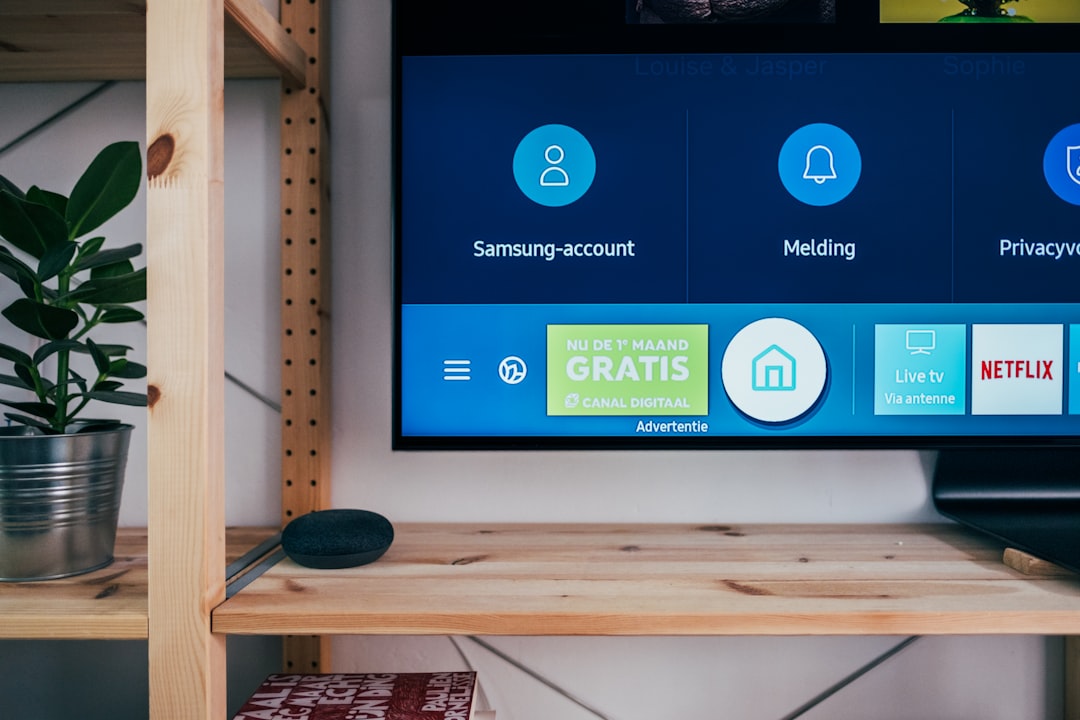
Quick Answer: Samsung QLED panel ghosting — where faint images from previous scenes linger on screen — is typically caused by aggressive motion processing, incorrect Picture Mode settings, or cumulative image retention rather than true burn-in. Most cases can be resolved within minutes by adjusting Motion Rate, disabling Auto Motion Plus interpolation, and running Samsung's built-in pixel refresh cycle.
There's a particular kind of frustration that sets in when you're watching a dark cinematic scene and you can still see the ghost of a soccer field scoreboard from two hours ago floating somewhere in the upper-right corner. It's not dramatic. It doesn't make the TV unusable. But it sits there, nagging, and every time you try to convince yourself it's your imagination, it gets slightly worse.
Samsung QLED owners encounter this more often than Samsung's marketing suggests, which is a frustration shared by many, much like when you face issues such as LG OLED screen flickering. The company's Quantum Dot LED panels — which are, technically speaking, still LCD panels with a quantum dot enhancement layer and LED backlighting, not emissive displays like OLED — have specific failure modes around image retention, motion artifacts, and what users collectively call "ghosting." These terms get conflated constantly, which is part of why the problem is so hard to Google effectively, similar to how users struggle to troubleshoot Google Home Max Wi-Fi issues without proper guidance. Different causes produce visually similar symptoms, and the fixes are completely different depending on which one you're dealing with.
This guide exists because the official Samsung support documentation is, charitably, thin, much like the technical documentation for specialized electronics, such as fixing an Instant Pot Vortex Plus E5 error. Forum threads on Reddit's r/hometheater and r/4kTV are full of users who tried the wrong fix for the wrong problem and concluded their panel was defective when it wasn't — or worse, concluded it was fine when it wasn't.
Understanding What "Ghosting" Actually Means on a QLED Panel
Before touching any settings, the single most important thing to establish is which kind of ghosting you're seeing. The word "ghosting" is used to describe at least three distinct phenomena on Samsung QLED displays, and conflating them leads to wasted hours.
Motion Ghosting vs. Image Retention vs. Panel Uniformity Artifacts
Motion ghosting is a temporal artifact. It happens in real-time during fast-moving content — a trailing edge behind a moving object, a blurring of fast horizontal movement, a doubling effect behind a ball in flight. This is almost always caused by pixel response time limitations interacting with the panel's refresh and backlight scanning behavior, which can be just as complex as diagnosing Wi-Fi 7 packet loss and MLO jitter. It appears during motion and disappears when the content is static.
Image retention is spatial and persistent. A static element — a news ticker, a game HUD, a streaming service logo — has been displayed for a long enough period that the LCD crystals in that region have "learned" a partial orientation. The image appears as a faint echo even when completely different content is displayed. On QLED, this is usually temporary and recoverable. On OLED it can become permanent burn-in; on QLED it almost never does, but the temporary retention can last hours and cause genuine alarm.
Panel uniformity artifacts are neither — they're manufacturing tolerances expressing themselves as slightly uneven brightness or color consistency across the panel, sometimes made visible by certain content. These look like ghosting but respond to none of the same fixes.
The diagnostic is simple: display a completely static, uniform gray screen, a troubleshooting step as crucial as verifying Shark Ion Robot wheel obstructions when your device stops moving. If the ghost is visible on static content, you're dealing with image retention. If it only appears during movement, it's motion processing. If you see splotchy uneven patches on the gray field, you may be looking at uniformity issues.
The Settings Architecture: Why Samsung's Menu System Makes This Harder Than It Should Be
Samsung's TV firmware — Tizen OS — has undergone several interface overhauls since 2018, sometimes making it as difficult to navigate as finding the root cause of a QuickBooks Online sync failure in complex software. The location of critical picture settings has moved between firmware versions, sometimes dramatically. A Reddit thread from 2021 where someone says "go to Picture → Expert Settings → Local Dimming" may be completely wrong for a 2023 QN85B or QN90C model running a different Tizen build.
This is a real operational problem. Samsung's support site doesn't reliably document which settings exist on which model year's firmware. Users on the Samsung Community forums frequently report finding settings in different locations than documented, or finding that a setting described in official guides simply doesn't exist on their panel. One moderator thread from the Samsung Community boards has over 400 replies largely because the original instructions were wrong for half the models people were trying them on.
The general architecture, as of recent Tizen versions, is:
- Settings → Picture — base mode, brightness, contrast, sharpness
- Settings → Picture → Expert Settings — the real controls: local dimming, contrast enhancer, color space mapping, gamma
- Settings → Picture → Picture Options — motion settings, noise reduction, film mode
- Settings → Support → Device Care → Self Diagnosis — where pixel refresh and screen tests actually live
This matters because users hunting for motion settings in "Expert Settings" won't find them — they're in "Picture Options." And users looking for the pixel refresh function will search through Picture menus for twenty minutes before someone on a forum tells them it's under Support.
Step-by-Step: Fixing Motion Ghosting on Samsung QLED
Step 1 — Disable or Recalibrate Auto Motion Plus
Auto Motion Plus (AMP) is Samsung's motion interpolation system. It uses frame insertion and blur reduction to make 24fps or 30fps content appear smoother. It's the technology responsible for the "soap opera effect" — that hyper-real, slightly uncanny smoothness that makes movies look like daytime television.
More relevantly for ghosting: AMP's blur reduction component works by inserting black frames between content frames (backlight strobing), which can produce a faint doubling artifact behind fast-moving objects that reads as ghosting.
Navigation path (most 2020–2023 QLED models):
Settings → Picture → Picture Options → Auto Motion Plus Settings
Inside this menu:
- Auto Motion Plus — set to Custom rather than Auto or any preset
- Blur Reduction — reduce to 0 first as a diagnostic step
- Judder Reduction — reduce to 0 or 3 (too high causes soap opera effect, too low causes judder on 24fps film)
- LED Clear Motion — turn OFF (this is the backlight strobing; it's the primary cause of perceived ghosting halos around fast objects)
The LED Clear Motion toggle is the single most impactful change for motion ghosting. Samsung enables it by default in some Picture Mode presets. It improves measured motion clarity by reducing perceived blur, but produces a stroboscopic artifact that a significant portion of users perceive as ghosting. Disabling it typically resolves the complaint within seconds of testing.
Field note: On the QN85B and QN90C series in particular, LED Clear Motion defaults to ON in "Game Mode" and some "Dynamic" presets. Multiple threads on AVSForum document users spending weeks thinking their panel had a defect before finding this setting.
Step 2 — Check Local Dimming Aggressiveness
Samsung QLED panels with full-array local dimming (FALD) — primarily the Q80 series and above — use zone-based LED dimming to improve contrast. When the algorithm dims a zone too aggressively and then restores it rapidly, it creates a "halo" effect around bright objects on dark backgrounds that is visually indistinguishable from motion ghosting.
Navigation path:
Settings → Picture → Expert Settings → Local Dimming
Options typically include: Off, Low, Medium, High, and in some models, Auto.
- For film and dark room viewing: Low is generally the best balance
- For gaming: Off reduces input lag and eliminates the halo artifact entirely
- High produces the best measured HDR contrast but the most visible halo ghosting artifacts
The engineering tradeoff here is real: higher local dimming = better black levels = more visible halo ghosting. Samsung can't resolve this mathematically without increasing zone density, which the cheaper QLED panels don't have. The QN900C's Neo QLED MiniLED has enough zones that it's less of a problem. On a Q60 or Q70, it's a genuine compromise and users need to decide what bothers them more.
Step 3 — Picture Mode Selection and Its Hidden Defaults
Samsung's Picture Mode presets aren't just aesthetic choices — they set underlying default values for dozens of parameters simultaneously, including some that aren't individually accessible from their respective submenus when certain modes are active.
- Dynamic: boosts everything, enables LED Clear Motion, enables aggressive noise reduction. Terrible for motion ghosting.
- Standard: moderate settings, some motion processing active by default
- Natural: disables most motion processing automatically. Closest to source-accurate.
- Movie/Cinema: the most accurate mode, disables interpolation by default, typically the best starting point for ghosting complaints
- Game Mode: disables most post-processing for latency, but uniquely enables LED Clear Motion by default on many models
For addressing ghosting, start by switching to Movie mode and retesting before changing any granular settings. Sometimes the entire problem disappears because Movie mode doesn't enable LED Clear Motion or aggressive AMP by default.
Step 4 — Sharpness Settings and Edge Enhancement
This is underappreciated as a ghosting contributor. Samsung's Sharpness control at the base Picture level applies an edge-enhancement algorithm that adds artificial contrast to edges. When combined with motion, this creates trailing artifacts — specifically a bright leading edge and dark trailing edge behind moving objects — that reads as ghosting.
Set Sharpness to 0.
Also check:
Settings → Picture → Expert Settings → Detail Enhancer — Off or Low
Settings → Picture → Expert Settings → Contrast Enhancer — Off initially as a diagnostic
These are different from basic sharpness and can each contribute independently to edge artifacts.
Step-by-Step: Fixing Image Retention on Samsung QLED
Image retention is a different beast with different tools.
Running the Pixel Refresh / Screen Burn Protection Cycle
Samsung includes a built-in pixel refresh function, though they don't call it that directly. The navigation varies by model year, but as of recent firmware:
Settings → Support → Device Care → Self Diagnosis → Picture Test
This runs a standardized test pattern sequence. Separately:
Settings → General → System Manager → Screen Saver
And more specifically for retention:
Settings → General → Expert Settings → Screen Burn Protection
This menu contains:
- Pixel Shift: micro-shifts the image by a pixel or two periodically to prevent static retention. Useful for HUDs, news tickers, gaming interfaces. Enable this for any content with persistent static elements.
- Screen Burn Protection Mode: a screensaver-style intervention that cycles patterns when a static image has been detected for a threshold duration
For acute image retention after something like a 6-hour gaming session where the HUD was static, the most effective approach is:
- Display a white or bright gray screen for 30–60 minutes (counterintuitive but effective — it effectively "resets" the crystal orientation by forcing maximum drive signal)
- Then run a full-color cycling test pattern (downloadable as video content, available on YouTube as "burn-in fixer" patterns)
- Run Samsung's built-in Picture Test from the Self Diagnosis menu
Most temporary retention on QLED resolves within a few hours. If it persists beyond 24 hours, you may be dealing with something more structural — but permanent burn-in on a QLED LCD panel is genuinely rare, unlike OLED.
Real Field Reports: What's Actually Happening Out There
The gap between Samsung's official documentation and what users actually encounter is substantial, and it's worth being direct about that.
On the Samsung Community forums, a thread titled "QN90A ghosting — 6 months of troubleshooting" became something of a reference document for the problem. The original poster had gone through three Samsung technician visits, received a panel replacement, and continued experiencing the artifact. The resolution, eventually identified by another forum user, was that LED Clear Motion was being re-enabled by a firmware update that reset certain settings to new defaults. Samsung pushed a firmware update, the setting toggled back on, ghosting returned, the user assumed panel failure.
This isn't an isolated incident. Multiple threads on AVSForum and r/4kTV document the same pattern: Samsung firmware updates silently resetting picture settings. There's no changelog transparency. Users don't know their settings have changed until they start noticing picture quality degradation.
A separate category of field reports involves the Q60 and Q70 series — Samsung's entry-level QLED lineup — where local dimming is edge-lit rather than full-array. These panels have significantly less zone control, and the halo ghosting from edge-lit local dimming is more pronounced and less tunable. Some users on these panels reach a point where Local Dimming Off produces flat, washed-out blacks, and Local Dimming On produces unacceptable halos. There's no intermediate setting that resolves both issues simultaneously because the hardware doesn't support it. This is an engineering constraint, not a settings problem, and no amount of menu adjustment will fully fix it.
Counter-Criticism and the Debate Around Samsung's Approach
It's worth engaging with a genuine industry debate here: is Samsung's marketing of QLED versus OLED honest about ghosting and retention risks?
The critical camp — represented most vocally in display enthusiast communities and by panel analysts at organizations like DisplayMate — argues that Samsung's emphasis on "no burn-in risk" as a QLED differentiator against OLED is technically accurate but practically misleading. QLED's temporary image retention, while not permanent, can persist long enough during a viewing session to be highly disruptive. Users who paid a premium expecting no retention-related artifacts are encountering them regularly and feel misled.
The defense, offered by Samsung and many reviewers, is that QLED retention is genuinely temporary and self-resolving, that it requires more extreme usage patterns to trigger than OLED burn-in, and that the fix (waiting, running patterns) doesn't require any irreversible intervention. This is also true.
The honest answer sits somewhere uncomfortable: QLED's retention behavior is categorically different from OLED burn-in, and Samsung's "no burn-in" claim is technically defensible — but users who interpret this as "no image retention artifacts ever" are routinely disappointed. The marketing language creates an expectation the hardware doesn't always fulfill under real-world use.
On the motion ghosting side, critics note that Samsung's Motion Rate marketing (Motion Rate 240, Motion Rate 120) conflates actual panel refresh rates with interpolated effective rates in ways that make meaningful comparison difficult. A Motion Rate 240 television may have a native 60Hz panel using backlight strobing and frame interpolation to achieve its marketing number. The motion artifacts that users experience are, in part, a consequence of this interpolation architecture — and Samsung's aggressive default settings for these processing systems mean users are often running configurations that maximize measured clarity scores at the cost of subjective ghosting artifacts.
Advanced Diagnostics: When Settings Changes Don't Help
If you've gone through every setting adjustment and the artifact persists, there are several further diagnostic steps before concluding panel failure.
Input Signal Verification
Ghosting artifacts can originate upstream of the TV entirely. A poor-quality HDMI cable, a source device with video processing enabled, or a receiver/switcher introducing signal latency can all produce visual artifacts that appear identical to panel ghosting.
Test with a direct connection between source and TV. Disable any processing on the source device (game consoles, streaming sticks, and AV receivers all have their own post-processing stacks). A 4K HDR signal traveling through a mid-grade AV receiver's video processing can arrive at the TV with pre-existing motion artifacts.
Firmware Version Verification
Go to Settings → Support → Software Update → About This TV and document your current firmware version. Cross-reference this with the Samsung Community forums for your specific model — there are often pinned threads documenting which firmware builds introduced or resolved specific picture quality issues. Samsung has released firmware updates that specifically addressed motion processing artifacts on the QN85A, QN90B, and QN95C series after community pressure.
The 10-Point Gray Uniformity Test
Download or stream a 10-point gray ramp test pattern (10%, 20%, 30%... 100% gray fields). View each one for a minute in a dark room. If certain gray levels show splotchy, uneven luminance patterns that don't correspond to any displayed content, you're looking at panel uniformity issues rather than ghosting in any processable sense. This can be caused by backlight bleed, dirty screen effect (DSE), or panel manufacturing variation. Settings won't fix this — it's a physical panel characteristic.