Under-sink vanity cabinets in rental apartments present a universal puzzle. You open the doors expecting generous utility, only to find a dark cavern sliced down the middle by a curved P-trap, rigid supply lines, and water shut-off valves. Standard leases prohibit drilling into vanity frames, installing permanently mounted hardware, or altering the cabinet carpentry. Beyond lease restrictions, everyday bathroom conditions complicate storage: humidity encourages mildew, poor lighting hides bottles in distant corners, and occasional plumbing condensation threatens pressboard surfaces. Maximizing this footprint without putting your security deposit at risk requires freestanding, modular organizers. By choosing components that stand on their own feet rather than leaning on or attaching to your plumbing, you can reclaim vertical clearance, streamline your morning routine, and maintain unobstructed access to emergency shut-off valves at all times.
Mapping the Cabinet and Protecting Surfaces
Before purchasing organizers, thoroughly map out the physical obstructions inside your vanity. Recording only the total width, depth, and overall height is a common pitfall. Instead, measure four specific clearances: the height from the cabinet floor to the lowest dip of the drainpipe trap, the lateral distance on either side of the plumbing assembly, the depth from the front opening frame to the back wall pipes, and the inward swing clearance of the cabinet door hinges. Heavy cabinet hinges frequently steal up to two inches of horizontal clearance, which can block sliding drawer tracks from pulling out straight.
Once measurements are noted, clear the cabinet completely. Sort your toiletries into practical categories such as daily skincare, oral care, haircare tools, first aid, and backstock goods. Check expiration dates on sunscreens and medications, disposing of expired formulas so you only allocate valuable storage space to items currently in use.
Protecting the cabinet base is crucial in rentals. Low-grade pressboard and unsealed veneer absorb spills, bubble up when wet, and stain easily from residual body oils or cleaning agents. Lay down a waterproof, non-adhesive shelf liner or a dedicated silicone under-sink mat with a raised perimeter lip. Avoid self-adhesive contact paper entirely; adhesive backings bond aggressively to cabinet veneers, tearing off paint and leaving gummy residues during move-out that lead to deposit deductions. A flexible, non-adhesive mat shields composite wood from slow leaks, provides a flat, stable foundation for freestanding racks, and can be lifted out and washed in the sink within minutes.
Related guide: How to Double Your Rental Kitchen Cabinet Space with Freestanding Organizers
Expandable and Slotted Shelving Systems
The single greatest obstacle under any sink is the vertical drop of the drain. Traditional fixed shelves either cannot fit past the pipe or leave wide swaths of dead air on either side. Expandable under-sink shelving systems solve this layout problem through modular, bridge-like design.
These freestanding frames consist of two side supports connected by telescoping metal rails that adjust horizontally to match the interior width of your vanity. Rather than utilizing a single solid board, the shelving surfaces are composed of individual plastic or powder-coated metal slats that snap over the crossbars. You simply omit or shift slats in the exact spots where the drainpipe or water lines descend, while maintaining flat shelving everywhere else. This yields uninterrupted, level storage tiers across the cabinet width without resting any weight against delicate plumbing connections.
When setting up an expandable rack, adjust the bottom tier height to allow several inches of headspace for your tallest bottles. Ensure the frame's feet rest squarely on the cabinet floor and verify that you maintain at least one to two inches of clear working space around the water shut-off handles. In the event of a sudden leak, you must be able to turn those oval valves without first having to unhook or dismantle storage racks.
Related guide: No closet? Your entryway can still have a place for everything.
Tiered Sliding Bins and Modular Drawers
Deep vanity cabinets swallow toiletries quickly because items pushed to the back are impossible to see or reach without crouching and knocking over bottles. Freestanding sliding drawers eliminate this problem by gliding stored supplies out into the light of the bathroom, ending the frustration of blind rummaging.
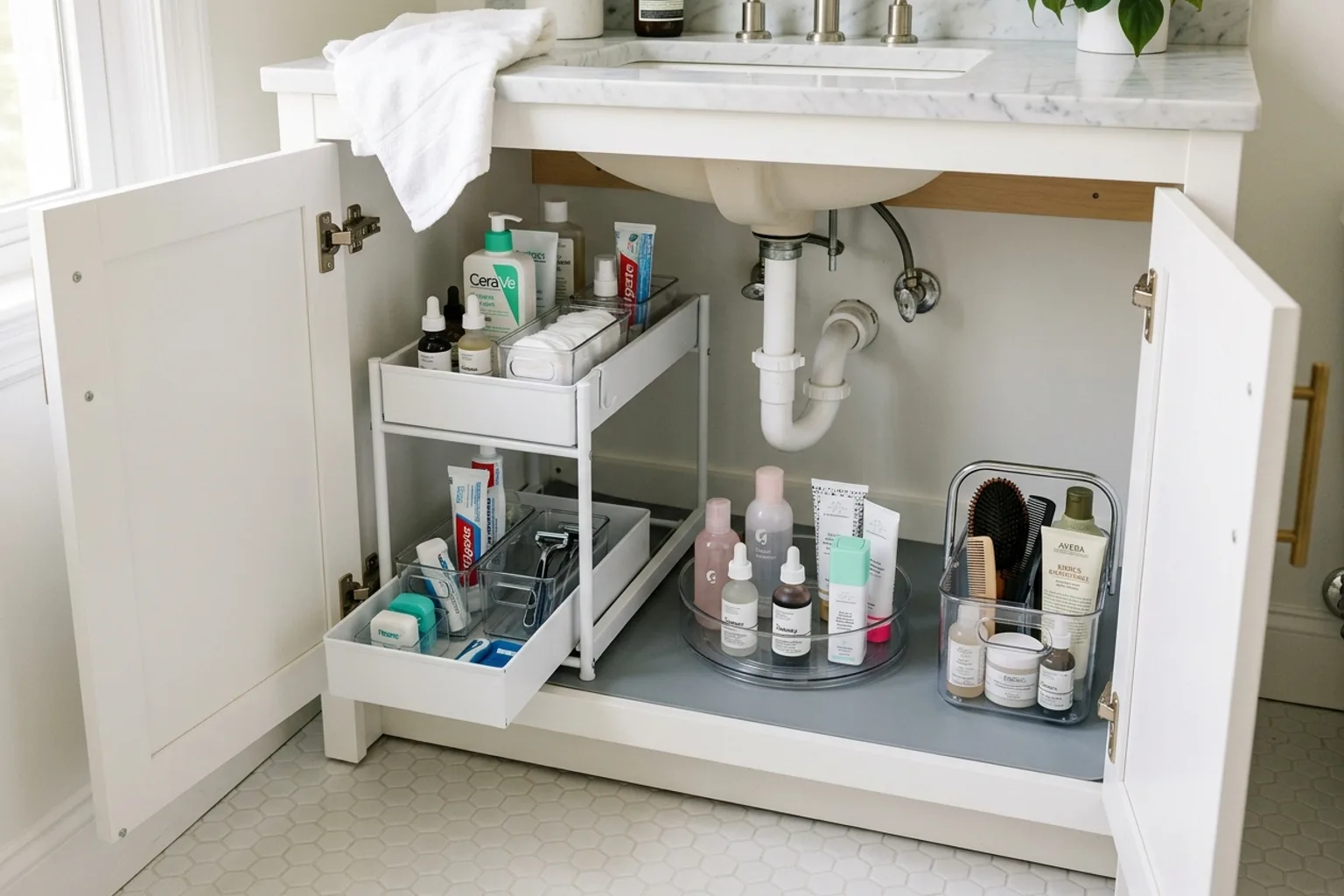
Look for multi-tier sliding units built with rigid acrylic or powder-coated steel wire frames. Narrow profiles, especially those measuring six to eight inches in width, fit comfortably within the narrow alcoves flanking a central drain assembly. Transparent plastic bins provide clear visibility from above and from the sides, allowing you to gauge product levels at a glance. Wire baskets provide dependable ventilation, though you may want to line their mesh bottoms with a thin sheet of plastic to keep narrow makeup tubes and medicine bottles standing upright.
Always verify that your sliding units feature built-in drawer stops to prevent over-extension and accidental spills onto the floor. When filling tiered sliding drawers, keep weight distribution in mind: load heavy liquids, such as shampoo bottles, liquid hand soap refills, and rubbing alcohol, into the bottom slide-out tier. Place lighter items like cotton pads, sponges, and cosmetic tubes on the top level. This keeps the unit's center of gravity low, ensuring the base remains firmly planted when the upper drawer is fully extended.
Related guide: How to Organize a Small Rental Linen Closet with Freestanding Bins and Shelf Dividers
Divided Turntables and Portable Caddies
Even after positioning shelving and drawer stacks, asymmetrical sink bases often leave behind odd square pockets of negative space. Rotating turntables—often called lazy Susans—turn these awkward corners into efficient, high-density storage zones. A simple quarter-turn brings tucked-away bottles of astringent, contact lens solution, or dry shampoo right to your fingertips without disturbing neighboring supplies.
Choose turntables with a raised border lip of at least one to two inches to prevent tall bottles from tipping off during rotation. High-impact wipeable plastic or stainless steel holds up best against ambient bathroom humidity; porous unfinished wood or bamboo should generally be avoided in unventilated under-sink enclosures where moisture can cause warping or mildew. Segmented turntables with removable pie-shaped wedges offer even greater flexibility, allowing you to lift out an entire sub-category of products, such as nail polish or shaving supplies, whenever needed.
For products that you use together as part of a set routine, portable caddies with central handles provide clean, adaptable utility. Assemble cohesive kits: a manicure station, a hair-dyeing kit, or spare dental supplies. A caddy rests neatly on an adjustable shelf tier or cabinet floor, ready to be lifted up to the sink counter during your morning or evening routine and stowed away immediately afterward. This keeps minor clutter contained and off your limited countertop.
Zoning, Safety, and Pedestal Sink Solutions
A thoughtfully configured under-sink area stays organized through intentional zoning. Keep everyday hygiene staples—facial cleansers, deodorants, and primary hair products—at eye level on the top tier or directly in the front compartments of your easiest-to-reach slide-out bins. Secondary supplies, such as spare soaps, seasonal treatments, and extra washcloths, fit naturally toward the back and bottom tiers where access takes a split second longer.
Safety requires strict attention in enclosed, humid spaces. Heated styling tools, including curling irons, blow-dry brushes, and hair straighteners, must be allowed to cool completely on the counter before you store them inside organizers or near plastic bins. Trapping heat against plastic creates fire risks and can warp storage containers. In addition, never loop electrical appliance cords around plumbing pipes or allow power cords to dangle near water valves. Cleaning solutions containing bleach or ammonia should be kept strictly in their original containers with caps firmly tightened to avoid off-gassing into closed cabinets.
If your rental bathroom features an open pedestal sink with no base cabinet at all, freestanding organization is still practical. You can place a curved, semi-circular wire shelving unit designed specifically to wrap around the pedestal column, creating tiered utility without wall anchors. Alternatively, slide a slim, three-tier rolling utility cart directly beside the basin. Rolling carts deliver generous vertical capacity, maneuver smoothly when cleaning the bathroom floor, and can be packed up and moved effortlessly to your next apartment.
Sources & further reading
AI-assisted writing and concept images. Sources and automated checks support the process; they do not replace checking your own measurements.
How we create our guides · Suggest a correction