The entryway is a transition, not a storage room. Start with the things that come through the door every day and give each of them a small, specific home.
Take inventory for one ordinary day
Set aside keys, a bag, the shoes you wear most often and the mail you need to sort. These are the items your entryway must handle. Seasonal coats, extra shoes and seldom-used accessories can live elsewhere.
Measure the space with the entrance door fully open. A console that fits against the wall can still obstruct the door or the route past it. Include baseboards and handles in your measurements.
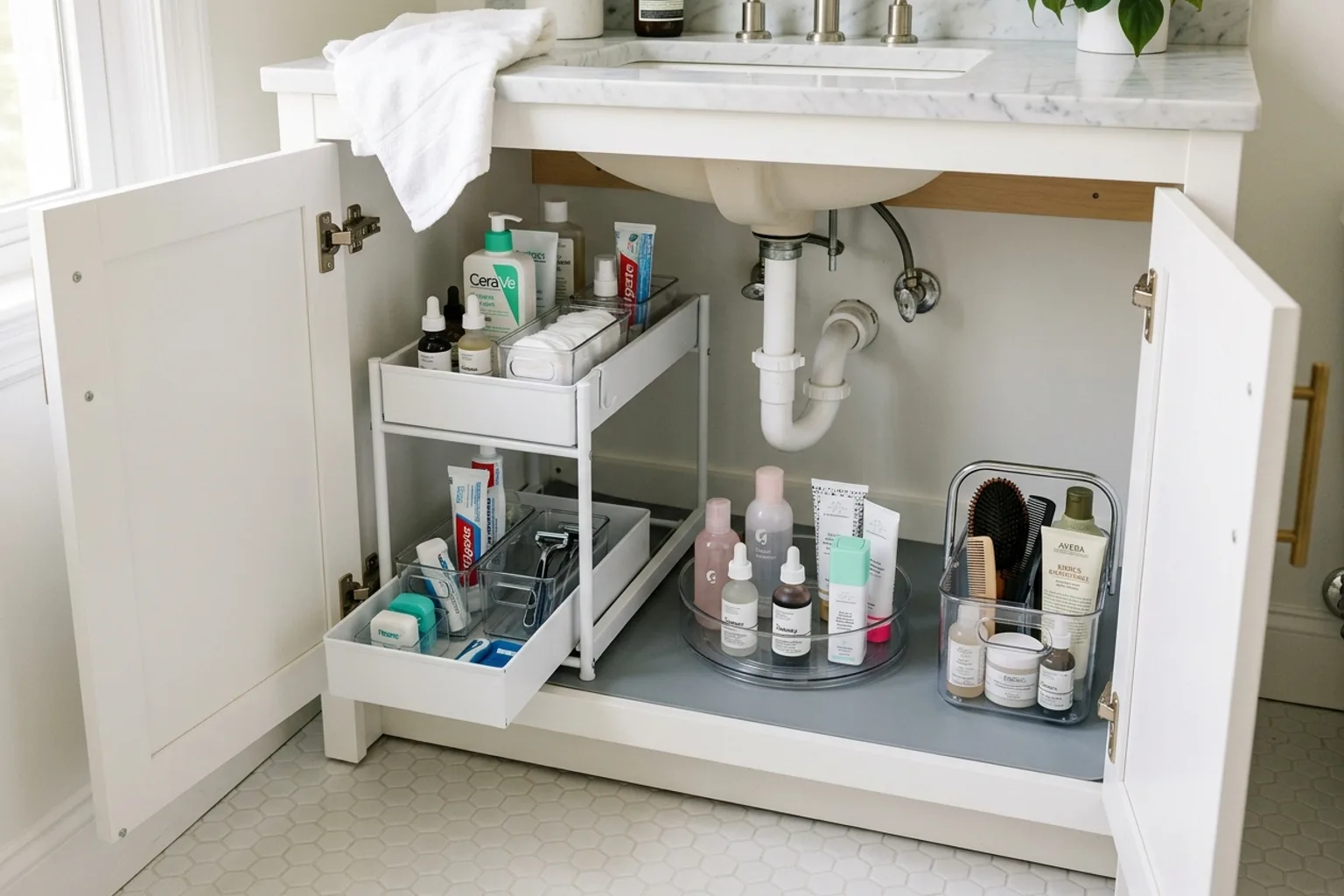
Related guide: How to Maximize Under-Sink Storage in a Rental Bathroom with Freestanding Organizers
Use a three-part arrangement
01 / A landing surface
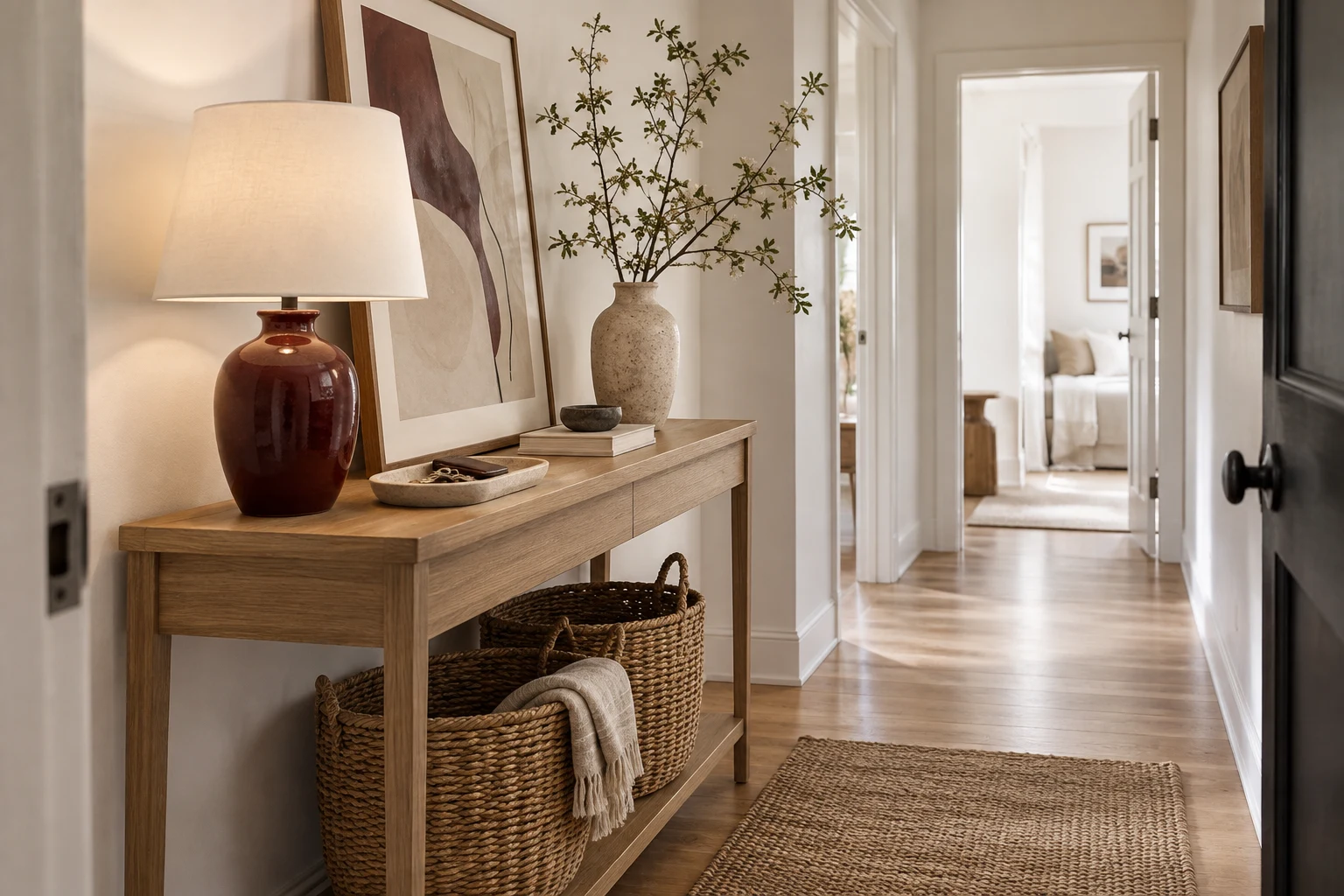
A small freestanding console or stable side table provides a home for keys and mail. Use one shallow tray instead of several containers. Follow the manufacturer's assembly and anti-tip instructions for any furniture you choose.
02 / A contained shoe zone
A washable tray or open basket can hold the shoes currently in use. Choose a container that fits the available floor space without narrowing the walkway, and let wet footwear dry before storing it.
03 / A home for the bag
Use a dedicated shelf or suitable freestanding rack. If you choose an adhesive hook, match it to the surface and the manufacturer's stated load limits; it is not a universal damage-free solution.
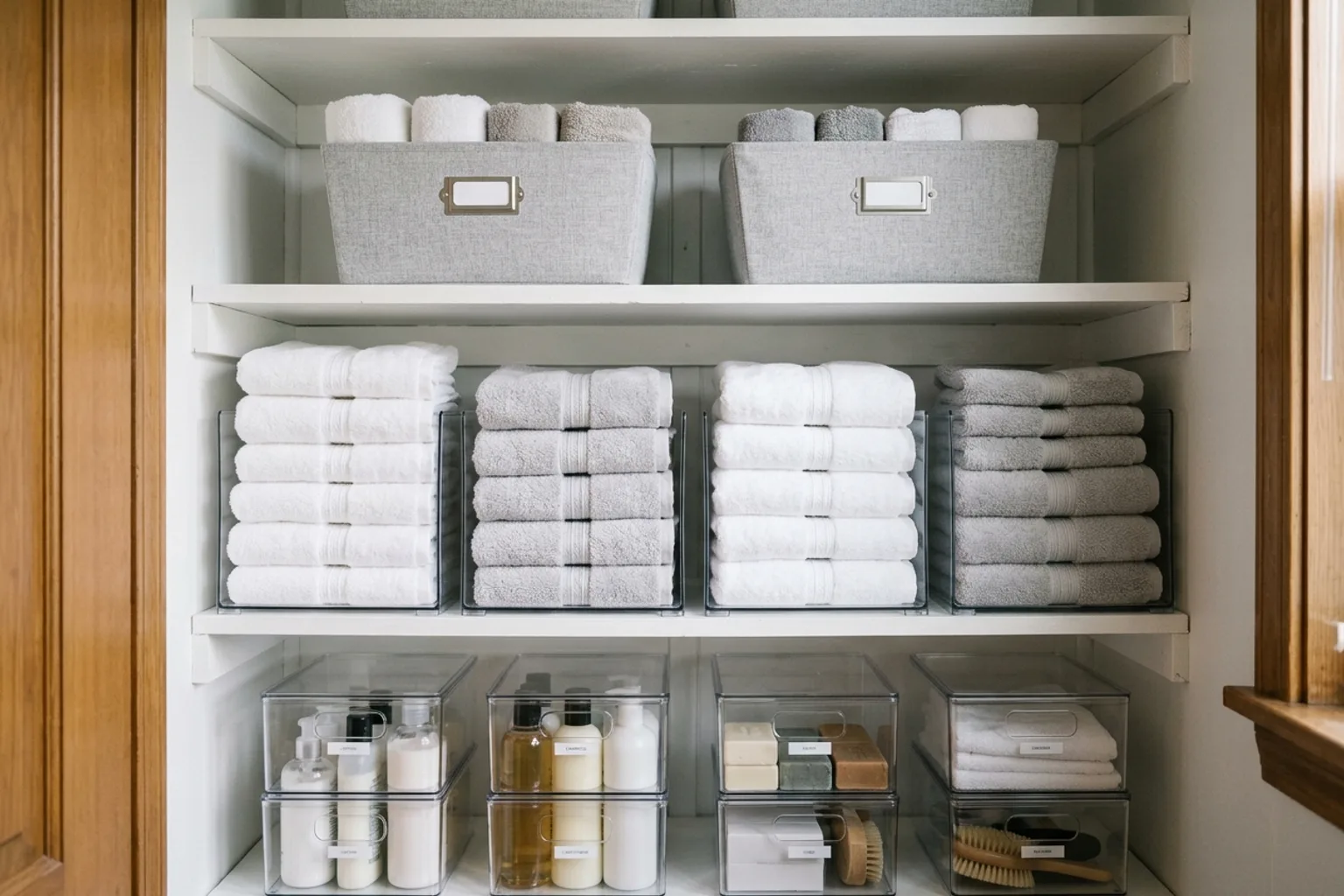
Related guide: How to Organize a Small Rental Linen Closet with Freestanding Bins and Shelf Dividers
Keep it easy to reset
At the end of the day, remove anything that does not belong. If the tray overflows repeatedly, change the routine before buying another organizer.
- Keep the entrance and escape route clear.
- Use washable containers where dirt collects.
- Store only the shoes you currently wear by the door.
- Give mail a regular destination beyond the entryway.
Check your lease and the product instructions before attaching anything to a wall or door. Our concept image illustrates an arrangement; it is not a tested installation.
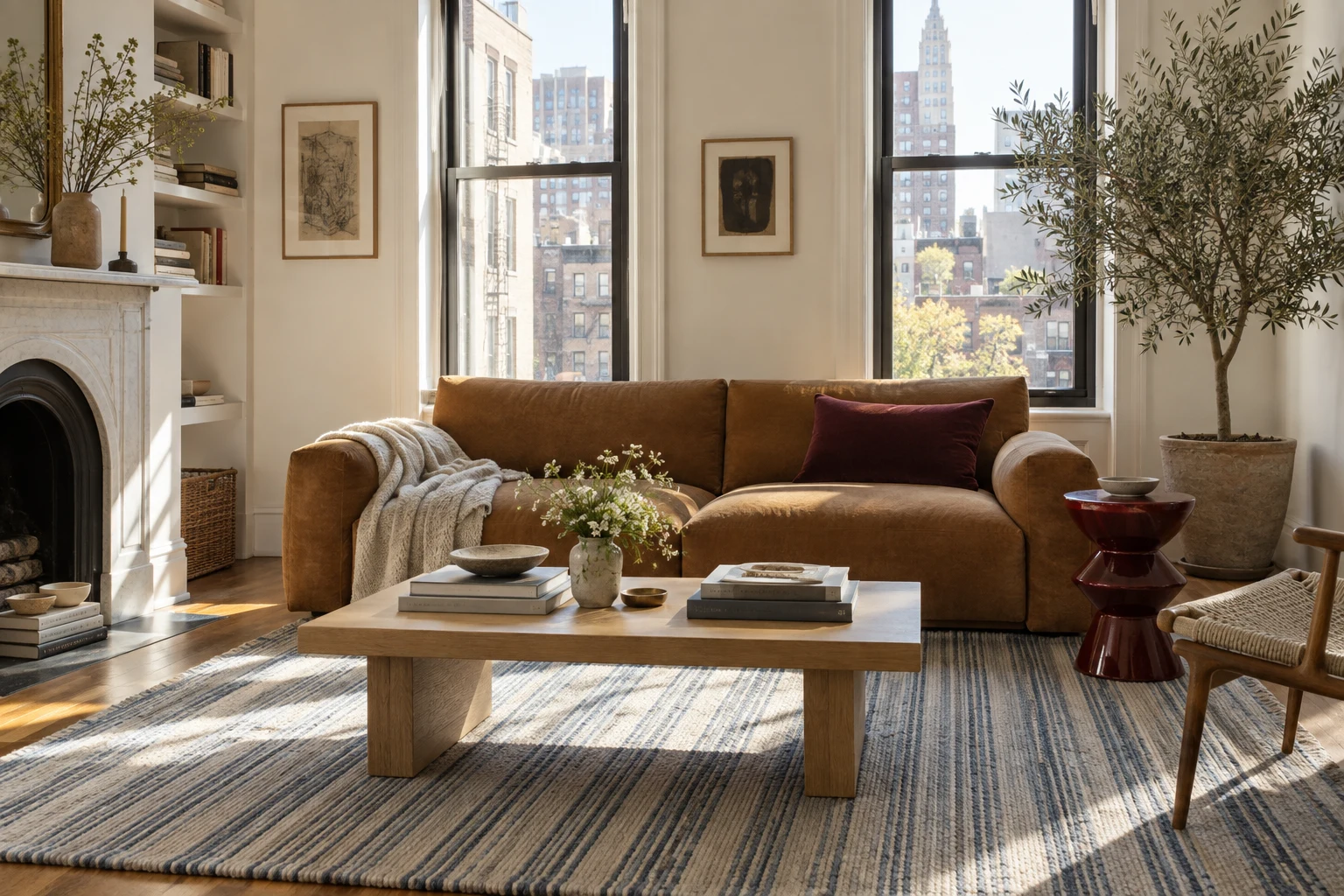
Related guide: A small living room. A little more possibility.
AI-assisted writing and concept images. Sources and automated checks support the process; they do not replace checking your own measurements.
How we create our guides · Suggest a correction