Rental linen closets rarely offer ideal proportions. Most feature shallow, fixed shelving made of painted particle board or vinyl-coated wire, spaced either too close together to stack bulky quilts or too far apart to keep folded bath towels from toppling over sideways. Because lease agreements routinely prohibit drilling fresh bracket holes, adjusting fixed standards, or adding permanent cabinetry, making these small spaces functional requires modular, surface-resting tools. Freestanding storage bins and slip-on shelf dividers solve these architectural constraints by dividing wide, unsegmented horizontal boards into distinct compartments. This approach stabilizes tall textiles, protects personal security deposits by leaving walls and shelves completely pristine, and ensures that every organizing element packs flat when moving to a new apartment.
Assessing Shelf Dimensions and Inventory Needs
Before shopping for containers or rearranging a single towel, measure the clearance height, usable width, and interior depth of every shelf. Standard apartment linen closets generally range between twelve and eighteen inches in depth. Organizers that overhang the shelf edge by even half an inch can prevent bi-fold or hinged closet doors from latching shut, while bins that fall short waste valuable cubic volume at the back. Once dimensions are noted, pull everything out onto a clean bed or table to take a realistic inventory. A dependable baseline for small apartments is two complete sheet sets per bed and two to three bath towels per resident, plus a single compact reserve set for visiting guests. Frayed washcloths, mismatched pillowcases, and half-empty hotel toiletries quietly consume essential shelf space. Reassigning heavy off-season duvets to under-bed boxes and paring back duplicate textiles immediately frees clearance, ensuring what remains can breathe comfortably on the shelves.
Related guide: How to Double Your Rental Kitchen Cabinet Space with Freestanding Organizers
Selecting Dividers for Wire and Solid Shelving
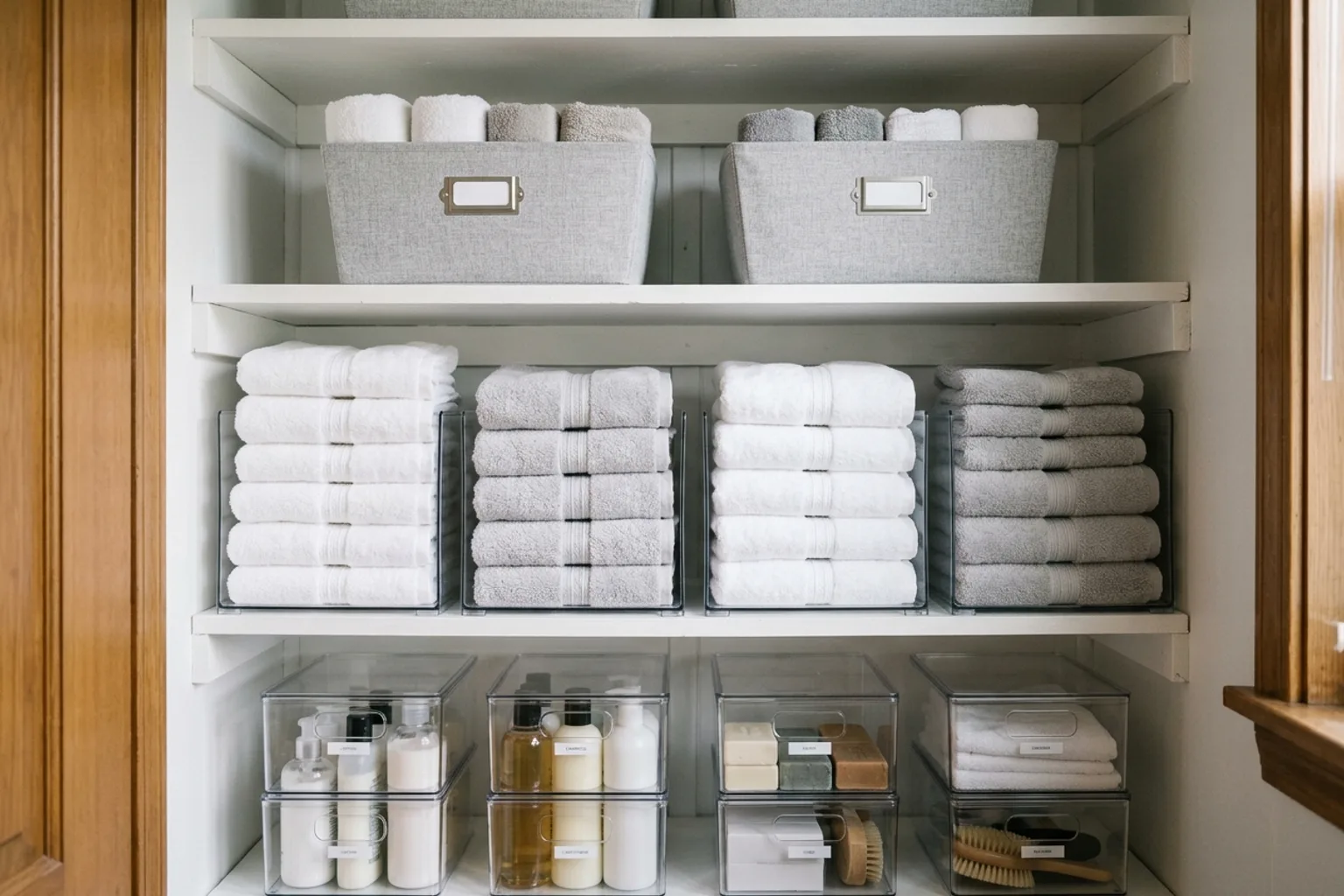
Freestanding shelf dividers create rigid vertical boundaries that stop tall piles from leaning into neighboring stacks. When furnishing solid three-quarter-inch wood or composite shelves, acrylic or coated steel slide-on dividers slip smoothly over the front lip without requiring screws, mechanical anchors, or aggressive adhesives that could strip rental paint upon removal. If your closet has vinyl-coated wire racks instead, standard slide-on dividers will tilt and wobble between the metal wires. In that situation, seek out wire-specific dividers equipped with dual-prong clips on the base that grip the wire ribs directly, or cut solid polypropylene shelf liners to lay across the wire grid before placing flat-base organizers down. Space dividers roughly ten to fourteen inches apart for standard bath sheets, bath towels, and folded sheet packets. This width provides reliable lateral support while allowing individual items to slide out without catching and dragging down the rest of the column.
Related guide: How to Maximize Under-Sink Storage in a Rental Bathroom with Freestanding Organizers
Choosing Between Opaque Baskets and Clear Bins
Visual cohesion matters just as much as physical containment in a shallow closet. Small loose items, oddly shaped hot water bottles, and bulky medical supplies quickly look chaotic when left sitting on bare shelves. Combining opaque baskets with clear containers balances visual calm with everyday utility. Woven cotton baskets, felt cubes, or fabric-covered bins work well on upper and middle shelves to conceal mismatched guest bedding, spare mattress protectors, and extra pillow protectors, presenting a unified row of clean lines whenever you open the door. Conversely, clear acrylic or transparent plastic bins belong wherever you store backup toiletries, first-aid items, and small grooming products. Being able to see soap bars, contact solution, and sunscreen bottles through the container walls keeps you from rummaging blindly or purchasing duplicate bottles you already own.
Related guide: A small living room. A little more possibility.
Folding Methods for Compact Stacking
Storage accessories can only do so much if linens are folded into uneven, lumpy shapes. Adopting two standardized folding techniques keeps stacks tidy and uniform between dividers. For bed sets, the self-contained pillowcase bundle remains the cleanest solution: fold the flat sheet, fitted sheet, and one pillowcase into flat rectangles of identical dimensions, then slide the entire bundle inside the set's second pillowcase. This forms a neat, book-like fabric packet that stacks flat or slides vertically between dividers like a binder on a bookshelf, preventing loose pieces from getting separated. For bath towels, skip loose rolls, which tend to roll forward and eat up vertical shelf clearance. Instead, use a hospitality-style tri-fold: fold the towel in half lengthwise, fold it lengthwise again into thirds, and then bring the outer edges inward to meet in the middle. Stacking towels with their smooth, rounded folds facing out creates crisp, stable columns that resist slouching.
Zoning Vertical Shelf Space from Top to Bottom
Strategic vertical placement determines whether a small linen closet stays organized or falls apart during busy mornings. Reserve the highest shelf, which is often difficult to reach without a step stool, for rarely accessed items such as seasonal down comforters, spare pillows, and extra guest blankets. Keep these bulkier textiles inside breathable canvas storage bags with zipper closures to block household dust while letting natural fibers circulate air. Assign the prime eye-level and chest-height shelves to high-turnover essentials: daily bath towels, hand towels, washcloths, and current-rotation sheet bundles framed by shelf dividers. The lowest shelf and the floor zone are naturally suited for heavy utility supplies. Place freestanding plastic caddies or handled totes here to hold bulk toilet paper packs, cleaning spray refills, and laundry detergents, which keeps the closet's physical center of gravity low and avoids bowing upper composite boards.
Maintenance, Labeling, and Rotation Habits
A thoughtfully organized closet requires clear signposts and simple laundry habits to remain orderly long-term. In rental properties where you cannot attach adhesive nameplates directly to the shelving, clip-on metal or plastic label tags attached to bin handles and basket rims work wonderfully. Label each container specifically—using terms like Master Bed Sheets, Hand Towels, or Travel Toiletries—so housemates or guests can return items without guessing. When restocking clean laundry, slide freshly washed towels and sheet bundles underneath the existing stack rather than dropping them on top. This bottom-loading rotation ensures that every linen in your rotation experiences equal wear, stops deeper layers from acquiring a stale, unused closet smell, and preserves neat columns across every tier.
Sources & further reading
AI-assisted writing and concept images. Sources and automated checks support the process; they do not replace checking your own measurements.
How we create our guides · Suggest a correction