Before buying an organizer, try a removable cardboard version. It is an inexpensive way to test a layout and learn which compartments you will actually use.
Gather a few simple materials
- Clean, dry corrugated cardboard without staples.
- A ruler, pencil and paper for a test layout.
- Scissors appropriate for the cardboard, plus a protected work surface.
- Paper tape and optional decorative paper.
This project is for lightweight stationery in a dry drawer. Cardboard is not suitable near heat, moisture, food spills or heavy tools.
Related guide: How to Organize a Small Rental Linen Closet with Freestanding Bins and Shelf Dividers
Measure, divide, then test
01 / Measure the inside
Record the drawer's usable width, depth and closed clearance. Keep the dividers below that clearance. Check the narrowest points rather than measuring only the opening.
02 / Make a paper layout
Place your everyday items in the empty drawer. Use strips of paper to separate groups. Leave enough room to lift each object out comfortably.
03 / Cut the strips
Transfer the tested lengths to the cardboard. Make the strips slightly shorter than the measured span, then test the fit. They should sit in place without bowing or scraping the drawer.
04 / Join at the crossings
At each crossing, cut a slot halfway down one strip and halfway up the other. Match the slot width to the cardboard thickness and slide the pieces together. Test one crossing on scraps first.
05 / Finish and fit
Cover rough edges with paper tape. If you add decorative paper, check the fit again because the extra thickness can change the joints. Fit the organizer loosely and make sure the drawer closes freely.
Use it, then refine it
Try the arrangement for a week. Resize an awkward compartment or remove a divider you do not need. Replace cardboard if it becomes damp, dirty or distorted.
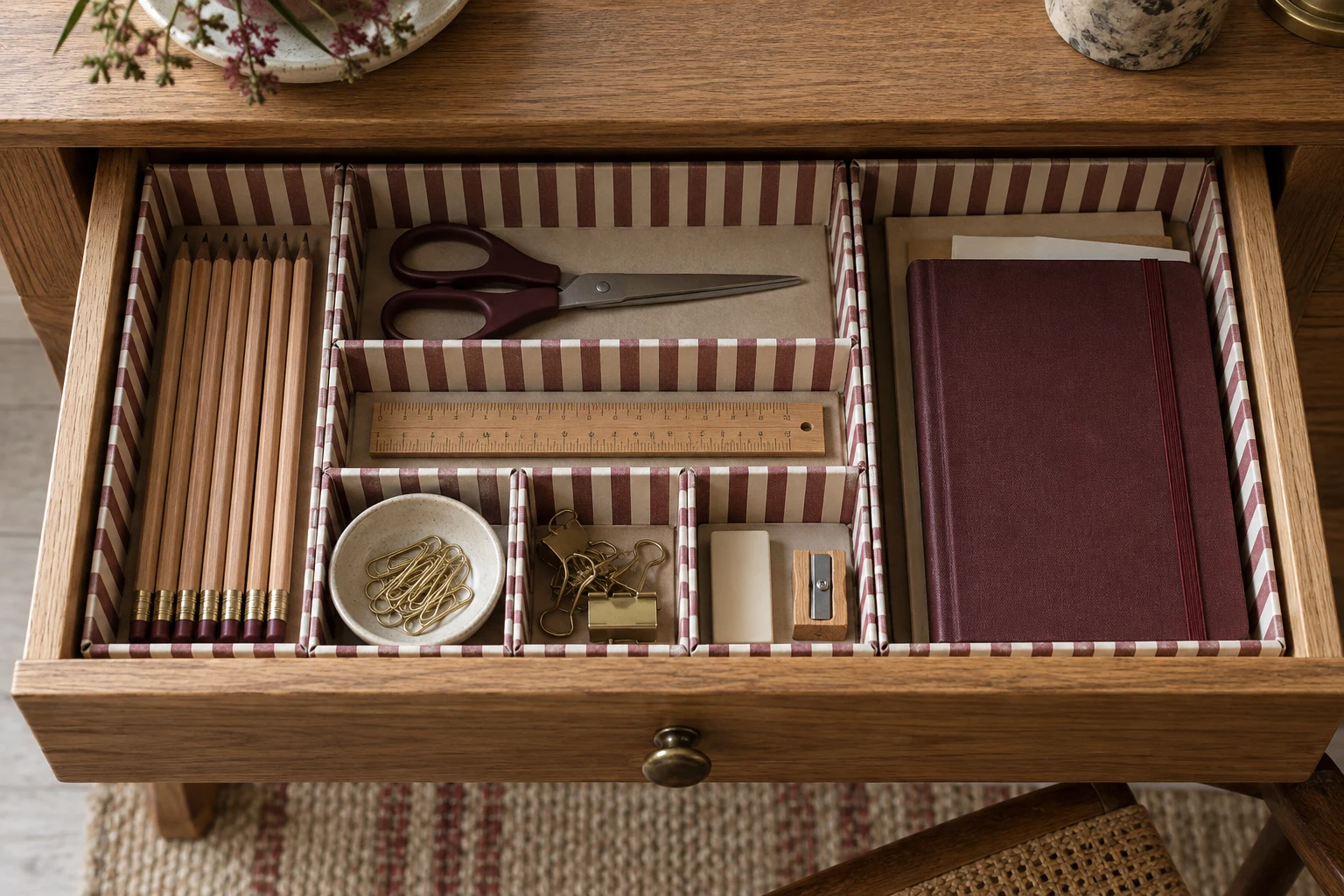
This is a concept guide, not a documented hands-on test. The illustration shows one possible finish; your drawer dimensions determine the actual cuts.
PUT THIS GUIDE TO USE
Work with your own measurements
AI-assisted writing and concept images. Sources and automated checks support the process; they do not replace checking your own measurements.
How we create our guides · Suggest a correction