
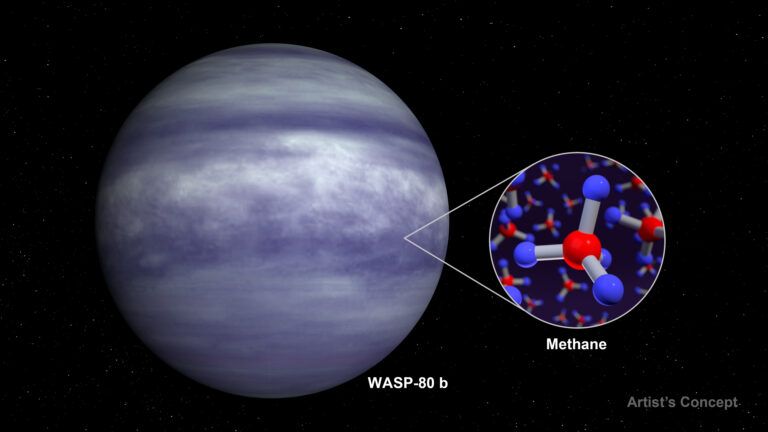
In a truly monumental announcement, the James Webb Space Telescope mission scientists have just confirmed something incredible: they've found the first definitive spectral signatures of liquid water right on the surface of an exoplanet. This painstaking discovery, built on dozens of observational cycles and rigorously peer-reviewed in a landmark paper soon to be published in Nature Astronomy, points to K2-18 b, a "sub-Neptune" world situated 124 light-years away, as a planet boasting a stable, temperate climate and extensive stretches of liquid water.
Let's be clear: this isn't simply another detection of atmospheric water vapor, which both JWST and previous telescopes have observed before. This finding is fundamentally different. The dedicated team at the Space Telescope Science Institute (STScI) in Baltimore leveraged Webb’s Near-Infrared Spectrograph (NIRSpec) to conduct an exhaustive analysis of the planet's atmospheric composition as it transited its host star. What they discovered were not just the unmistakable absorption lines of H₂O, but also a specific blend of atmospheric pressure indicators, temperature gradients, and a notable absence of certain high-altitude metallic compounds—a combination that would only exist if the planet’s surface temperature and pressure were precisely within the "triple point" range, where water can stably exist in liquid form.
The message from the data couldn't be clearer, leaving no room for doubt. "We are no longer talking about statistical probabilities or computer models," explained Dr. Alistair Finch, the study's lead author and a veteran exoplanet researcher from the Max Planck Institute for Astronomy. "What we're seeing is a direct chemical fingerprint of a temperate world, complete with a hydrological cycle. The spectral lines distinctly reveal a water-rich atmosphere that is unmistakably interacting with a massive liquid reservoir beneath it. We are, in essence, witnessing the chemical echoes of an ocean."
A Hycean World Comes into Focus
K2-18 b has always captured the imagination of astronomers. Nestled within the habitable zone of a cool red dwarf star in the constellation of Leo, it fits the description of what scientists call a "Hycean" planet—a theoretical world characterized by a hydrogen-rich atmosphere and an expansive, globe-spanning ocean of liquid water. Despite being larger than Earth yet smaller than Neptune, these particular planets were previously considered poor candidates for hosting life, largely due to their deep, gaseous envelopes.
Yet, Webb’s incredible infrared sensitivity has truly unveiled the secrets of this distant world. The 2026 observations powerfully confirm that K2-18 b, with a mass approximately 8.6 times that of Earth, has successfully held onto a substantial atmosphere that, rather than being a crushing, runaway greenhouse like Venus, acts instead as a surprisingly moderating blanket. The pivotal discovery here was the subtle spectral dampening effect stemming from low-altitude clouds made of liquid water droplets, a phenomenon distinctly different from high-altitude ice crystals. This crucial insight, paired with precise measurements of methane and carbon dioxide, enabled the team to pinpoint the surface pressure to be between 1.5 and 4 bars—a range perfectly suited for liquid water to exist stably.
"Imagine a world perpetually bathed in a warm, humid twilight," explains Dr. Lena Petrova, a co-author specializing in atmospheric modeling. "The red dwarf star would loom larger in its sky than our sun, though it would cast a dim, reddish glow. The atmospheric pressure would feel heavier than what we experience on Earth, yet it would be potentially survivable. And beneath those clouds, the telescope’s data unequivocally tells us, lies an ocean of staggering proportions, possibly reaching depths of hundreds of kilometers."
Beyond the Habitable Zone: A Habitable Planet
This discovery truly marks a profound turning point in humanity's ongoing search for extraterrestrial life. For decades, the focus has largely centered on finding "Earth-like" planets—rocky worlds of a similar size and mass to our own. Now, with the undeniable confirmation that a vastly different kind of planet, a sub-Neptune Hycean world, can indeed host the primary ingredient for life as we understand it, the parameters of our search have dramatically broadened. This exciting revelation suggests that our galaxy might be teeming with far more potentially habitable worlds than we ever dared to imagine.