
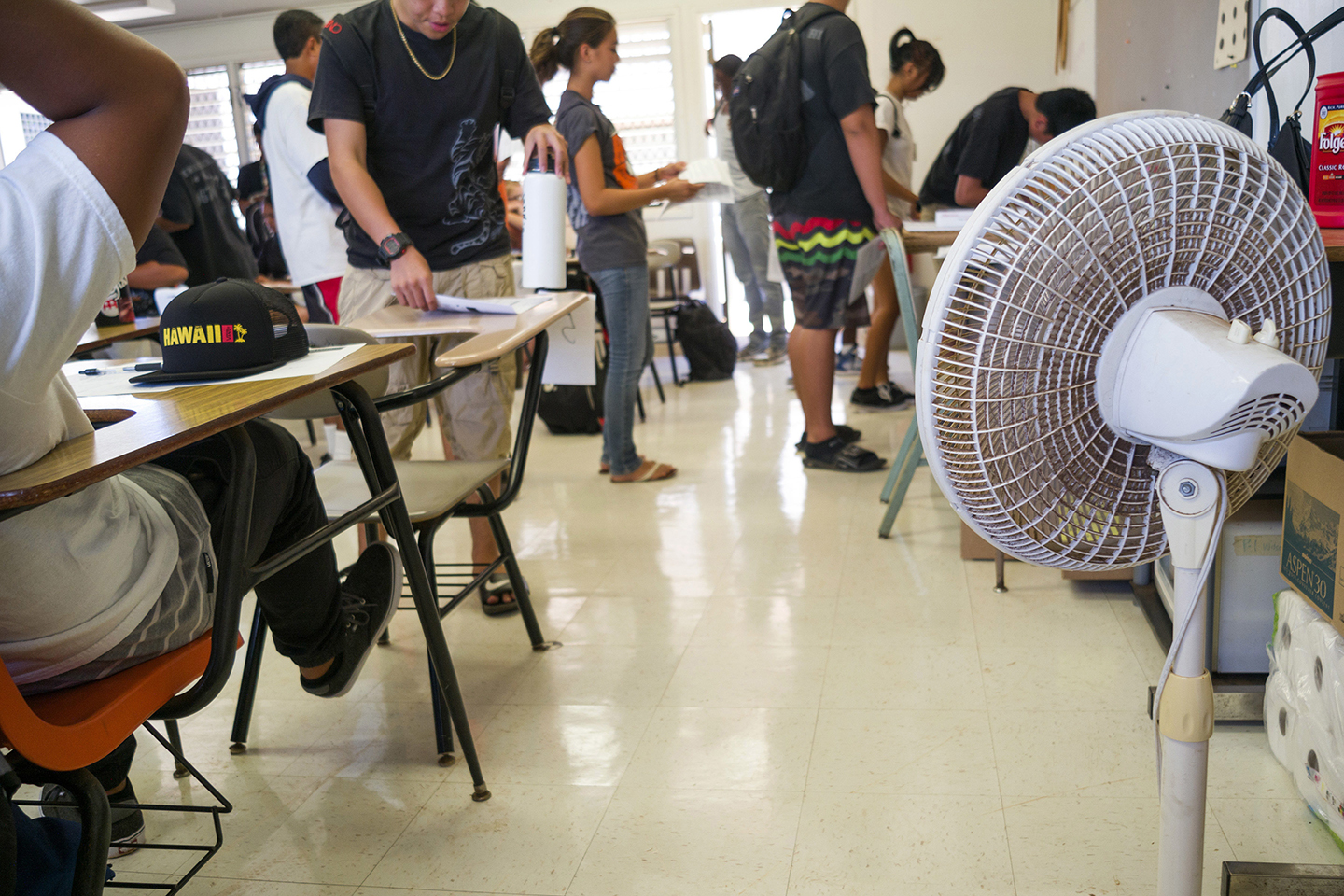
Imagine a metal roof in Ayutthaya, Thailand, baking under the sun, turning a simple primary school classroom into a sweltering oven. Inside, a single, struggling fan barely stirs the thick, humid air, offering little to no comfort. Students, drained and glistening with sweat, fight to concentrate on their teacher's words. What was once an occasional, difficult day has now become an unbearable daily grind throughout the Earth's tropical regions. Fast forward to 2026, and a truly radical, once-unimaginable policy is transitioning from urgent crisis talks to actual implementation: permanent seasonal school closures.
Following the devastating, record-breaking heatwaves of 2024 and 2025 – which left a wake of heatstroke victims and crippled education systems from Manila all the way to Mombasa – governments worldwide are now grappling with a stark new reality. The previous approach of ad-hoc, week-by-week emergency shutdowns simply isn't working anymore. Sources within UNESCO and various national education ministries confirm that a fundamental, systemic change is in motion. The critical discussion has shifted from whether schools will close for prolonged periods during the hottest months to how best to navigate the deep academic and social consequences.
A Matter of Survival: The Physiological Imperative
The discussion has moved far beyond simple comfort; it's now squarely about survival. From a clinical standpoint, the risks inside these intensely hot classrooms are severe and complex. We're not just talking about students feeling tired or sluggish; we're addressing a direct threat to children's neurological and physical development.
"A child's body simply isn't as good at regulating temperature as an adult's," explains Dr. Aruna Desai, a pediatric specialist whose groundbreaking 2025 study on heat exposure in Indian schools profoundly impacted the public health community. "Children absorb more heat from their surroundings, and they don't sweat as much. When temperatures in a stuffy, poorly ventilated classroom climb above 40°C (104°F) for extended periods, we witness a series of alarming health issues. It starts with dehydration and mental fogginess, but can quickly escalate to heat exhaustion and, tragically, life-threatening heatstroke."
The crucial measurement health officials are now closely tracking is the wet-bulb globe temperature (WBGT), a comprehensive metric that considers temperature, humidity, wind speed, and solar radiation. Essentially, it gauges conditions for human survivability. Recent weather data confirms that extensive areas across Southeast Asia, the Indian subcontinent, and Sub-Saharan Africa are now enduring weeks where the WBGT consistently surpasses 32°C (89.6°F) – a threshold where even moderate physical activity becomes hazardous. In such conditions, a classroom without air conditioning transforms into a dangerous crucible, actively jeopardizing children's health. The very act of learning takes a backseat to the body's desperate struggle for metabolic preservation.
"Our research has shown a significant 30% decline in basic math and literacy test scores during periods of intense heatwaves," Dr. Desai's study highlighted. "The brain, constantly fighting to cool the body, simply can't dedicate enough energy to complex cognitive functions such as memory consolidation and critical thinking. We are, quite literally, jeopardizing our children's future."
The Global Infrastructure Gap
The most apparent fix—installing air conditioning—is, for much of the Global South, a logistical and financial pipe dream. The sheer magnitude of this undertaking is overwhelming. A 2025 World Bank assessment indicated that equipping every school in tropical regions with air conditioning would demand an investment exceeding $2 trillion, and that sum doesn't even begin to cover the perpetual energy expenses.
This challenge goes far beyond just purchasing AC units. It demands a complete overhaul of national power grids, many of which are already delicate and frequently fail during peak demand. In rural parts of nations such as Nigeria or Pakistan, the fundamental grid infrastructure needed to support such an enormous electrical load simply doesn't exist. Moreover, the environmental irony is stark: deploying millions of traditional air conditioners that rely on hydrofluorocarbons (HFCs), which are powerful greenhouse gases, would only intensify the very global warming that's causing this problem in the first place. It's a truly destructive feedback loop.
This glaring infrastructure gap leaves education ministries facing an incredibly difficult decision. Do they gamble with the health and well-being of millions of students, or do they cede a substantial chunk of the academic year to the whims of an increasingly hostile climate?
Reshaping the School Year: The Great Calendar Reformation
Confronted by this seemingly impossible dilemma, a drastic reevaluation of the academic calendar is now surfacing as the "least unfavorable" path forward. The Philippines and certain regions of India are already experimenting with new models, moving the main long vacation from its traditional slot to the new "heat season," generally from April to June. Under this revised structure, the school year would commence later, continue through the monsoon and cooler winter months, and then pause for a compulsory "heat recess."
However, this isn't just a minor tweak to the calendar. It signifies a profound reshaping of society's very rhythms.