The spot price of uranium has spent the better part of 2026 oscillating in a state of high-altitude volatility that few analysts predicted with any real conviction three years ago. We are no longer talking about a simple commodity bull run driven by speculative retail interest on platforms like WallStreetBets; we are observing the structural fracture of the global nuclear fuel cycle. The decoupling of Western nuclear utilities from Russian enrichment services—a process formalized by the Prohibiting Russian Uranium Imports Act and mirrored by similar mandates across the European Union—has shifted from a geopolitical talking point into an operational nightmare for procurement officers.
For years, the industry operated on a "just-in-time" delivery logic, sustained by post-Cold War surplus inventories and the benign assumption that the atom, like the internet, was inherently globalized. That assumption is dead, much like the illusion that the global internet will remain unified as nations physically cut digital borders in 2026, as detailed in this report on data sovereignty and global rewiring. The current market is defined by a desperate, scramble-to-secure reality where the term "supercycle" feels less like a financial forecast and more like a description of a structural survival strategy—a sentiment echoed in other sectors, such as the rise of fractional data center ownership for institutional investors.
The Enrichment Bottleneck: When Capacity Isn't Just Math
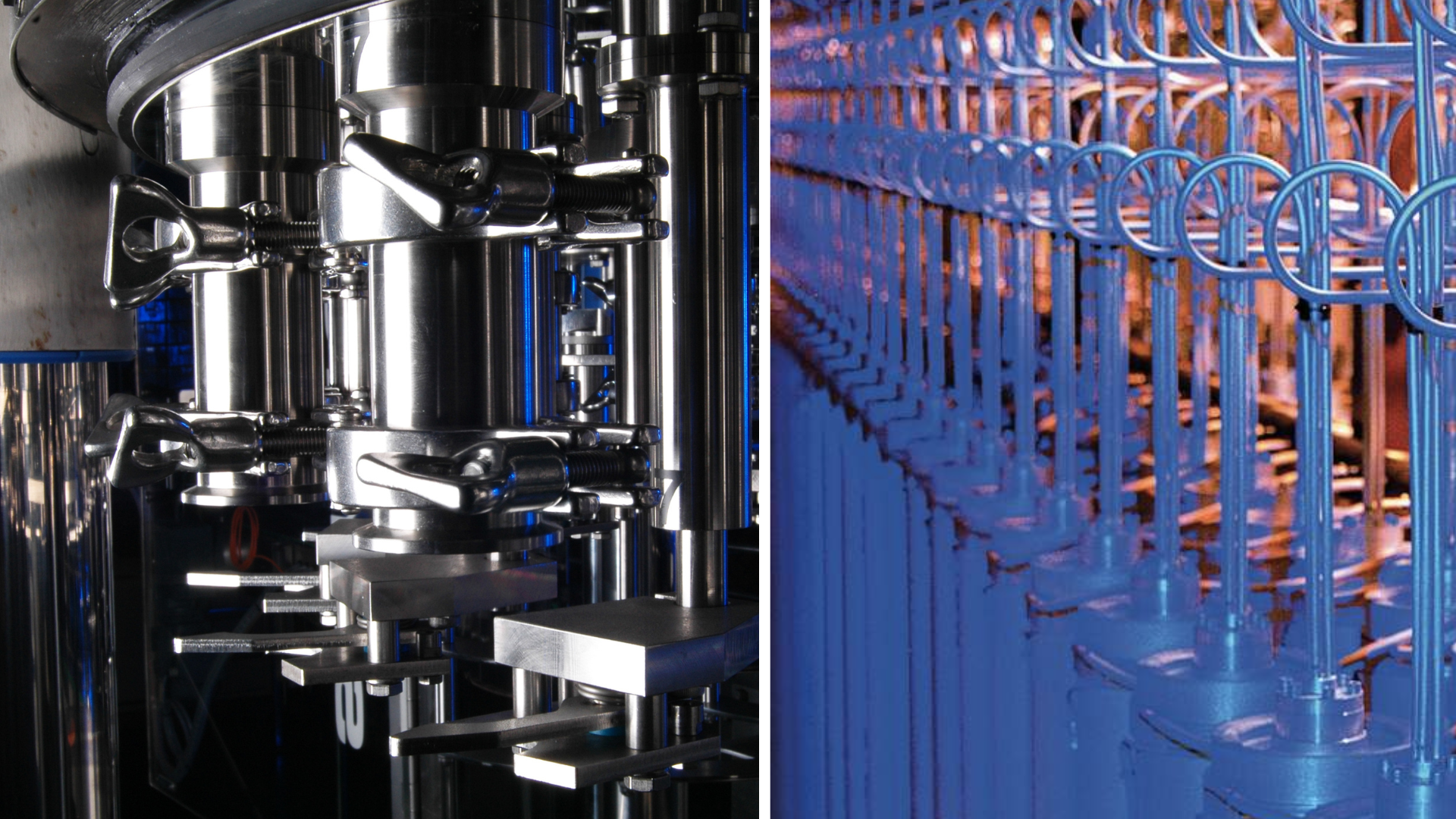
The core of the current tension lies not in the mining of yellowcake, but in the alchemy of conversion and enrichment. Historically, Russia’s Tenex (a subsidiary of Rosatom) provided nearly 40% of the world’s enrichment capacity. When the sanctions began to bleed into the supply chain, the immediate result wasn't a sudden spike in uranium mining output—it was a frantic re-tooling of Western centrifuge capacities.
However, scaling enrichment is not like scaling software, where AI-driven models often struggle to scale effectively, leading to the hidden operational reality of why most AI affiliate funnels fail at $10k MRR. It requires massive, energy-intensive facilities (specifically, gaseous diffusion or the more efficient gas centrifuge plants) that take years to permit, build, and reach steady-state operations. On forums like the Nuclear Engineering International discussion boards and specialized subreddits like r/UraniumSqueeze, the sentiment has shifted from "HODL" optimism to a cold, hard focus on SWU (Separative Work Unit) prices.
"The math looks fine on paper until you actually try to source HALEU (High-Assay Low-Enriched Uranium) for your next-gen SMR project," one senior engineer commented on a technical mailing list last month. "We’re seeing a massive gap between the 'green-lit' political announcements and the reality of getting a contract signed with a domestic enricher who is already booked through 2032."
This is the operational reality of 2026: The "nuclear renaissance" is being throttled by a lack of infrastructure, paralleling the broader energy landscape where analysts continue to debate if sodium-ion is truly ready to replace lithium. Utilities are finding themselves in bidding wars for capacity that technically doesn't exist yet, leading to what some analysts call "ghost contracts"—agreements that are essentially bets on the successful commissioning of plant expansions that have yet to clear the regulatory hurdles of the NRC (Nuclear Regulatory Commission) or its international counterparts.
Field Report: The Procurement Hangover
Talk to any procurement lead at a major U.S. or French utility, and you won't hear about the "energy supercycle." You will hear about "inventory opacity." Since the beginning of the year, the reluctance of secondary market participants to disclose their true stockpiles has created a trust vacuum.
During a recent industry gathering in Vienna, the consensus among mid-level managers was surprisingly bleak, highlighting a level of professional uncertainty similar to why more startups are currently trading full-time CEOs for fractional leadership models. The "just-in-case" inventory strategy has forced companies to hold three to five years of fuel on hand, effectively taking millions of pounds of U3O8 off the market and locking it away in warehouses. This creates a feedback loop: lower liquidity drives higher spot prices, which scares utilities into buying even more to hedge against future volatility, driving prices higher still. It is a classic liquidity trap, but with radioactive material.
Counter-Criticism: The "Bubble" Narrative
There is, of course, a vocal contingent of contrarians who argue that the "supercycle" narrative is a hallucination born of panic. Critics, including several prominent energy-focused short-sellers on Hacker News, argue that the market is severely underestimating the elasticity of secondary supply.
"The demand for uranium isn't growing at a rate that justifies a permanent, structural shift," notes a prominent energy analyst who has been skeptical of the nuclear resurgence. "We are looking at a supply-side squeeze created by policy, not by a massive, global rollout of new nuclear power. If Japan decides to restart more reactors or if China hits a speed bump in their nuclear build-out, the narrative collapses. We’re one policy pivot away from an inventory glut."
This argument rests on the idea that nuclear expansion in the West is still largely aspirational. For every new SMR (Small Modular Reactor) design that gets a regulatory nod, there are three that are stuck in the "valley of death"—the period where initial capital is exhausted, but public-private funding hasn't yet arrived. The failure of several pilot projects in 2025 to meet their initial operational milestones has left a bitter taste in the mouths of institutional investors who are now much more selective about where they park their capital.
The Human and Social Cost of Energy Security
Beyond the spreadsheets and the spot prices, there is a tangible social friction. The communities surrounding prospective mining sites in the American West and Australia are once again in the crosshairs of the "strategic necessity" argument. In the 1970s, it was about energy independence from OPEC; in 2026, it is about "geopolitical decoupling from autocratic regimes."
The messaging from state-level policy makers is consistent: Mining in our backyard is the patriotic alternative to dependence on foreign enrichment. But the reality on the ground is far more nuanced. Local opposition movements—often citing environmental legacy issues from the Cold War era—are becoming increasingly sophisticated. They aren't just using local town halls; they are coordinating across digital platforms, using GIS data to monitor exploration permits and sharing legal templates to challenge water rights in court.
The "adoption friction" here is immense. Even if the market signal for uranium is screaming "more supply," the political and environmental "no" is becoming louder. This is a critical edge case for the supercycle theory: Can a market truly enter a multi-decade supercycle if the social license to operate is perpetually shrinking?

The Infrastructure Crisis: A System Held Together by Duct Tape
If you look at the technical debt within the nuclear supply chain, it resembles a legacy IT system that hasn't been refactored in three decades. Much of the logistics infrastructure—the casks, the transport protocols, the specialized rail networks—is aging. The industry is currently facing a "brain drain" of the personnel who actually know how to manage the nuances of fuel cycle logistics.