
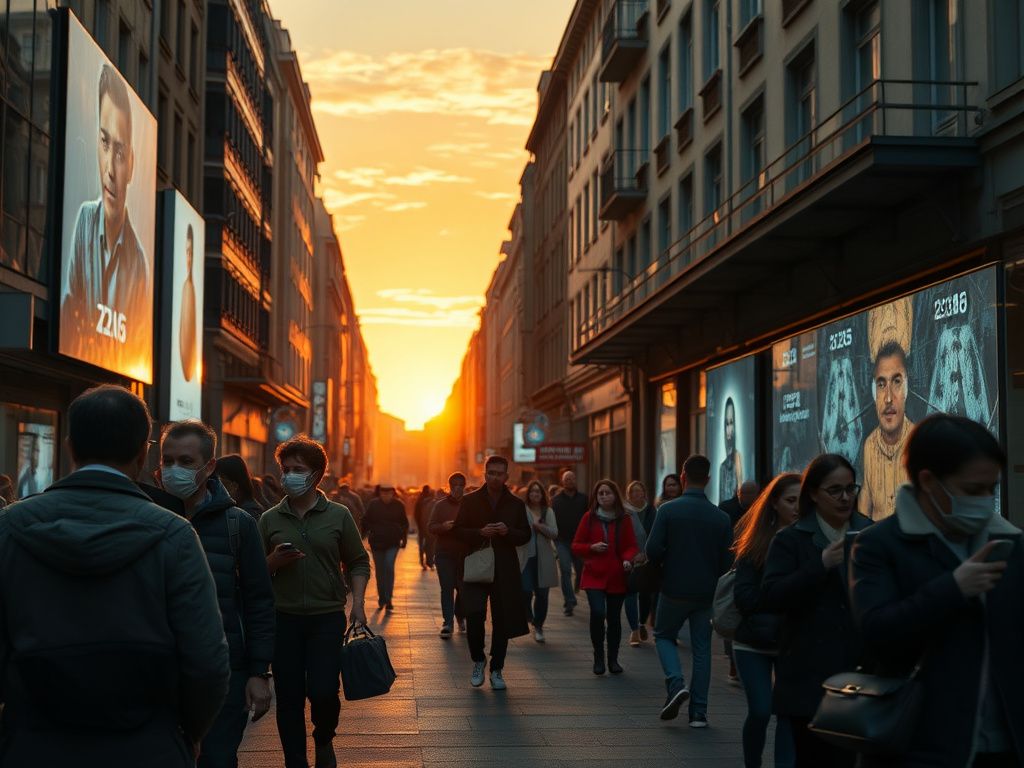
The 7 Unseen Global Shifts of 2026 That Started Changing Everyday Life Before Most Institutions Noticed
Near Atocha Station in Madrid this summer, a delivery rider dragged his scooter into the shadow of a pharmacy entrance and just sat there for a while.
Nobody paid much attention to him.
It was around 3:30 in the afternoon. The heat had flattened the street. Tourists still moved through the center of the city, but slower than usual, stopping constantly for water or shade. Even traffic sounded duller somehow.
A few years ago people still talked about climate change mostly through forecasts and future timelines. By 2026, in parts of southern Europe at least, it started feeling less theoretical than logistical.
How long can people work outside? Can trains handle prolonged heat? How many neighborhoods lack cooling infrastructure? At what temperature does a city stop functioning normally for several hours a day?
The strange thing is that this shift happened gradually enough that many people barely noticed how much daily behavior had already adapted around it.
That has been true of a lot of things lately.
The biggest changes of 2026 often arrived quietly first — through habits, moods, and routines — before they fully appeared in headlines.
1. Heat Changed the Physical Rhythm of Cities
In Athens, municipal authorities expanded public cooling centers after repeated heat emergencies. Parts of Italy and Spain adjusted work schedules during severe summer conditions. France increased heat preparedness planning following consecutive years of record temperatures.
None of these changes individually looked historic.
Together they did.
According to the Copernicus Climate Change Service, 2023 and 2024 ranked among the hottest years ever recorded globally.
Source: https://climate.copernicus.eu/
The World Bank’s Groundswell report estimated that climate pressures could displace more than 200 million people internally by 2050 under severe warming scenarios.
Source: https://www.worldbank.org/en/topic/climatechange/publication/groundswell-preparing-for-internal-climate-migration
But honestly, the statistics feel less memorable than certain ordinary observations.
Construction workers clustering near shaded areas earlier in the day. Restaurants shifting outdoor seating later into the evening. Delivery schedules quietly reorganizing around temperature instead of traffic.
Cities are not simply “getting warmer.”
They are beginning to reorganize themselves physically around heat stress.
That is different.
2. AI Entered Professional Life So Quietly That Many People Still Pretend It Hasn’t
Earlier this year, a university lecturer in Amsterdam told The Guardian that detecting AI-generated student writing had become “less about catching cheating and more about redefining what authorship means now.”
Source: https://www.theguardian.com/
That line stayed with me because it captures something broader happening across white-collar work.
AI systems are no longer experimental tools in many industries. They are infrastructure.
Not officially always. Culturally, people still speak about them with hesitation. But operationally, dependence arrived fast.
Law firms summarize documents through language models. Architects generate concept images automatically. Recruiters filter candidate materials with AI-assisted systems. Junior developers debug through copilots all day long.
McKinsey estimated generative AI could automate substantial portions of knowledge-work tasks across multiple sectors.
Source: https://www.mckinsey.com/capabilities/quantumblack/our-insights/the-economic-potential-of-generative-ai
The technology integrated faster than workplace identity adapted around it.
That mismatch creates strange moments.
A software engineer I met in Warsaw this spring described feeling “simultaneously faster and less certain” while using AI-assisted coding systems daily.
Then he immediately changed the subject and started talking about rising rents in the city center instead.
That also feels characteristic of 2026 somehow. People touch enormous changes briefly, then move away from them because there are already too many large changes happening simultaneously.
3. Japan and South Korea No Longer Feel Socially Distant From the West
For years, Western discussions about Japan often carried a subtle undertone of distance: their demographic problems, their small apartments, their low birth rates, their social withdrawal.
Increasingly, those patterns feel less culturally isolated.
South Korea’s fertility rate fell to approximately 0.72 births per woman in 2023 according to Statistics Korea.
Source: https://kostat.go.kr/portal/eng/index.action
Japan recorded fewer than 800,000 births in 2022.
Source: https://www.mhlw.go.jp/english/database/db-hh/
But the atmosphere surrounding these numbers matters as much as the numbers themselves.
Last winter in Tokyo, I spent several evenings walking through residential neighborhoods west of Shinjuku where newer apartment buildings seemed designed around temporary adulthood: minimal storage, small kitchens, narrow balconies, very little suggestion of permanence.
The buildings did not feel depressing exactly.
Just provisional.
And increasingly, parts of Berlin, Toronto, Seoul, and London feel emotionally similar in subtle ways: more renters, fewer long-term assumptions, smaller domestic spaces, delayed family decisions.
Tokyo used to feel futuristic partly because it seemed emotionally disconnected from Western urban life.
Now it mostly feels early.
4. The Internet Became Smaller Socially Even While Expanding Technically
A musician in Chicago told Rolling Stone earlier this year that she no longer thinks about “going viral” because maintaining a smaller paid community feels more stable and psychologically manageable.
Source: https://www.rollingstone.com/
That mindset appears increasingly common online.
The internet still looks enormous publicly. But many users now spend most meaningful interaction inside smaller spaces: Discord servers, private chats, subscription communities, group feeds, closed circles.
Pew Research studies throughout the 2020s repeatedly showed declining trust in large social platforms, especially among younger users concerned about privacy and mental-health effects.
Source: https://www.pewresearch.org/
At the same time, public platforms increasingly feel exhausting in ways users struggle to describe precisely.
Not always hostile. Just relentless.
Sometimes scrolling through major social platforms now feels less like social interaction and more like standing inside a crowded airport terminal where every screen is trying to demand attention simultaneously.
That sentence probably sounds exaggerated until you spend several uninterrupted hours online.
Then it starts feeling fairly literal.
5. Burnout Changed How People Organize Their Lives
There was a period where burnout still sounded temporary. Fixable.
Take time off. Practice boundaries. Disconnect more.