The LEO (Low Earth Orbit) environment has shifted from a scientific frontier to a high-stakes industrial parking lot, much like how experts are now Stop Resetting Routers: How Tech Pros Are Charging Premium Fees for Wi-Fi 7 Optimization in terrestrial networks to manage similar high-stakes infrastructure. As we move through the second quarter of 2026, the promise of "global ubiquitous connectivity" has hit the hard reality of orbital physics and archaic legal frameworks. We are no longer talking about the risk of collisions; we are talking about a systemic paralysis of orbital utility, a problem mirrored in industries where Why Decentralized Labs Are Becoming the Biggest Cybersecurity Weak Point of 2026 threatens critical operational stability.
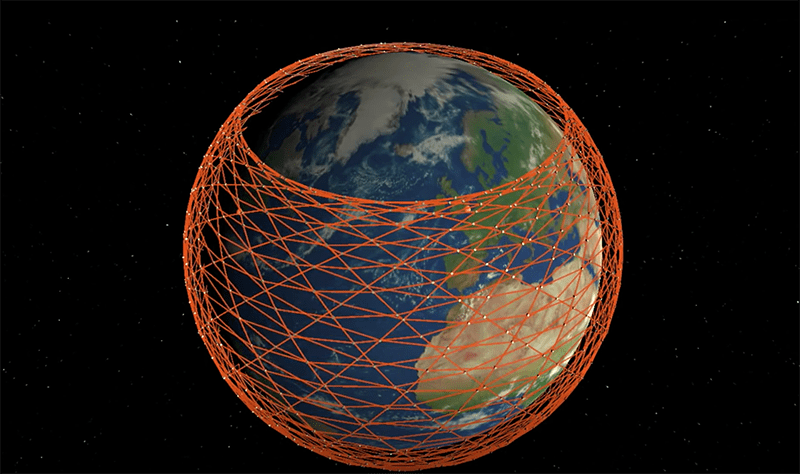
The 2026 space law crisis isn't about one company or one nation. It is a collision between the 1967 Outer Space Treaty—a relic of the Cold War designed for sovereign explorers—and the commercial reality of massive, autonomous satellite swarms. When the FCC and the ITU (International Telecommunication Union) approved the current generation of mega-constellations, they operated under the assumption of "orbital lanes." Today, those lanes are indistinguishable from gridlocked urban highways during rush hour, only with closing speeds of 15 kilometers per second.
The "First-Come, First-Served" Fallacy
At the heart of the current crisis is the spectrum and orbital slot allocation process. The ITU operates on a filing system that effectively rewards "paper satellites"—constellations that exist in regulatory documents long before they are launched. In 2026, we are seeing the logical conclusion of this: companies and states are hoarding orbital real estate, just as How Tokenized Real Estate Is Redefining Passive Income in 2026 has transformed the way investors approach land rights on Earth.
Engineers at major aerospace firms, speaking on condition of anonymity, describe the situation as a "resource game of chicken." One lead systems engineer at a mid-tier satellite startup put it bluntly on a private Slack channel for industry professionals: "We aren't designing for reliability anymore; we're designing for regulatory compliance. If we don't put a functional transponder in that specific shell, someone else will claim it, and we lose our market access forever."
This culture of "fill it or lose it" has created a massive incentive for the deployment of "zombie satellites"—units that have reached end-of-life or experienced critical bus failures but remain in the shell to hold the slot. Under the current interpretation of international law, the decommissioning of a non-functional satellite is a technical mandate, but in practice, it is treated as a strategic vulnerability.
Real Field Report: The "Shell 4-B" Incident
In March 2026, a cascading failure in a major communications constellation’s propulsion module led to a loss of attitude control for 42 satellites in the same orbital shell. The operator, under immense pressure from both internal stakeholders and international regulators, refused to initiate an immediate deorbit sequence because doing so would have technically breached their license requirement to maintain a minimum density in that shell.
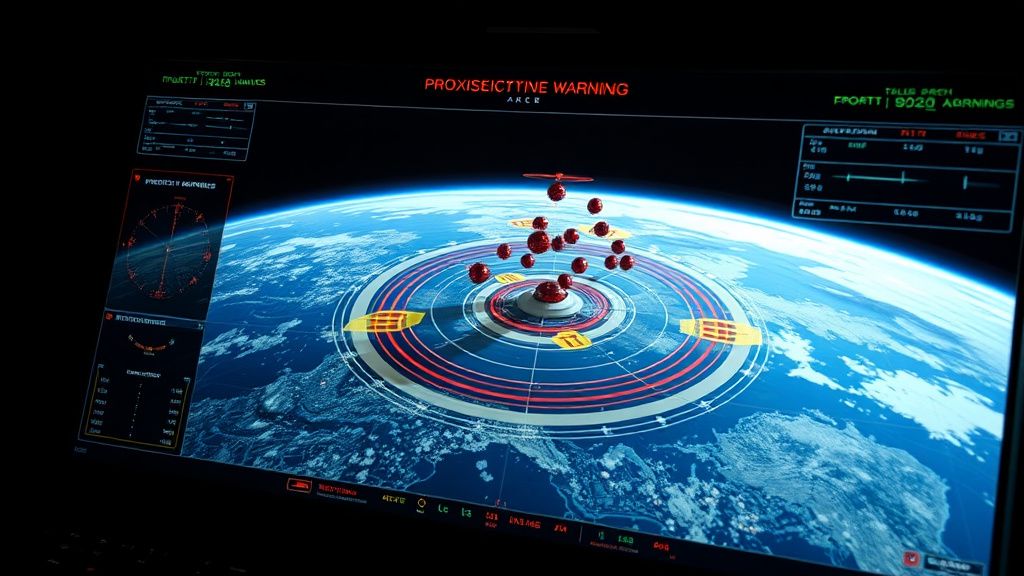
For six days, these "dead" satellites drifted, narrowly missing active assets from a competitor’s fleet. The situation was resolved only when an automated proximity sensor alerted the rival constellation’s AI-driven system, reminding stakeholders that even in space, automated How B2B Exporters Use ERP Systems to Scale Margins Through Global Arbitrage is essential for maintaining control over complex global logistics. The cost? A significant percentage of fuel, effectively shortening the mission life of that competitor’s satellite by six months.
This isn't just a technical glitch; it is an emerging economic war. When one company’s failure forces another’s fuel consumption, who pays for the lost lifespan? There is no legal precedent for "orbital torts" on this scale.
The Algorithmic Commons and the "Tragedy of the Heavens"
The 2026 crisis is also a story about the failure of automated traffic management, a challenge that echoes why Why Decentralized Energy is Changing the Future of Utility Giants has become such a contentious topic for centralized infrastructure providers. Each mega-constellation operator uses proprietary "black box" algorithms to manage their own collision avoidance. When an operator’s satellite detects an incoming object, it maneuvers. But when the "object" is another autonomous constellation, you end up with two AI agents executing contradictory evasive maneuvers based on different sensor data.
This is the "algorithmic dance of death." In a GitHub issue thread tracked by space situational awareness researchers, a debate broke out regarding the "non-cooperative maneuver" problem. A lead dev noted:
"The problem isn't that we don't know where the other guys are. The problem is that our maneuver logic assumes they are static, and their logic assumes we are static. We’re both trying to avoid the same volume of space simultaneously, which often puts us on a collision course after the maneuver."
There is no common API for satellite maneuvering. There is no central, real-time traffic controller for LEO. We have thousands of private agents acting in a shared public space without a standardized communication protocol.
Economic Pressure vs. Engineering Reality
The economic pressure to keep constellation costs low has led to "lean engineering." In 2026, this means thinner shielding and less redundancy in propulsion systems. When the satellite is cheap, the mission life is short, and the turnover rate is high. This creates a perpetual cycle of launch and de-orbit, increasing the density of the debris environment.
The "Kessler Syndrome"—the catastrophic chain reaction of collisions—is no longer a theoretical concern for 2050; it is a live operational risk for 2026. Insurance premiums for satellite launches have skyrocketed by 400% in the last 24 months, with underwriters now demanding "deorbit assurance bonds" that many startups simply cannot afford. This has effectively created a barrier to entry, consolidating the space industry into a handful of massive entities that can afford the regulatory and insurance overhead, while smaller innovators are priced out of the sky.