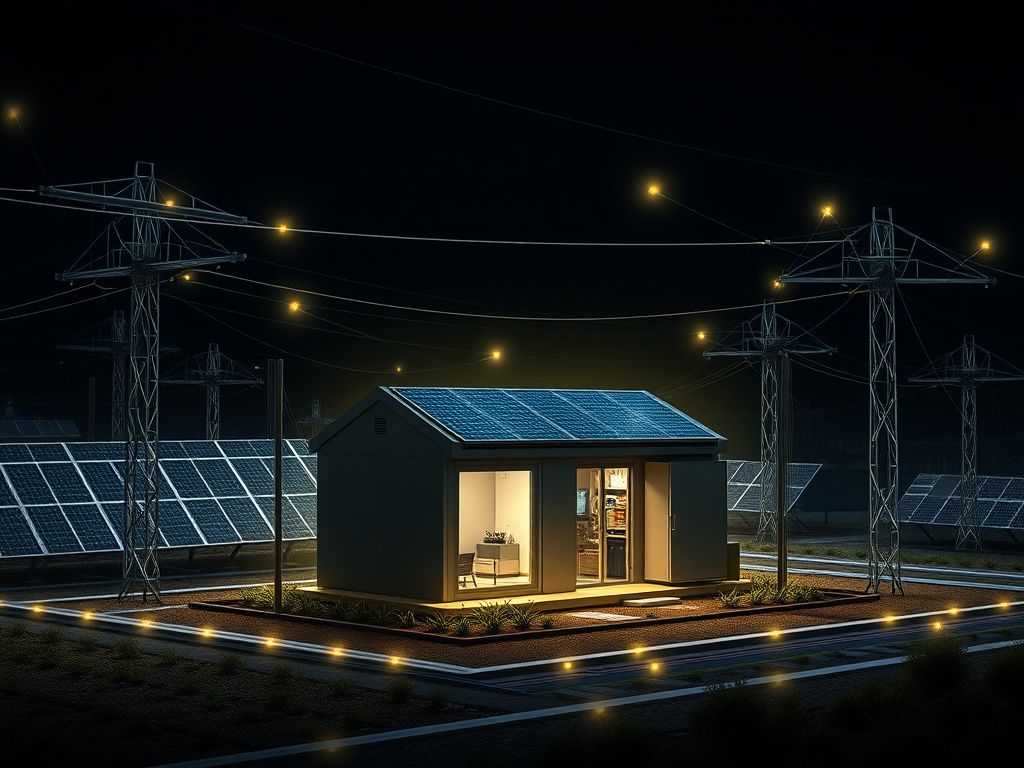
The traditional utility model—a centralized, unidirectional flow of electricity from massive, state-sanctioned power plants to passive consumers—is suffering from a terminal case of structural obsolescence. We are witnessing a silent erosion of the "utility monopoly" as micro-grids, prosumer-led solar arrays, and battery-buffered neighborhood networks turn legacy infrastructure into stranded assets. This shift isn't just about clean energy; it is a fundamental reconfiguration of the power-economic landscape where the customer is becoming the infrastructure.
The Death of the "Baseload" Myth
For decades, the utility business was simple: forecast demand, build a massive plant, transmit power over long distances, and charge a regulated rate of return. This was the "Rate Base" model. Utilities loved it because it was capital-intensive—the more concrete and copper you poured, the more profit you could legally justify to regulators.
However, the rise of behind-the-meter (BTM) generation has fundamentally broken this feedback loop. When a commercial complex or a residential community installs a micro-grid—solar panels paired with industrial-scale lithium-iron-phosphate (LFP) storage—they cease to be "customers" and become "non-consumers."
The problem for the utility giant is the "Death Spiral." As wealthy early adopters and businesses leave the grid or drastically reduce their consumption, the fixed costs of maintaining the aging, massive transmission grid must be spread across a smaller base of users. This drives rates up for those who cannot afford to defect, which in turn incentivizes even more people to install their own micro-grids. It is a classic feedback loop that legacy utility CFOs are terrified of, often discussing it behind closed doors as an "existential revenue volatility risk."
Operational Reality: The "Dumb Grid" vs. The "Smart Mesh"
The current grid was designed to be "dumb." It doesn't know where the power goes; it just pushes it in one direction. Micro-grids, conversely, are software-defined entities. They require advanced micro-grid controllers (MGMCs) to manage frequency, voltage, and phase synchronization, effectively acting as mini-utilities.
Technically, this sounds elegant. In the field, it is a nightmare of integration.
On platforms like the IEEE Power & Energy Society forums or various GitHub repositories dedicated to OpenADR (Open Automated Demand Response), developers and engineers are locked in a constant battle with legacy hardware. Many municipal grids still rely on SCADA systems designed in the 1990s, often leaving them vulnerable to the Why Municipal Bonds Face a Looming 2026 Credit Crisis that threatens aging infrastructure. Attempting to get a modern micro-grid controller to "talk" to a 30-year-old utility transformer without triggering a protective trip or a voltage spike is a common point of failure.
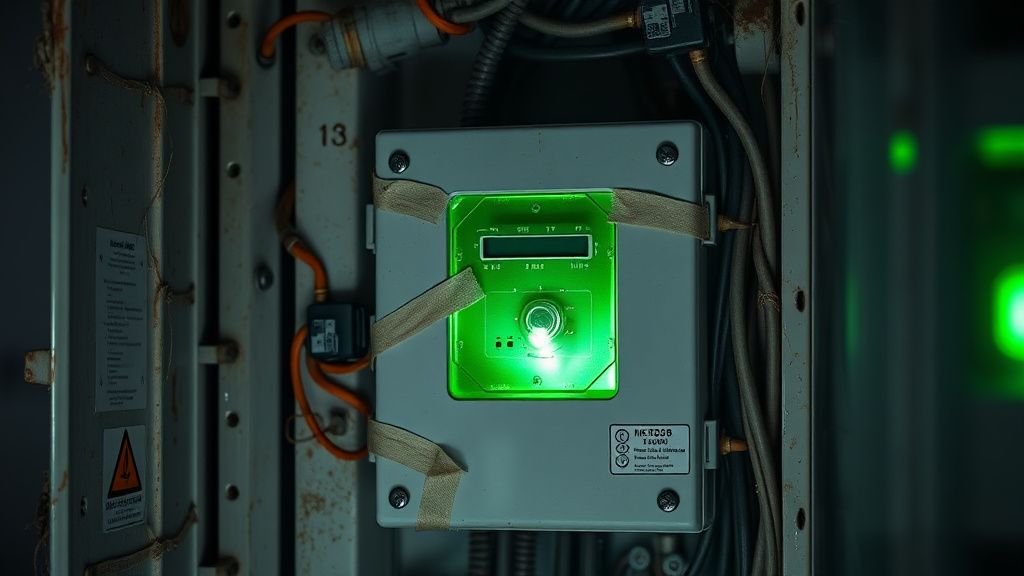
“The UI looks polished, but the backend is held together by hope and proprietary serial cables,” one lead engineer commented on a recent Reddit thread regarding a failed municipal micro-grid rollout in the Midwest. This "workaround culture" is defining the industry. Technicians are frequently forced to deploy "bridge" devices—custom-built Raspberry Pi-based protocol converters—to force legacy equipment to accept modern data standards, a task that has become increasingly complex as explained in Why Running a Home VPN Server Is Harder Than You Think in 2026.
Real Field Report: The Brooklyn Micro-grid Failure
Consider the much-hyped Brooklyn Micro-grid project. It was the poster child for peer-to-peer (P2P) energy trading using blockchain. On paper, it was revolutionary: neighbors selling excess solar power to each other without a utility middleman.
In practice? It struggled against the "regulatory wall," a similar challenge to the one explored in The 2026 Pension Crisis: Why Global Retirement Systems Are Facing a Tipping Point, where structural legacy systems fail to adapt to modern needs. The local utility was legally obligated to maintain the poles and wires but was barred from profiting from the energy transactions happening on them. When the project tried to scale, it hit a wall of interconnection fees and "standby charges" designed specifically to protect the utility's business model. Users found themselves dealing with "API friction"—where the smart meter data wouldn't sync with the trading platform, leading to manual accounting errors that made the system more expensive than just buying from the grid.
The lesson was clear: technology is the easy part. The real battle is the interconnection queue. In many jurisdictions, wait times for a micro-grid to be legally allowed to plug into the local distribution loop can take 18 to 24 months, effectively killing the ROI for smaller projects.
The Economics of Stranded Assets
Utility giants are currently sitting on billions of dollars in "stranded assets"—power plants and transmission lines that have been paid for but have not yet reached the end of their accounting life. If a utility is forced to retire these early because a local micro-grid cluster has made them redundant, the company has to write off those assets.
This leads to intense lobbying against "net metering." Utilities have spent millions on astroturfing campaigns, framing solar owners as "subsidized by the poor" who are allegedly getting free infrastructure services. It is a classic move of "regulatory capture," where the incumbent uses the threat of systemic instability to force the regulator to hobble the competition.
Counter-Criticism: Why Micro-grids aren't the Silver Bullet
It is critical to acknowledge that the "Micro-grid Revolution" has its own set of catastrophic failure modes that the hype cycle ignores:
- Maintenance Deficit: A micro-grid isn't a "set it and forget it" appliance. It requires a local team of electricians and software engineers to manage battery degradation, inverter failures, and firmware updates. When the system fails, who fixes it? In many cases, it becomes a "zombie grid"—a local cluster that worked for two years until a capacitor popped, and now everyone is back on the main utility grid, paying double because they have a useless, broken asset on their roof.
- The "Island" Trap: During an extended winter event, a micro-grid's solar array will almost certainly underperform. If the battery capacity isn't perfectly sized for a 7-day "dark" streak, the user is left in the cold. Critics argue that we are trading the reliability of a massive, redundant national grid for a series of fragile, poorly maintained "islands."
- Security Vulnerabilities: A grid managed by software is a grid that can be hacked. There have been documented "proof-of-concept" attacks on distributed inverters where malicious firmware updates could cause a synchronized "frequency trip," potentially damaging local distribution transformers.