
The promise of the 20th-century social contract was simple: work for thirty years, pay into the pot, and the next generation will sustain your retirement through their own contributions. It was a Ponzi-adjacent structure that relied on a fundamental, demographic bedrock—a perpetually expanding base of young workers supporting a shrinking, aging peak. As we head into the second half of 2026, that bedrock has not just cracked; it has dissolved into a fine, intractable dust.
Across the G7 and increasingly within the emerging economies of East Asia, the "Pension Winter" is no longer a theoretical fiscal risk discussed in IMF white papers. It is a lived, operational reality. When the South Korean government announced its "emergency solvency adjustment" in February, it didn't just slash projected payouts; it triggered a localized bank run on private pension funds, a signal that trust in the state-managed machinery of retirement has reached a breaking point.
The Math of Institutional Failure
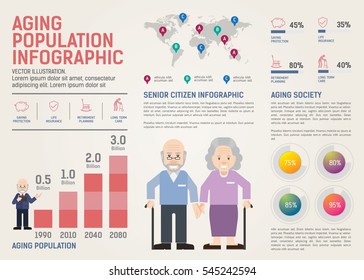
At the heart of the crisis is the simple ratio of contributors to beneficiaries. In 1960, the dependency ratio in most developed nations hovered around 5:1. By 2026, in countries like Japan, Italy, and increasingly Germany, that number has collapsed toward 1.5:1.
Economists call this the "demographic cliff," but for a systems analyst, it is a catastrophic failure of scaling. Pension systems are essentially massive, slow-moving compute jobs where the inputs (tax revenue from wages) must equal the outputs (payouts to the elderly). When the input rate declines while the liability duration increases—thanks to medical advancements keeping people alive into their late 80s—the system hits a hard stop.
We have reached the point where, in several major jurisdictions, the interest earned on sovereign wealth funds is no longer sufficient to cover the gap. Governments are now faced with a "Trilemma of Despair": raise taxes on an already depleted and shrinking workforce, delay retirement ages to the point of social unrest, or slash benefits and accept a surge in elderly poverty. Most are doing all three, but none of these levers are working as intended.
The Real-World Friction: Why Workarounds Fail
The "workaround culture" has emerged as a direct response to institutional instability. In Japan, the phenomenon of karoshi (death by overwork) has given way to rougo-haka (retirement bankruptcy). We are seeing a massive shift in human behavior: the "gig-ification" of the elderly.
I recently spoke with a consultant based in Tokyo who tracks labor participation among those over 75. His data suggests that nearly 40% of this cohort is engaged in "marginal labor"—courier services, security details, and clerical support—not out of necessity for activity, but for survival. This creates a secondary systemic friction: the elderly are now competing with the youth for low-skill entry-level jobs, further depressing wages for the very generation expected to fund the future of the state.

On platforms like Reddit and various financial forums, the discourse is no longer about "how to optimize my 401(k)." It’s a recurring, bitter refrain: "Why should I pay into a system that I know will be insolvent by the time I am 60?" This loss of faith is leading to widespread tax evasion and a migration of capital into non-traditional assets—including exploring if social copy-trading is actually profitable in the 2026 reality check, or moving funds into crypto and offshore real estate—further starving the national systems of the liquidity they need to survive the year.
The Broken Promise: Institutional Perspectives
The institutional response has been a masterclass in obfuscation. In the United Kingdom, the Department for Work and Pensions has repeatedly updated its "solvency roadmaps," which critics point out are little more than glorified Excel projections that ignore the reality of stagnating productivity growth.
Consider the "2026 Pension Realignment" controversy. Internal leaks from a major European pension fund management firm revealed that their internal stress tests—the ones not shown to the public—modeled a "Systemic Liquidity Event" (SLE) if fertility rates in the region dropped below 1.2. They did, and the fund didn't pivot. Instead, it doubled down on high-risk, illiquid private equity investments to "chase yield," a move that has left thousands of pensioners tied up in funds they cannot liquidate.
"The reality is that we are holding these systems together with duct tape and accounting tricks. Every 'adjustment' is just a way to kick the can five years down the road, hoping that some miracle in AI-driven productivity will somehow replace the missing human workers. It won't." — Anonymous Senior Analyst, European Central Bank feedback thread, March 2026.
Case Study: The Italian Paradox
Italy serves as the ultimate petri dish for this collapse. In the first quarter of 2026, the Italian government attempted to implement an "intergenerational solidarity tax," effectively taking a portion of the income of those under 30 and directly transferring it to cover the pensions of those over 70.
The social backlash was immediate and, in some cities, violent. For the under-30 demographic, this was perceived not as solidarity, but as theft. A viral TikTok campaign, #NoFutureTax, saw thousands of young Italians documenting their inability to afford housing, food, and energy, juxtaposed against the state-subsidized pensions of a generation they felt had bankrupted the nation's future. The government eventually suspended the policy, but the trust gap has widened into a chasm.

Counter-Criticism and the Optimism Bias
Not all analysts agree that the "collapse" is inevitable. A vocal subset of neoclassical economists argues that automation and the integration of AI-driven labor will lead to a "productivity explosion." If a single worker in 2030 can produce the output of five workers in 2020, they argue, the tax base argument becomes irrelevant.