

The municipal bond market is bracing for a 2026 reckoning as a "triple threat" converges: the exhaustion of pandemic-era federal stimulus, the ballooning maintenance costs of decaying mid-century infrastructure, and the harsh reality of climate-resilient retrofitting. For investors and municipal managers, this isn't just a balance sheet issue; it is a structural failure of creditworthiness that threatens the "safe haven" status of local debt.
The Myth of Perpetual Stability
For decades, municipal bonds ("munis") were considered the bedrock of conservative portfolios, though today's sophisticated investors are exploring why institutional investors are dumping debt-based ESG for hard assets. The logic was sound: local governments could always tax their way out of a deficit, and infrastructure was a tangible asset that didn't disappear. However, that assumption is fraying. The operational reality of the 2020s is defined by the "deferred maintenance debt trap."
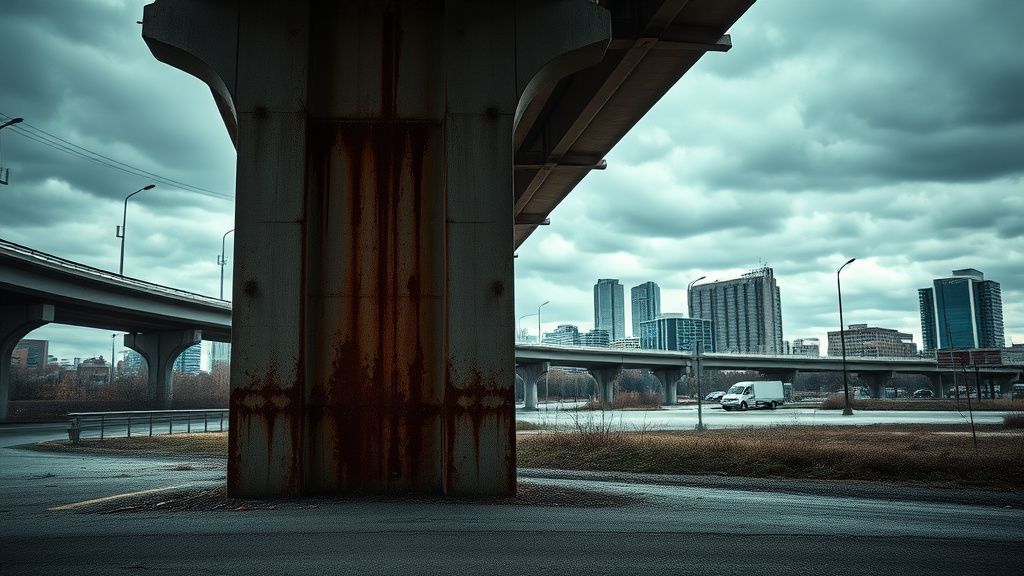
Many U.S. municipalities have spent the last thirty years pushing capital expenditure projects into the future to balance operating budgets. In the municipal bond world, this is a form of accounting arbitrage that is now coming due, much like how businesses are learning to manage capital by moving away from legacy systems or discovering how tokenized carbon credits are revolutionizing portfolio yields in 2026. When a bridge, water treatment plant, or power grid reaches its "design end-of-life," the cost to replace it is exponentially higher than the cost to maintain it. By 2026, the cumulative effect of inflation on raw materials, combined with a severe shortage of skilled municipal labor, means that many local governments will face a shortfall that cannot be bridged by tax hikes alone without triggering a mass exodus of residents.
The 2026 Convergence: Why That Year?
The 2026 deadline isn't arbitrary; it is the fiscal cliff created by the sunsetting of American Rescue Plan Act (ARPA) funds. Cities across the U.S. used these one-time federal injections to cover operational gaps that were supposed to be temporary. As these funds vanish, the underlying rot in infrastructure budgets—which was masked by the influx of liquidity—will be laid bare.
Rating agencies like Moody’s and S&P have already begun tightening their criteria for "General Obligation" (GO) bond ratings. Their models are shifting from looking at historical revenue stability to evaluating "Climate Adaptation Capability." If a city cannot prove it has a funded, actionable plan to protect its assets from extreme weather (which has become a persistent operational expense rather than a "black swan" event), its credit rating is likely to be downgraded regardless of its tax base size.
Real Field Report: The Jackson, Mississippi Precedent
The water crisis in Jackson, Mississippi, serves as a grim template for what analysts fear for 2026. It wasn't just a single event; it was a decades-long failure to service debt-funded infrastructure. The system didn't "fail" in a day; it failed after years of ignoring the "hidden costs"—the cost of not fixing a pump until the pump becomes a catastrophic liability that costs 500% more to replace.
- The Operational Reality: When a utility provider faces emergency repair costs, they stop paying down existing bonds to prioritize immediate service restoration. This triggers a technical default or a covenant violation.
- The Market Reaction: Investors who bought in for the 4% yield find their principal tied up in litigation or complex restructuring processes that last years.
"The problem isn't that the infrastructure is old; it's that the fiscal model for maintaining it assumes perpetual growth. When the growth stops, the maintenance cost becomes a suicide note for the local credit rating." — Comment from a municipal bond desk analyst on a professional Discord server.

The Structural Failure: How "Workaround Culture" Impacts Credit
In the absence of sufficient capital for major overhauls, municipal engineers have become masters of the "workaround," a trait often seen in sectors where agencies are scaling operations, much like how top firms are learning why white-label AI chatbots are the new gold rush for agencies in 2026. We see this in GitHub issues related to smart-city IoT deployments that fail to integrate with 1970s-era electrical grids, and in the Reddit threads of city subreddits where residents document "temporary" road patches that have remained for five years.
This culture of "patching" has a direct, measurable impact on bond ratings. Every time a municipality opts for a stop-gap repair instead of a systemic upgrade, they are essentially taking out a high-interest "reputational loan." By 2026, the cumulative interest on these operational workarounds will reach a tipping point where the infrastructure is no longer "investable."
Counter-Criticism: Is the "Crisis" Overblown?
Critics of the "2026 Downgrade Crisis" narrative argue that the municipal bond market has survived every historical catastrophe, from the Great Depression to the 2008 financial crisis. They point out that:
- Legislative Intervention: Federal and State governments rarely let major cities go bankrupt due to the social contagion risk.
- Asset Resilience: Local governments hold monopoly power over essential services, which provides a predictable, albeit slow, revenue stream.
However, this debate misses a crucial nuance: the cost of capital. Even if the bonds don't default, the downgrades will raise the interest rates that municipalities must pay to issue new debt. A city that once borrowed at 2.5% might find itself forced to borrow at 5% or 6%. That delta—the extra 3%—is money that should have gone toward the actual infrastructure. It is a negative feedback loop that accelerates the decay.