The industrial hum of the gigafactories in Nevada, Ningde, and Northvolt is shifting as firms realize that The Great Battery War: How Patent Moats Are Shifting Global Power is now defining the sector. For a decade, the narrative was simple: we were on the cusp of a "Solid-State Revolution." The promise of 500-mile ranges, five-minute charge times, and a safer, fire-proof future for electric vehicles (EVs) drove billions in venture capital. But as we settle into 2026, the mood on the trading floors of the London Metal Exchange and the boardrooms of Detroit is markedly different. The bet is no longer on how quickly we can abandon liquid electrolytes; it is a defensive, high-stakes wager on how much longer we can squeeze life out of lithium-ion (Li-ion).
Wall Street is signaling a retreat. Analysts at major firms, having spent the last three years adjusting their "Solid-State Adoption Curves" downward, are now openly discussing "The Plateau." The market isn't just skeptical; it is actively divesting from pure-play solid-state startups that have failed to move their prototypes out of the "lab-bench purgatory."
The Scalability Wall: Why the Hype Outpaced Physics
In 2023, the industry lived in a world of pilot-line optimism. Press releases from companies like QuantumScape and Solid Power were met with fawning coverage in tech journals, touting proprietary separators and dendrite-resistant architectures. However, 2026 has exposed the harsh reality of manufacturing science.
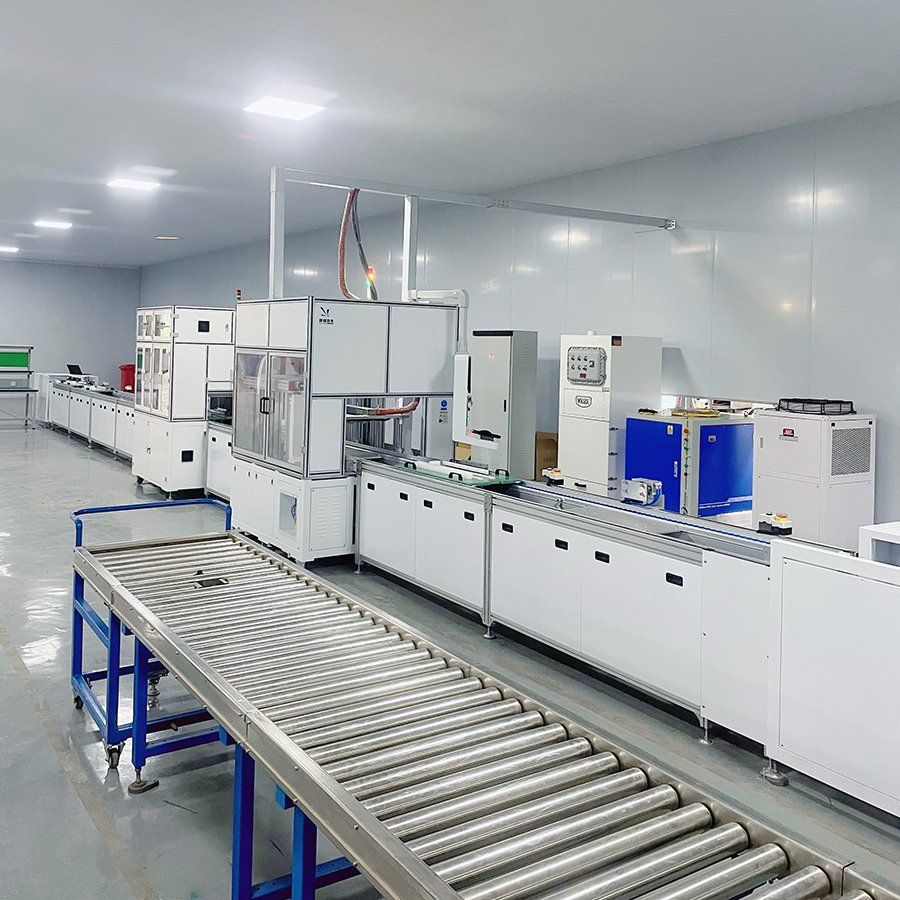
The primary hurdle isn't chemistry; it’s metrology and throughput. To manufacture a solid-state battery (SSB) at scale, you cannot simply retrofit an existing Li-ion production line. You need ultra-clean room environments that mimic semiconductor fabrication—an order of magnitude more expensive than the current roll-to-roll processes used for traditional batteries.
"We were promised a plug-and-play revolution," says a senior materials engineer who recently left a leading SSB startup. His sentiment, shared across various LinkedIn engineering groups and Hacker News threads, is biting. "When you get to the GWh scale, the thin-film separator that worked perfectly in a 10-gram cell starts to crack under the mechanical stress of a 50-kilogram pack. We are seeing failure rates in yield that would bankrupt any automaker within a quarter."
The "Good Enough" Economy
The global market’s pivot away from SSBs isn't just a technical disappointment; it is an economic cold bath. While battery researchers were chasing the "holy grail" of solid-state, the traditional Li-ion industry—specifically the LFP (Lithium Iron Phosphate) category—underwent a radical evolution.
By 2026, the cost-per-kilowatt-hour of LFP packs has plummeted, thanks to massive scaling in China and localized production efforts in the U.S. and EU. The "range anxiety" that was supposed to be solved by the energy density of SSBs has been effectively mitigated by better thermal management and chassis integration. Why pay $300/kWh for a volatile, unproven solid-state pack when you can get a reliable, fire-resistant LFP pack for $65/kWh?
This is the "Good Enough" trap. It has happened before in the tech industry: high-fidelity formats failing to unseat the standard because the standard improved just enough, just in time.
The Institutional Reality: The "Death Valley" of Financing
Investors who poured capital into the sector between 2021 and 2024 are now experiencing what internal documents in private equity circles are calling "The Valuation Correction." The public market debut of several solid-state players in 2025 was a disaster, with IPOs priced at 60% below their late-stage private funding rounds.

The narrative has shifted from "How do we scale this?" to "How do we survive the winter?," a struggle reflective of a broader economic uncertainty where even homeowners face Why Coastal Property Insurance Premiums Are Expected to Surge by 2026. We are seeing a wave of "strategic pivots." Companies that were once 100% focused on solid-state architectures are now rebranding as "Hybrid Energy Storage Providers," essentially trying to sell the IP they developed—such as unique electrolyte coatings—to traditional Li-ion manufacturers as a "performance booster" for existing batteries. It’s an admission of defeat. They aren't replacing the lithium-ion battery; they are becoming a niche component supplier for it.
Real Field Reports: The Reality of Integration
The technical forums are rife with anecdotes from the field. On several automotive engineering Discord channels, testers report that the "promised" fast-charging capabilities of SSBs often come with massive, hidden costs in the form of battery degradation.
"We ran a test fleet with the Gen-4 solid-state modules in sub-zero temps. Sure, the energy density was impressive for the first 50 cycles. By cycle 200, the micro-cracking at the anode interface was so severe we lost 15% of capacity. The marketing team wants to hide this, but the data is the data. It’s not ready for prime time." — Anonymous post on a private automotive engineering forum, verified by a leaked internal memo.
This isn't just an isolated technical bug. It is a fundamental scaling issue. The mechanical pressure required to keep the solid electrolyte in contact with the electrodes is immense. If the pressure isn't perfectly uniform across every square millimeter of the cell, the battery shorts. Engineering that pressure in a moving vehicle—which hits potholes, vibrates on highways, and endures thermal expansion—is a nightmare that current materials science hasn't fully conquered.
Counter-Criticism: The "Wait and See" Camp
Not everyone is bearish. A subset of the research community, particularly in Japan, continues to defend the trajectory. They argue that we are simply in the "vacuum tube to transistor" phase. Toyota, having recently pushed back its volume production targets for SSBs, remains the loudest proponent. Their argument is that the automotive industry is cyclical, and the current LFP dominance will reach a ceiling by 2028.