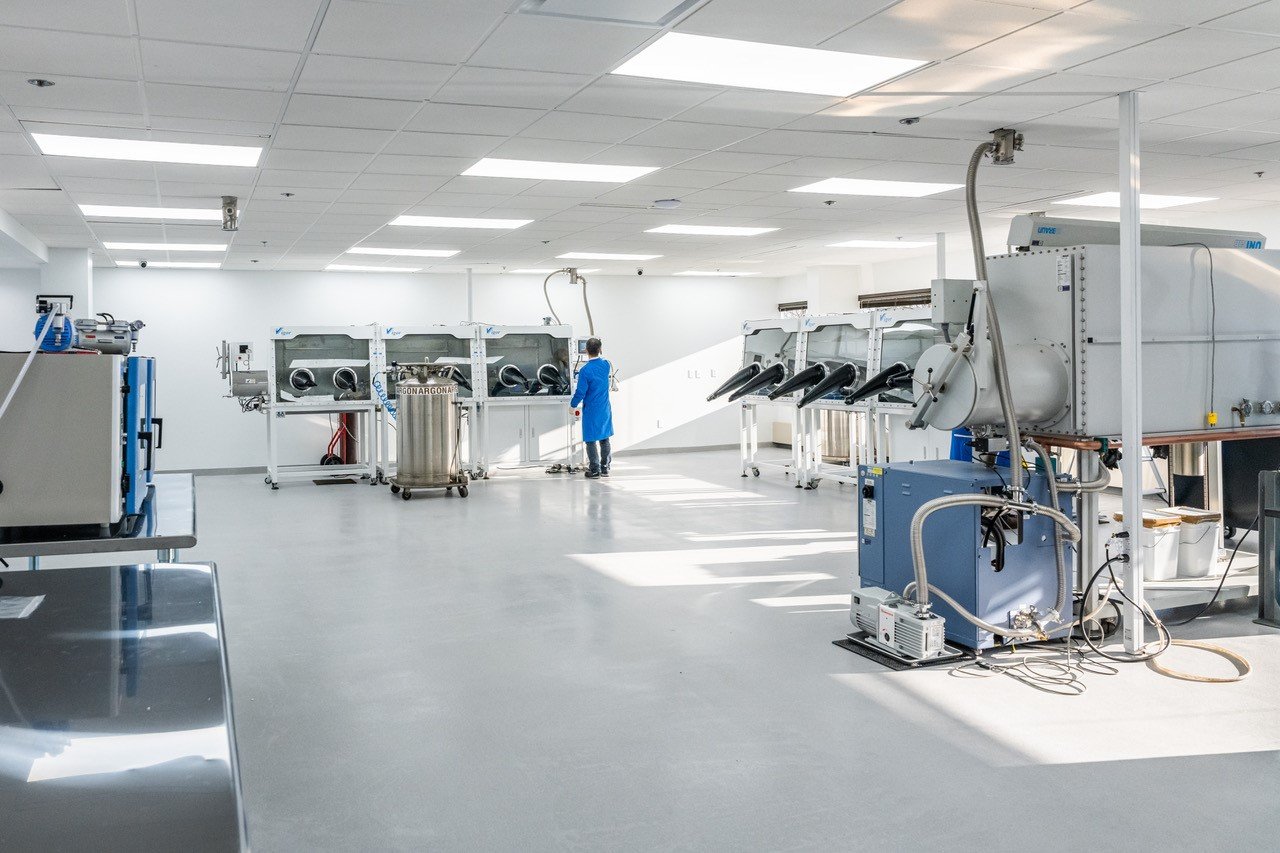
The laboratory floor at the Quantum Electrolyte Institute in Daejeon, South Korea, is quiet, save for the hum of an argon-filled glovebox. It is 2026, and the frantic, gold-rush energy that defined the 2023-2024 period of battery research has shifted. The industry is no longer asking if solid-state batteries (SSBs) work; it is asking who owns the molecular recipe for stability, and whether the geopolitical map—long anchored by lithium mining in the Lithium Triangle and refining in East Asia—is about to be redrawn by patent litigation and synthetic material sovereignty.
We are witnessing a decoupling of energy storage from traditional extractivism. As of mid-2026, the global patent landscape for solid-state electrolytes has become a battlefield where legacy auto giants, nimble material science startups, and state-backed conglomerates fight over sulfide-based glass, polymer-ceramic composites, and thin-film deposition techniques. The prize? A battery that doesn’t catch fire when punctured, charges to 80% in eight minutes, and, crucially, doesn’t rely on the same supply chain bottlenecks that defined the internal combustion engine era.
The Patent Minefield: Who Really Owns the Future?
In the first quarter of 2026, a surge of "freedom to operate" (FTO) lawsuits has paralyzed mid-tier EV manufacturers. The problem isn’t that the technology is failing; it’s that it’s too successful. By late 2025, a critical mass of patents involving sulfide-based solid electrolytes—originally pioneered by academic researchers in Japan—hit the public domain, only to be snapped up by aggressive IP holding companies.
The situation in patent courts across the Hague and Delaware is reminiscent of the "smartphone wars" of the 2010s. Manufacturers are finding that their "next-generation" solid-state prototypes infringe on patents granted as far back as 2018 that were previously ignored because they were deemed "commercially irrelevant." Now, with the scale-up to gigafactory-level production, these dormant patents have become nuclear weapons.
On the forums of Hacker News and in the deep-thread discussions on GitHub, there is a palpable sense of disillusionment. "We spent three years optimizing for energy density," writes one lead materials engineer at a Tier-1 supplier. "Now, the legal team tells us we can't ship because someone has a patent on the specific ratio of lithium sulfide to phosphorous sulfide doping used in our sintering process. It’s not engineering anymore; it’s legislative land-grabbing."
The Geopolitical Shift: Beyond the Lithium Triangle
For decades, countries like Chile and Argentina held the cards because they sat on the brine. But solid-state technology is changing the definition of "essential minerals." While lithium is still required, the form in which it is used—and the auxiliary materials (like lanthanum, zirconium, or specialized ceramics)—is shifting the power balance.
We are seeing a trend towards "Regional Sovereign Battery Clusters." Europe, realizing its precarious dependence on external supply chains, is pouring billions into "Closed-Loop Electrolyte Refining." By 2026, the EU’s Strategic Raw Materials Act has mandated that a significant percentage of battery materials for state-subsidized projects must be processed within the bloc.
However, this is not without friction. In practice, this has created a fragmented ecosystem. American manufacturers are finding it difficult to source high-purity ceramic separators from Asian markets due to tightening export controls on dual-use technology. This has led to the "workaround culture"—a desperate attempt by domestic labs to synthesize proprietary electrolytes using cheaper, earth-abundant precursors. The result? A messy, unoptimized landscape where every manufacturer has a slightly different, incompatible chemical formulation.
Operational Realities: The "Sintering Gap"
The biggest myth in the 2026 tech cycle is that solid-state batteries are "ready for prime time." When you step onto the manufacturing floor, the reality is far more fragile. The biggest obstacle remains the sintering process—the heating of powders to create a solid, continuous ceramic separator.
In real-world deployment, the rejection rate for these separators remains alarmingly high. Industry insiders at the 2026 International Battery Seminar spoke in hushed tones about "the 15% problem." Even with the most advanced roll-to-roll manufacturing equipment, 15% of the separators develop micro-fractures during the stack-and-press phase. These are not visible to the naked eye, but they are fatal. They lead to "dendrite propagation"—the lithium needles that eventually pierce the electrolyte and cause a short.
"The PR guys will tell you it’s a 'breakthrough success,'" says a former QC manager at a major Japanese battery OEM. "But if you look at the internal QA logs, we’re still running these things at 40% yield. It’s like trying to bake a thousand soufflés perfectly every time, but if one falls, the whole batch is toxic waste."
Counter-Criticism and the Sustainability Paradox
There is a loud, growing debate among sustainability advocates regarding the environmental cost of this shift. Critics argue that while solid-state batteries are safer, the manufacturing process—specifically the high-temperature sintering and the energy-intensive atmospheric controls—negates the carbon benefits of the EVs themselves for the first 50,000 miles of driving.
Moreover, the "recyclability" of these new batteries remains a massive question mark. Current lithium-ion recycling infrastructure, designed to shred and hydrometallurgically process liquid-electrolyte cells, is largely incompatible with the solid-state ceramic architectures.
"We are essentially creating a new, more complex form of 'techno-trash.' We haven't even figured out how to profitably recycle basic LFP batteries, yet we’re already pivoting to ceramic-sulfide architectures that require entirely different solvent-based separation techniques which don't currently exist at scale." — Dr. Aris Thorne, Materials Sustainability Analyst.
This "recycling debt" is a ticking time bomb for automakers who have made aggressive ESG pledges for 2030. The industry is effectively borrowing time from the environment, hoping that the chemistry will mature faster than the waste problem scales.