
Why Millions Suddenly Became Obsessed With Tracking Viral Trends & Google Searches in 2026
At 2:13 a.m., a moderator inside a private Discord server called Search Signals Elite pinned a message telling members to stop publishing articles about a celebrity breakup.
“Velocity collapsed,” the moderator wrote.
Three minutes earlier, Google Trends data for the phrase had started flattening across the U.S. and parts of Western Europe after nearly six straight hours of explosive growth. TikTok engagement was slowing too. Someone inside the server posted screenshots from TrendTok analytics showing view velocity dropping faster than expected.
Within minutes, several affiliate marketers deleted scheduled posts. A YouTube Shorts editor in Texas reportedly killed two uploads before sunrise. One SEO operator wrote simply:
“Move to blackout bags. New spike coming.”
Nobody asked what “blackout bags” meant yet.
That part almost came later now.
By 7 a.m., Google searches for blackout bags had surged enough that Amazon product trackers were already showing ranking movement in emergency-preparedness categories.
And by noon, TikTok was full of videos explaining why everyone should apparently own one.
This is what internet culture increasingly looks like in 2026: millions of people monitoring search behavior in real time, trying to predict what the rest of humanity will suddenly care about next.
Sometimes they succeed.
Sometimes they accidentally manufacture the trend themselves.
Google Trends Quietly Became Infrastructure
A decade ago, Google Trends mostly belonged to: SEO forums, newsrooms, political analysts, marketing departments.
Now it sits underneath enormous sections of the internet economy.
According to Google, trillions of searches are processed annually, while Google Trends remains one of the most widely used public tools for tracking real-time search behavior worldwide.
Source: https://trends.google.com/trends/
But the bigger shift happened after 2023, when creator-economy competition intensified and AI systems drastically accelerated content production.
Suddenly, reacting quickly to search spikes became economically valuable at scale.
Goldman Sachs estimated the creator economy surpassed $250 billion globally and could approach $480 billion by 2027.
Source: https://www.goldmansachs.com/insights/articles/the-creator-economy-could-approach-half-a-trillion-dollars-by-2027
That amount of money changes behavior.
A creator who identifies a viral trend six hours early can:
- gain millions of views,
- trigger affiliate sales,
- win algorithmic recommendation momentum,
- or land sponsorship deals before competitors react.
Missing the trend entirely can mean disappearing from feeds for days.
A social-media consultant in Austin told Fast Company that during major launch weeks he checks Google Trends “more than email now.”
Source: https://www.fastcompany.com/
Then he added something slightly embarrassing.
He admitted he wakes up at night sometimes to check whether search curves are still climbing.
“I know that sounds insane,” he said. “But if you’re late now, you’re invisible.”
TikTok Broke the Old Lifespan of Trends
One reason trend obsession exploded is because viral cycles became unbelievably short.
Research published through TikTok’s own creator-marketing systems showed many trending sounds now peak within 24–72 hours before engagement begins collapsing sharply.
Source: https://newsroom.tiktok.com/
That compression changed creator behavior dramatically.
A beauty creator in Los Angeles told Business Insider that she now keeps trend-alert notifications active overnight because “waiting until morning can literally kill reach.”
Source: https://www.businessinsider.com/
That sentence sounds ridiculous until you spend time watching how creators actually operate now.
There are TikTok creators sleeping beside charging phones with trend dashboards open. There are SEO publishers keeping Slack alerts tied directly to Google Trends spikes. There are YouTube editors monitoring Reddit posts at four in the morning because Reddit increasingly predicts Shorts engagement several hours early.
A moderator inside a large TikTok-growth Discord server described the atmosphere during major viral events as: “Basically day trading mixed with sleep deprivation.”
That might honestly be one of the more accurate descriptions of the modern creator economy.
AI Made Trend Chasing Almost Instant
Before generative AI systems became mainstream, reacting to trends still required real production time: research, editing, graphics, publishing, distribution.
Now one person can generate: articles, videos, captions, translations, thumbnails, affiliate pages
in less than an hour.
Stanford’s Human-Centered AI Institute warned in a 2025 report that generative AI systems dramatically reduced the time between “trend emergence” and “mass content replication.”
Source: https://hai.stanford.edu/
That sentence sounds technical.
The actual effect is easier to see directly.
A Reddit clip becomes: TikTok reposts, YouTube Shorts, AI-written blogs, Instagram reels, automated news summaries, and translated voiceover videos
almost immediately now.
Sometimes before the original source even understands what happened.
Earlier this year, a false rumor involving emergency blackout kits spread across TikTok partly because trend-monitoring accounts amplified unusual Google search activity before journalists verified whether any actual emergency existed.
Searches rose. Then creators reacted to the searches. Then audiences reacted to creators reacting. Then the reaction itself generated more searches.
Several analysts later described the cycle as “self-reinforcing algorithmic panic.”
Honestly, it looked closer to digital stampede behavior.
Trend Tracking Became a Form of Economic Survival
The strangest part of this culture is how normal it already feels inside digital industries.
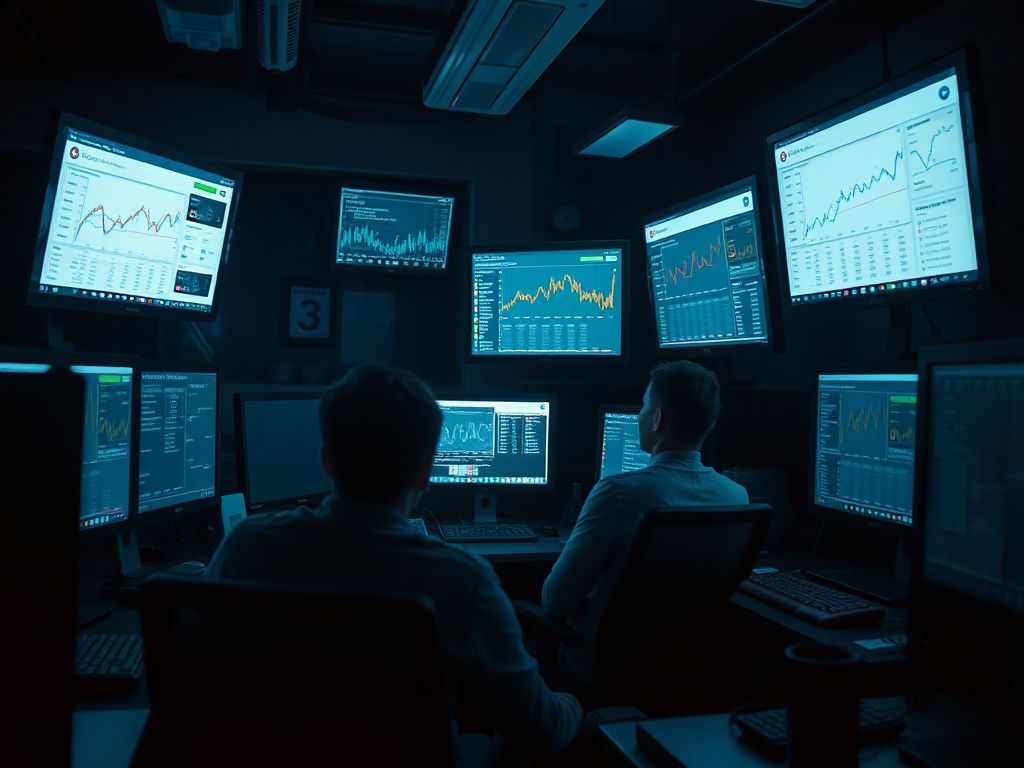
One SEO operator in Miami described his workspace during a podcast interview earlier this year: three monitors, Google Trends permanently open, TikTok Creative Center on another screen, Discord alerts running continuously, AI headline-generation tools refreshing automatically.
“We don’t really follow culture anymore,” he said. “We monitor momentum.”
That distinction matters.
Because for many online workers, trend tracking stopped being curiosity a while ago.
It became infrastructure.
A publisher misses one major search wave: traffic drops. Traffic drops: revenue drops. Revenue drops: staff gets cut.
That pressure creates extremely reactive ecosystems.
A mid-sized digital publisher told Semafor that some writers now keep trend dashboards open “basically all day” because homepage traffic increasingly depends on reacting before competitors do.
Source: https://www.semafor.com/
This changes journalism too.