
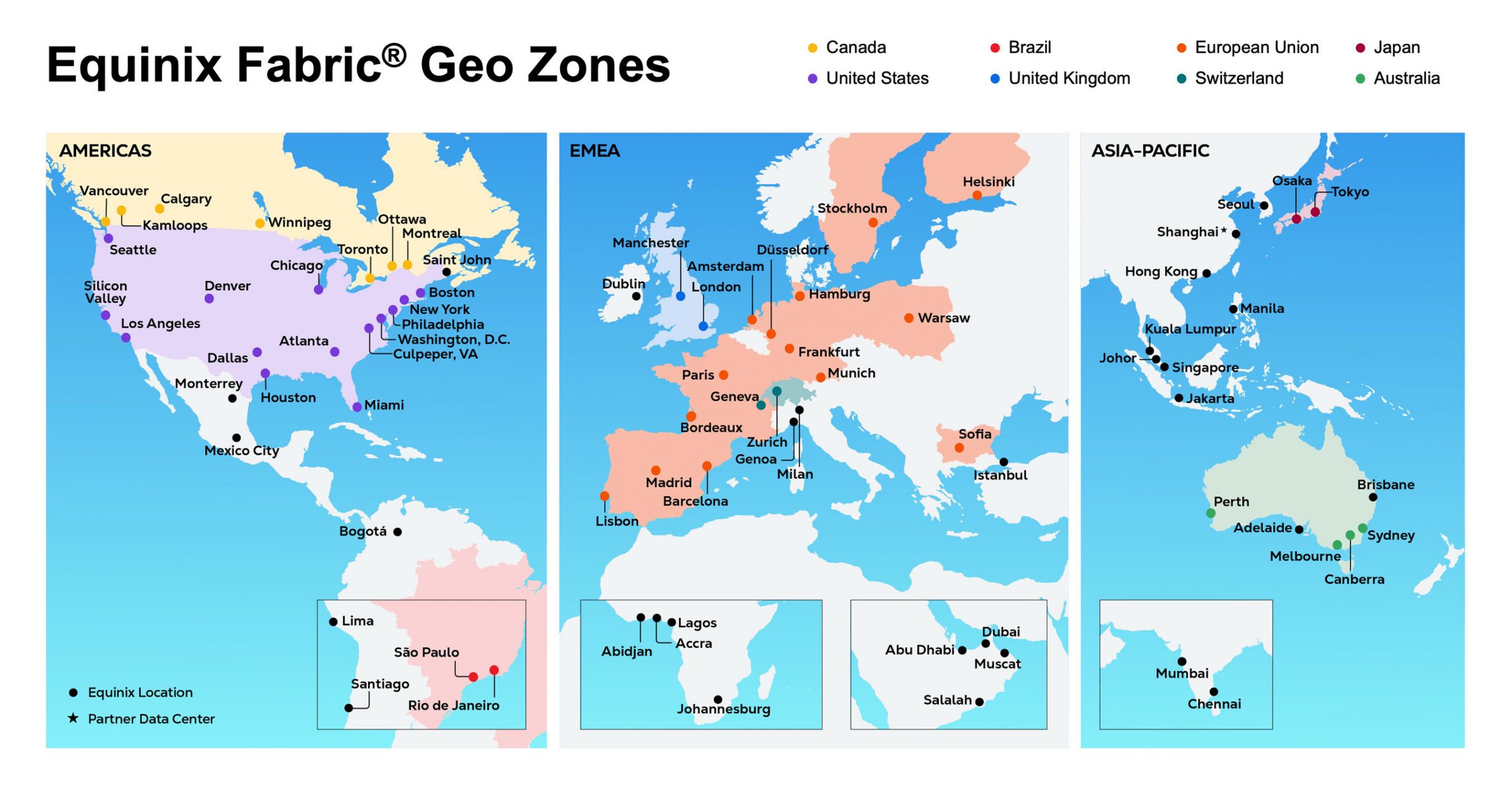
The global cloud, once envisioned as a frictionless, borderless nervous system for the planet’s economy, is officially undergoing a messy, involuntary divorce. By early 2026, the rhetoric of "data sovereignty"—a concept once relegated to dusty legal seminars and cautious EU policy briefs—has hardened into a rigid, weaponized operational reality. The vision of a "World Wide Web" has been replaced by a splintered mosaic of "data silos," where the cost of moving bits across a national boundary is increasingly measured in regulatory litigation rather than milliseconds of latency.
The Fragmented Stack
It is no longer enough to be a global hyperscaler; you now have to be a geopolitical chameleon. Engineers at firms like AWS, Microsoft, and Google are currently navigating a nightmare of "localized architecture." The goal isn't just low latency anymore; it is the physical and logical isolation of data to satisfy the demands of the "Sovereign Bloc" mandates emerging from the EU, India, and an increasingly autarkic Chinese market.
I spent the last month digging through developer forums on GitHub and internal Slack leaks from mid-tier SaaS providers, and the sentiment is uniform: the overhead is crushing. A lead infrastructure architect at a mid-sized fintech firm recently posted a thread on a private Discord, describing the reality of their 2026 roadmap:
"We aren't building product features anymore. We are building 'Regional Partitioning Engines.' Our entire deployment logic now has to check the user's passport, the server's location, the data's jurisdiction, and the encryption key's origin before a single record can be written to the DB. It’s basically distributed systems hell, but instead of CAP theorem constraints, we have 'Diplomatic Constraints.'"
The Illusion of "Local" Compliance
The technical debt here is invisible to the end user but crippling to the ecosystem. To satisfy the EU’s Data Resilience Act of 2025, many companies are deploying "Local Hubs"—miniature, redundant data centers that exist solely to keep data within a sovereign perimeter.
This isn't efficient; it is redundant and, frankly, brittle. When a security patch needs to be rolled out across these fragmented nodes, it isn't a global deployment script anymore. It’s a multi-week diplomatic exercise. If a developer accidentally pushes a global telemetry update that inadvertently scrapes data across a sovereign line, the legal teams are triggered within minutes. On a popular Hacker News thread titled “Is the Global Cloud dead?”, one senior SRE noted:
"The irony is that these sovereignty laws were supposed to protect privacy. Instead, they’ve made the systems so complex that we’re seeing more misconfigurations and data leaks than ever before. You try keeping a distributed, partitioned system patched across 14 different legal jurisdictions without breaking the user experience. You can’t."
The Economic Friction
The "Data Schism" is creating a tiered internet. Large companies—the ones that can afford the legal teams and the redundant infrastructure—are barely keeping their heads above water. Startups, however, are being throttled. The cost of entry into the global market has spiked because you can no longer build a service once and scale it everywhere.
This has led to the rise of "Workaround Culture." We see developers in smaller markets using encrypted VPN tunnels or obfuscated edge-routing to bypass sovereign restrictions, which only invites more government crackdowns. It’s a cat-and-mouse game where the government mandates isolation, and the engineering community invents clever ways to tunnel through it, creating a shadow network that is technically insecure but economically necessary.
The Weaponization of Sovereignty
What we are witnessing is the convergence of protectionism and national security. By 2026, data has been officially classified as a "strategic resource." Just as nations hoard rare earth minerals or oil, they are now hoarding data to fuel their own sovereign AI models.