
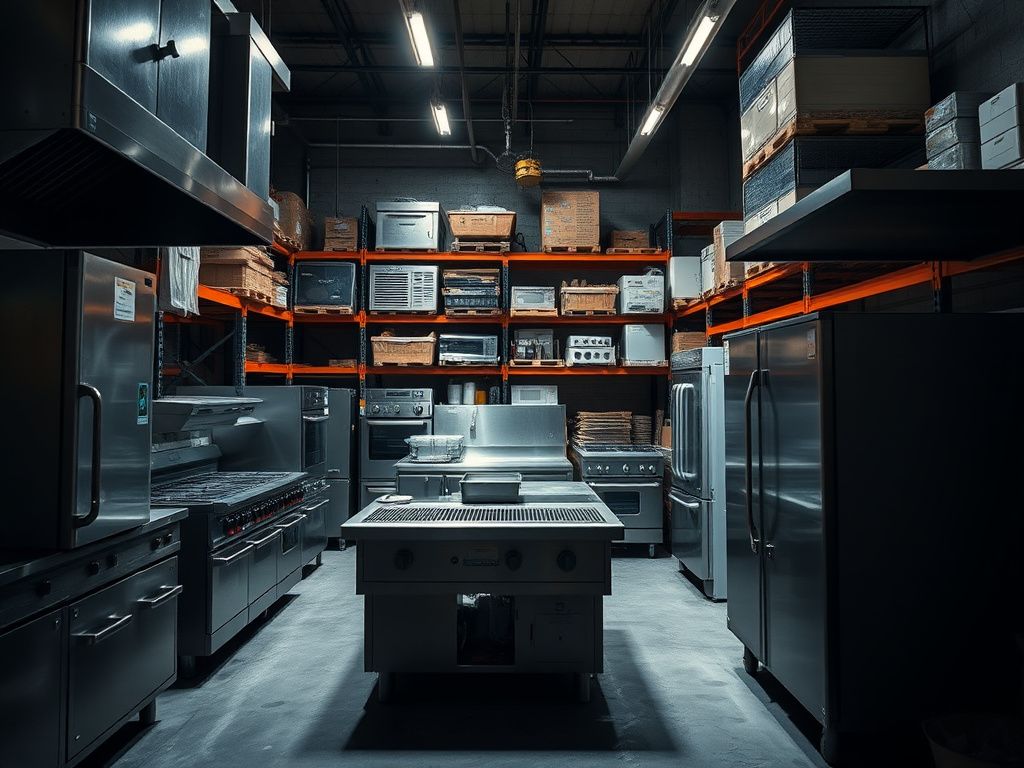
Flipping distressed kitchen equipment is a high-margin business model that capitalizes on the restaurant industry's high turnover rate. By acquiring commercial-grade assets from closure auctions and liquidations at a low cost, refurbishing them, and reselling them on the secondary market, savvy entrepreneurs can generate significant profits without the operational risks of running a food service establishment.
The romantic notion of opening a restaurant is a financial siren song that has lured countless entrepreneurs to their doom. The brutal reality? Razor-thin profit margins, relentless operational complexity, and a failure rate that industry veterans find sobering. But what if you could profit from this churn without ever serving a single plate? This is the core thesis of a far more resilient business model: systematically acquiring, refurbishing, and reselling distressed commercial kitchen equipment.
Forget the chef's hat. Put on your asset recovery helmet. We're not building a menu; we're building an arbitrage machine that capitalizes on market inefficiency.
The Architectural Flaw in the Restaurant Business (And Your Opportunity)
Every year, thousands of restaurants close their doors. When they do, the high-capital expenditure (CapEx) assets—the stainless steel heart of the operation—are often liquidated for pennies on the dollar. The original owner is motivated by desperation, the bank by speed. They need the space cleared and some capital recouped, fast. This creates a buyer's market of staggering potential.
Experts note that a brand-new, six-burner Vulcan range might cost upwards of $4,000. At a liquidation auction, that same unit, perhaps only two years old and covered in a layer of manageable kitchen grime, can often be acquired for $500 to $800. After a few hundred dollars in professional cleaning, minor part replacement, and testing, it can be resold on the secondary market for $2,000 or more. That is the fundamental economic engine we're building.
You are stepping into the value gap between a seller's desperation and a new buyer's budget constraints.
Phase 1: Strategic Sourcing and Asset Acquisition
Your ability to find undervalued assets is the bedrock of your success. This isn't about aimlessly browsing Craigslist. This is about building a systematic sourcing pipeline.
Your Primary Hunting Grounds
- Online Liquidation Auctions: Websites like Bid-On-Equipment, RestaurantEquipment.bid, and local auction house portals are your primary targets. Set up alerts for restaurant closures within a 100-mile radius.
- Bankruptcy Trustee Sales: These are often listed in public records or through specialized legal publications. The assets are sold under court order, meaning the process is formal but the prices can be exceptionally low.
- Leasing Company Repossessions: When a restaurant defaults on its equipment lease, the leasing company repossesses the assets. They are not in the business of holding inventory; they want to liquidate it. Build relationships with regional leasing agents.
- Direct Outreach: Drive through commercial districts and look for "For Lease" signs on former restaurant spaces. Contact the property manager. They often have leftover equipment they need removed and may even give it to you for free in exchange for clearing the space.
Pro-Level Tactic: Don't just bid on individual items. Look for "lot" bids that include the entire kitchen line. You might get a prime convection oven bundled with less desirable prep tables and shelving. By liquidating the whole package, your cost basis for the hero items (the ovens, mixers, and coolers) can approach zero.
Phase 2: Tactical Due Diligence—Separating Gold from Scrap
This is where amateurs lose their shirts. Showing up to an auction preview without a plan is financial suicide. You need a forensic approach to asset evaluation.
Your On-Site Inspection Checklist
- Brand Reputation is Everything: Look for the workhorses of the industry. Hobart for mixers, True for refrigeration, Vulcan and Blodgett for ovens and ranges. Avoid off-brand imports where replacement parts are non-existent.
- The "Plate Check": Find the metal data plate on the equipment. Snap a photo. This gives you the model number, serial number, and voltage/gas requirements. A quick Google search on your phone can reveal the unit's age, original price, and common failure points.
- Mechanical Triage:
- Refrigeration: Does the compressor kick on? It should have a low, steady hum. Look for excessive rust on the coils or signs of refrigerant leaks (oily residue). A bad compressor is a deal-breaker.
- Gas Equipment: Check the burners and pilot tubes for excessive corrosion. Ensure all knobs turn freely.
- Electric Equipment: Examine the power cords and plugs for fraying or damage. For 220V/3-phase equipment, you may not be able to test it on-site, making brand reputation even more critical.
- The Gasket Test: For any refrigeration unit, open and close the door. Does it seal tightly? A new set of magnetic door gaskets can cost $100-$300. Factor that into your bid.
Remember, you're buying the "bones." A dirty exterior is a cosmetic issue. A seized motor is a catastrophic failure. Learn the difference.
Phase 3: The Reconditioning & Value-Add Workflow
This is your factory floor. The equipment rolls in dirty and uncertain and rolls out clean, tested, and profitable.
Step 1: The Deep Clean (The Degreasing). This is non-negotiable. Using commercial-grade degreasers, power washers (carefully), and food-safe sanitizers, you must bring the equipment back to a standard that meets or exceeds health code requirements. The goal is to make it look as close to new as possible. This is often 80% of the perceived value-add. NSF certification is the standard; ensure your cleaning processes align.