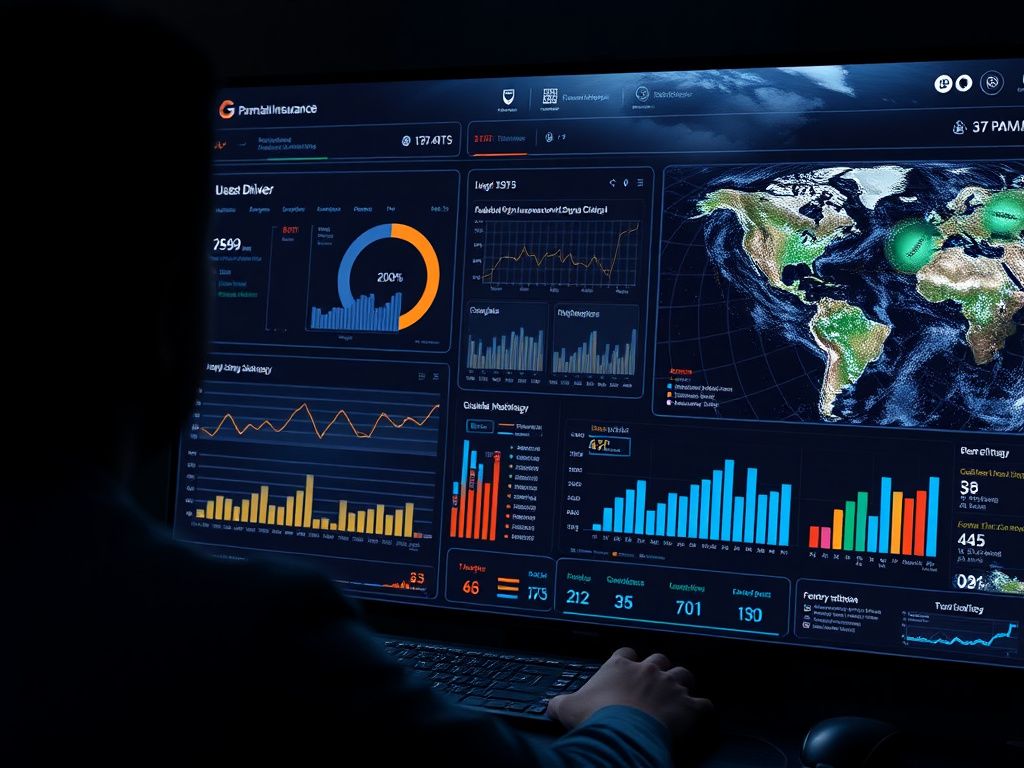
Parametric insurance is not an indemnity product; it is a binary, trigger-based financial instrument. Unlike traditional insurance that requires lengthy loss adjustment and damage verification, parametric policies pay out automatically when pre-defined data thresholds—such as specific wind speeds, rainfall levels, or seismic readings—are met, bypassing the adversarial claims process entirely.
The logistics sector has long treated insurance as a frustrating overhead expense, much like how leaders today grapple with why Why Corporate Upskilling Programs Are Ignoring Employees Over 40 or struggle to manage How Global E-commerce Brands Can Master DSA Compliance and Tax Efficiency. For global supply chains navigating the volatile climate landscape of 2026—a year where businesses must also stay updated on the 2026 DeFi Yield Guide: How to Balance Profits and New Tax Rules—this model is effectively dead. As climate volatility transitions from a "future risk" to an operational baseline, businesses are shifting toward parametric insurance—a mechanism that prioritizes speed and liquidity over the traditional forensic audit of damages.
The Shift: From Loss Assessment to Data Triggers
Traditional insurance relies on the "principle of indemnity." You suffer a loss, you prove the loss, and the insurer indemnifies you for the damage incurred. The problem for a modern global supply chain is the latency. If a port in Vietnam is hit by a typhoon, a traditional policyholder might wait six to eighteen months for a payout, during which time their operations have already been crippled by the lack of cash flow.
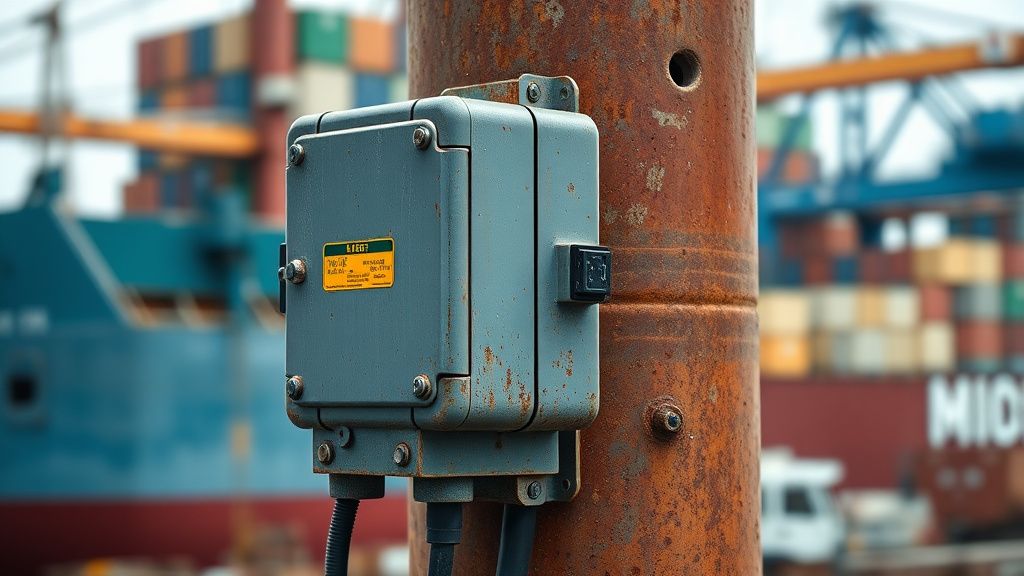
Parametric insurance flips this logic. It removes the insurer’s subjective opinion from the claim. If a sensor at the port records wind speeds of 150 km/h, the contract pays out. There is no adjuster. No dispute over whether the wind damaged the warehouse roof or whether the "damage" was actually wear and tear. The data is the claim.

Why 2026 Climate Volatility Changes the Calculation
By 2026, the term "climate change" has evolved into "predictable volatility," a landscape where forward-thinking firms are also exploring how Why Vertical Aquaponics Is the Key to Solving Global Food Security by 2030 could mitigate systemic shocks. We are no longer dealing with rare "Black Swan" events, but with "Gray Rhinos"—high-impact, high-probability events that supply chain managers are choosing to ignore until they hit.
The volatility is multi-dimensional:
- Hyper-localized Rainfall: Flash flooding that shuts down specific distribution centers for 48 hours.
- Infrastructure Stress: Thermal buckling of railway tracks due to unprecedented heatwaves.
- Network Fragmentation: The compounding effect where a small outage in one region cascades through a global Just-in-Time (JIT) model.
For a firm managing complex logistics, the "indemnity gap"—the space between the actual financial loss and the insurance recovery—has become a massive balance sheet liability. Parametric policies are being used as a liquidity hedge. They don't just cover the "broken concrete"; they cover the Business Interruption (BI) and the costs of rerouting inventory, which traditional insurers often refuse to underwrite due to the complexity of proving "proximate cause."
The Engineering of a Trigger: The "Basis Risk" Trap
If you are considering a parametric product, you must confront the concept of Basis Risk. This is the difference between the payout you receive and the actual loss you suffer.
If you set your wind speed trigger at 140 km/h, but your warehouse collapses at 135 km/h, your policy pays out zero. This is the structural flaw of parametric systems: they are only as good as the data and the logic of the trigger.
Hacker News discussions regarding parametric risk often mirror the debates found in articles like Why Top Professionals Are Ditching Online Courses for Human Mentorship or Is the Copy-Trading Agency Model the Future of Algorithmic Investing?, highlighting the ongoing tension between automated data reliance and human oversight. If the sensor fails, or if the data feed is corrupted, the policyholder can find themselves with an "untriggerable" contract.
"We moved our hurricane coverage to a parametric model in 2024. The first storm hit; our facility was flooded. The sensor, however, reported 0.5 inches less than the threshold because it was blocked by debris. We got zero, while the building was a total loss. Lesson learned: always have a fallback sensor and rigorous data auditing." — Logistics Ops Manager, Reddit r/SupplyChain
Real Field Reports: The Reality of Implementation
In the field, parametric insurance is currently being deployed by mid-to-large-scale logistics providers to cover "uninsurable" areas.
- The Port of Rotterdam Pilot: A leading logistics firm implemented a rainfall trigger for their low-lying outdoor container storage. When rainfall exceeded 50mm within a 3-hour window, a payout occurred within 48 hours. This enabled the firm to immediately hire additional drainage pumps and temporary labor without waiting for approval from the insurer.
- The Chilean Lithium Corridor: Mining operations often deal with seismic risk. Parametric seismic insurance uses USGS data to trigger payments based on the Peak Ground Acceleration (PGA) at the mine site. Because the trigger is public, the insurer cannot deny the claim, providing an immutable guarantee of liquidity.
The "Workaround" Culture and System Fragility
Because institutional insurers are still catching up with the speed of climate change, a "workaround" culture has emerged. Supply chain managers are increasingly utilizing decentralized finance (DeFi) or parametric platforms that don't look like traditional insurance at all. They act more like derivatives.
This creates a massive regulatory and accounting gray area. Is this insurance? Is it a hedge? Is it gambling? When your CFO asks why you are buying "weather options," you better have the risk quantification data to back it up.
If you are trying to quantify your own risk exposure, remember that data precision is key. You can analyze your historical facility downtime using our Facility Downtime Calculator to see if the potential premiums outweigh the cost of potential operational disruptions.
Counter-Criticism: Why Experts Are Skeptical
Not every industry veteran is sold on the parametric revolution. Critics point to three primary systemic failure points: