The router in the hallway, once a benign piece of plastic blinking with indifferent green lights, has become the epicenter of a new, precarious domestic geography. By early 2026, the home network is no longer a luxury; it is the vital organ of household economics, which is why Is Wi-Fi 7 Worth It? Why Smart Home Owners Are Hiring Expensive Network Experts has become such a critical consideration for modern households. Yet, as climate volatility shifts from a long-term forecast to a daily operational reality, that network is failing, leading many to question if Is Your 'Perfect' Home Network Killing Your Focus? due to the stress of constant technical failures.
Insurance companies, historically allergic to anything they can’t calculate with centuries of actuarial data, are now pivoting toward the "Home Infrastructure Micro-Insurance" model. They are betting that they can bundle the risk of a fried ONT (Optical Network Terminal) or a power-surged mesh node into a monthly premium, effectively creating a financial firewall for the digital home. But as I’ve seen in community threads and support logs across the sector, this isn't just about replacing hardware; it is often about managing Is Your Wi-Fi Causing Brain Fog? How Neuro-Architecture Can Restore Your Focus in an era of unreliable connections. It’s about the messy, often broken intersection of failing utility grids, extreme weather events, and the fragility of consumer-grade networking equipment.
The "Last Mile" is Now the "Weakest Link"
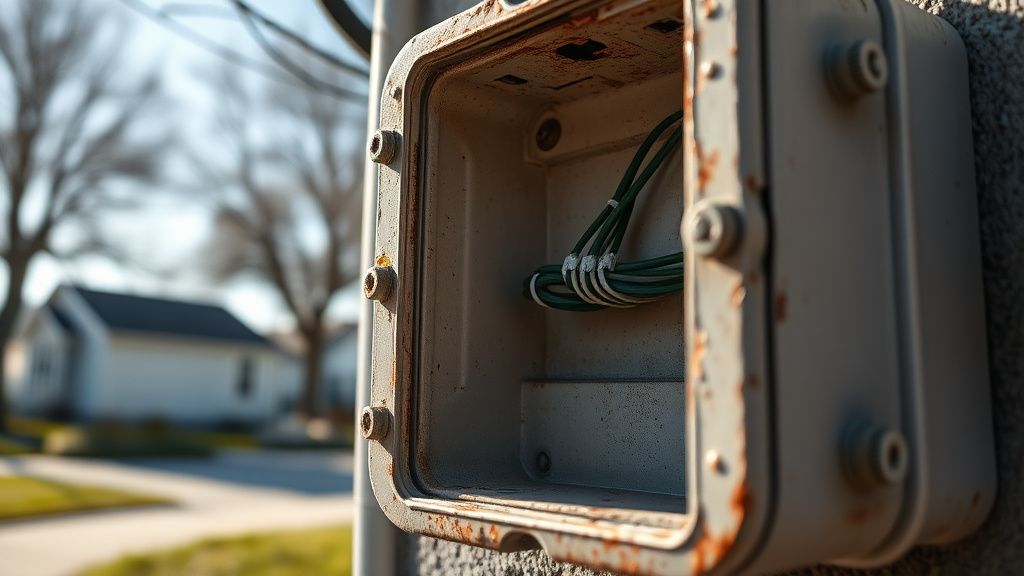
The industry term for this shift is "Resilience Friction." In the pre-2023 era, when a summer thunderstorm hit, the worst you expected was a couple of hours of downtime. Today, we are seeing "cascading physical failure." A heat dome doesn't just make your house uncomfortable; it forces the ISP’s neighborhood node—often a cabinet with inadequate cooling—into a thermal shutdown. When power fluctuates due to load balancing, your UPS (Uninterruptible Power Supply) might hold for ten minutes, but if the local grid stays down for six hours, your internal home network starts to experience what technicians call "cold-start trauma."
"The gear isn't built for this," says Marcus Thorne, a veteran network engineer who spent fifteen years managing regional ISP infrastructure before shifting to consultancy. "We’re deploying industrial-grade silicon in environments that aren't climate-controlled. When the humidity hits 90% after a storm and the temperature in the crawlspace jumps twenty degrees, the capacitor lifespan in your average home router drops by 40%."
This is the operational reality that the tech brochures don’t show. If you check the r/HomeNetworking subreddits or the Ubiquiti user forums circa 2026, the sentiment is consistent: "Everything was fine until the heatwave." We are seeing an explosion of "intermittent signal degradation" reports. These aren't bugs. They are hardware components struggling against environmental stress.
The Rise of Micro-Insurance: A Financial Band-Aid
In response to this, major carriers like AT&T, Verizon, and increasingly, specialized boutique insurers, have introduced "Network Protection Plans." Unlike standard warranties, these are parametric. They trigger based on local weather data. If a "Category 2 Heat Event" or "Severe Storm" is recorded in your zip code, the insurance policy covers the hardware replacement without a lengthy technician audit.
It sounds efficient on paper. It removes the friction of proving your router was destroyed by a power spike. However, the catch is the "Data-Privacy Tax." To qualify for these policies, you must agree to share real-time telemetry from your home gateway.
"It’s a trade-off," says Sarah Chen, an analyst at a boutique tech-policy firm. "You get the insurance, but the insurer gets to know exactly when you're home, how many devices are active, and which ones are consuming the most power. They are monetizing your digital signature to offset the risk of insuring your hardware."
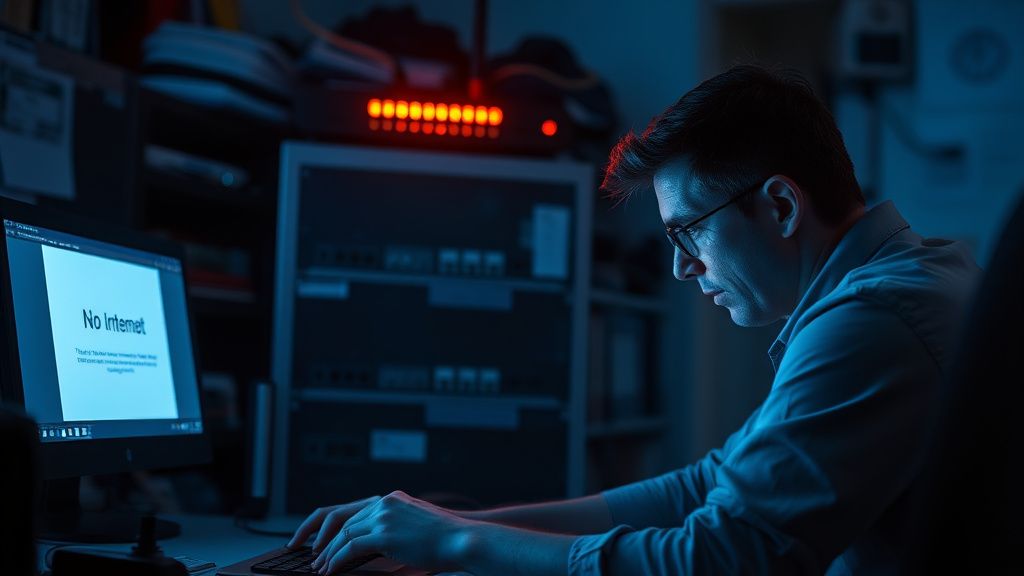
The Operational Reality: Why It Often Fails
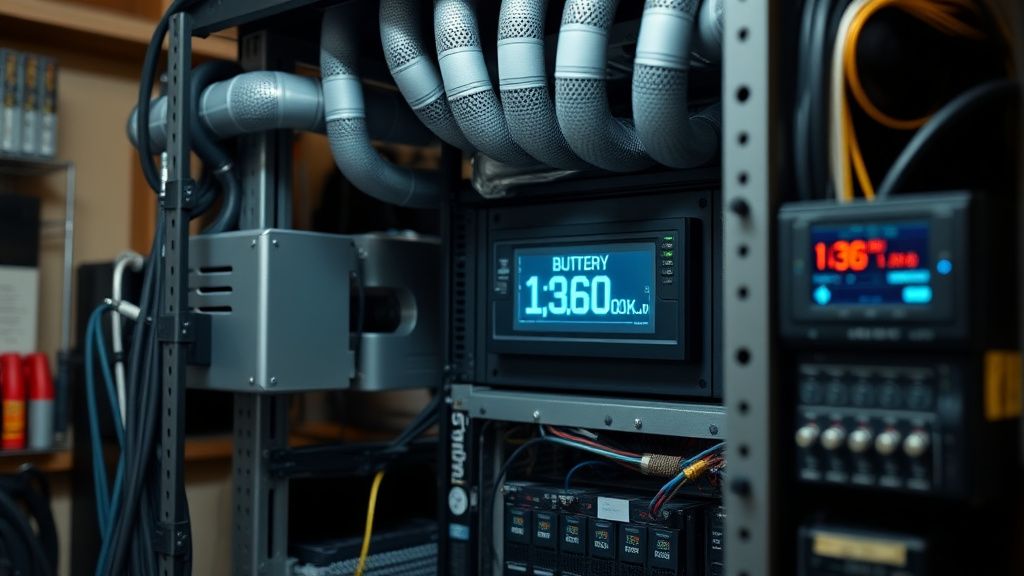
The promise of micro-insurance falls apart when you look at the "Workaround Culture," which is strikingly similar to the resourcefulness required to handle How AI Underwriting Is Changing Insurance: Fair Pricing or Digital Redlining? as insurers begin to overhaul their coverage models. On Discord servers dedicated to home-lab enthusiasts, the advice isn't to buy insurance; it’s to over-engineer. Users are building custom ventilated enclosures, installing active cooling fans in their data closets, and stacking high-capacity lithium-iron-phosphate (LiFePO4) batteries to buffer their networks against grid instability.
This creates a two-tier society. Those who can afford to "harden" their homes are protected; those who rely on the ISP-provided gateway and the promise of "protection plans" are left waiting in the queue.
Look at the GitLab issues for major router firmware projects. You’ll find hundreds of tickets marked "Critical - Thermal Throttling" or "Unstable Uplink during high ambient heat." When users push these issues, the common response from support is: "Ensure your device is in a well-ventilated area." It is the tech equivalent of saying "Have you tried turning it off and on again?" during a hurricane.
The micro-insurance companies claim they can solve this by providing "climate-resilient" equipment. Yet, in practice, this often just means a slightly better heatsink inside a standard plastic box. They aren't solving the physics; they are just pricing in the inevitable breakage.
The Failure Case: A Case Study in "Silent Decay"
Consider the case of the Pacific Northwest "Grid-Sync" incident in the summer of 2025. A series of localized power brownouts caused a ripple effect across thousands of home networks. Because the ISP nodes were struggling to resync after every micro-flicker of power, the DHCP lease renewal rates spiked to a level the backend wasn't programmed to handle.
The insurers paid out thousands of claims for "fried routers." But here’s the kicker: most of those routers weren't fried. They were just stuck in a firmware loop, unable to handle the handshake requirements of a stressed provider network.
The insurance companies didn't care. It was cheaper to ship a new unit than to dispatch a technician to perform a software-level factory reset. This "throwaway infrastructure" model is the dark secret of the industry. We are filling landfills with thousands of perfectly functional routers simply because the system cannot handle the complexity of modern climate-induced outages.