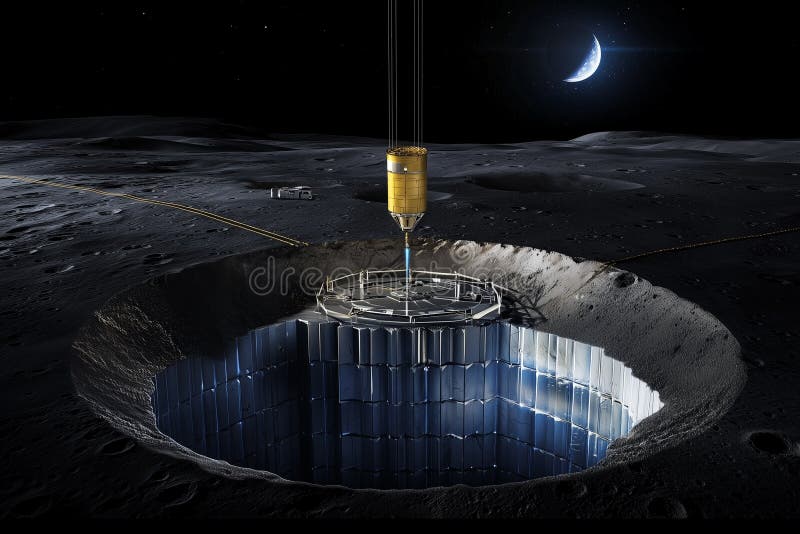
The year is 2026, and the lunar surface, once a desolate frontier for flags and foot-shaped dust impressions, has transformed into a high-stakes geopolitical chessboard. The object of this feverish, state-sponsored obsession? Helium-3—the isotope that remains a tantalizing promise for clean, high-yield fusion energy. While the physics of fusion remains a "ten years away" prospect that has haunted engineers since the 1970s, the economic and strategic scramble for the rights to the Moon’s regolith has ceased to be theoretical.
We are currently witnessing the end of the "Post-Apollo Era" and the beginning of the "Resource Annexation Era."
The Engineering Reality: It’s Not Just "Mining"
To understand the escalation, one must move past the naive assumption that this is simply about sending a few bulldozers to the Moon, just as one must move past superficial metrics when learning how to reverse-engineer top-performing Shopify stores for higher conversions. The logistical nightmare of lunar Helium-3 extraction is the primary filter that separates geopolitical bluster from operational reality, much like the complexities of managing decentralized ecosystems where DAO-governed affiliate programs are changing passive commerce.
Helium-3 is not exactly lying in heaps on the lunar surface. It is embedded in the top layer of the regolith, deposited over billions of years by the solar wind. To extract a meaningful amount, you must process millions of tons of lunar soil, heating it to several hundred degrees Celsius, and then transport the gas back to a lunar orbital hub.
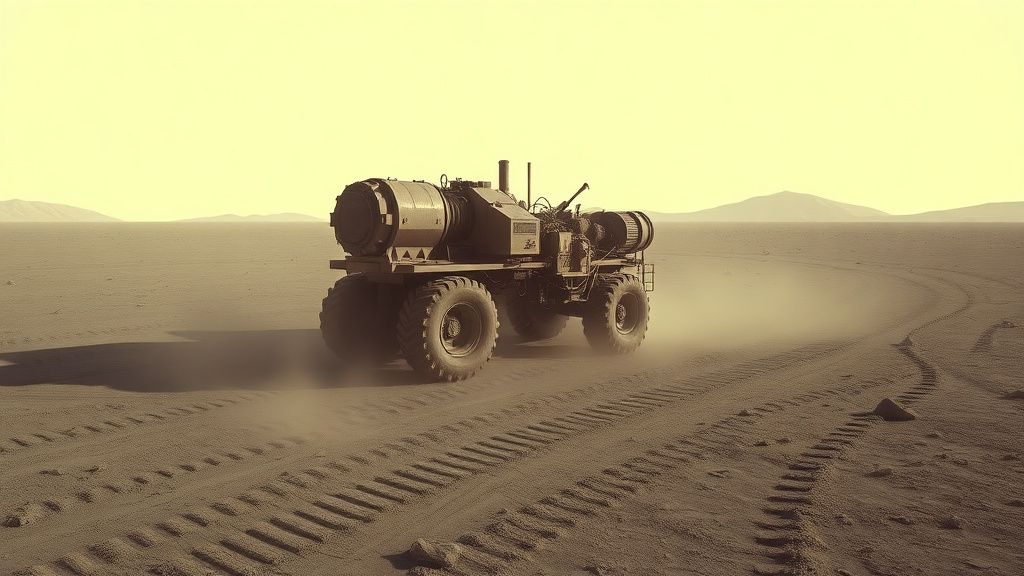
Engineers on platforms like the Lunar Infrastructure Discord and the Hacker News Space-Economy threads have been vocally skeptical about the cost-benefit analysis. A common refrain among field engineers—those working on the actual robotics side of the Artemis-Accords-aligned missions—is that "the energy expenditure required to extract, process, and return the gas currently exceeds the energy the gas would produce in a hypothetical fusion reactor."
Yet, that economic discrepancy is irrelevant to the state actors involved. This is not a market-driven operation; it is a strategic buildup. If the technology matures, the nation that controls the prime, high-concentration zones—specifically the near-side volcanic plains—controls the future of global energy.
The Fragmented Legal Landscape
The 1967 Outer Space Treaty, a relic of the Cold War, is showing its age in 2026. It declares that no nation can claim sovereignty over the Moon. However, the surge of "Artemis Accords" signatories versus the competing "International Lunar Research Station" (ILRS) coalition has created a de facto partition of the lunar surface.
We aren't looking at a legal document defining borders anymore; we are looking at "Safety Zones." These are circular perimeters around landing sites and extraction hubs where other nations are effectively barred from approaching, citing "safety interference." It is a blatant workaround of the 1967 treaty.
"The Safety Zone policy is the most ingenious and terrifying legal loophole in modern space history. It allows for the territorial annexation of the Moon without ever saying the word 'sovereignty.' You just define a zone of interference, put a sensor array there, and suddenly any rival vehicle approaching is a 'security threat' to your operations." — Senior Analyst, Space Policy Institute.
This has led to a breakdown in international coordination, mirroring the cybersecurity risks seen in sectors where decentralized labs are becoming the biggest security weak points. During a recent technical forum on GitLab, engineers discussing the interoperability of lunar rovers openly admitted that there is no shared communication protocol between the primary Eastern and Western coalitions. They aren't just mining in different areas; they are speaking different digital languages, which presents a far more difficult hurdle than the challenges faced by companies building sustainable B2B AI prompt engineering agencies.
The Human and Operational Cost
The human element of this escalation is often sanitized by sleek PR videos from government space agencies. The reality on the ground—or rather, on the orbiting stations—is one of extreme friction, where even minor maintenance tasks are high-stakes, reminiscent of industries where high-margin tech repair businesses thrive by mastering CMOS battery replacement.
Reports from private contractors involved in the construction of remote infrastructure, where professionals must navigate complex regulatory landscapes—much like those learning how to negotiate better remote sales commissions in 2026—reveal that the operational environment is fraught with friction. initial site-prep missions suggest that the environment is hostile to the point of absurdity. The moon dust, or lunar regolith, is electrostatically charged and sharp enough to destroy mechanical seals within weeks. We’ve seen a pattern of "rapid unplanned hardware failure" on multiple test platforms.

Users on subreddits like r/spaceflight have tracked the "Ghost Missions"—unannounced launches that carry heavy modular equipment that doesn't fit the profile of a scientific mission. The community-led tracking efforts have identified a clear trend: the cargo is becoming increasingly redundant, heavy, and shielded, indicative of semi-permanent base construction rather than exploration.
Counter-Criticism: Is the Helium-3 Rush a Decoy?
Not everyone in the scientific community believes the Helium-3 narrative is the actual driver. There is a strong counter-argument gaining traction among energy economists. They argue that Helium-3 is a "shiny object" designed to attract government funding and justify the militarization of cislunar space.
"If you want to control the world, you don't need Helium-3," argues Dr. Aris Thorne, a vocal critic of the current lunar policy. "You need the high ground. You need the ability to maintain persistent surveillance, the ability to deploy assets into orbit at a moment's notice, and the infrastructure to refuel in deep space. Helium-3 is the perfect, noble, scientific-sounding pretext for building a permanent, armed presence in space."
This skepticism is backed by the lack of any major breakthroughs in commercial fusion that would require massive quantities of Helium-3. Without the reactors, the gas has no market value. The economic feedback loop is broken, yet the investment continues to scale. Why? Because the "infrastructure" being built is dual-use. A heat-sink for a fusion extractor is also a cooling system for a massive space-based laser or radar array.
Failure of Diplomacy and the "Support Nightmare"
The operational reality of 2026 is a "Support Nightmare." As private-public partnerships (PPPs) proliferate, the lines of responsibility blur. If an American-contracted drilling rover accidentally damages a solar array belonging to a Chinese research base, who is responsible? The government? The private space-tech firm? The holding company registered in a tax haven?
In August 2026, an incident involving a localized sensor blackout in the Shackleton Crater led to a three-day tense standoff between two rover teams. Because there is no unified, neutral air traffic control or "Space Traffic Management" (STM) system in place, the teams had to rely on back-channel communications via terrestrial ground stations. The resulting transcript fragments, leaked on private developer channels, show a startling lack of clear, actionable protocols for cross-coalition incidents.