
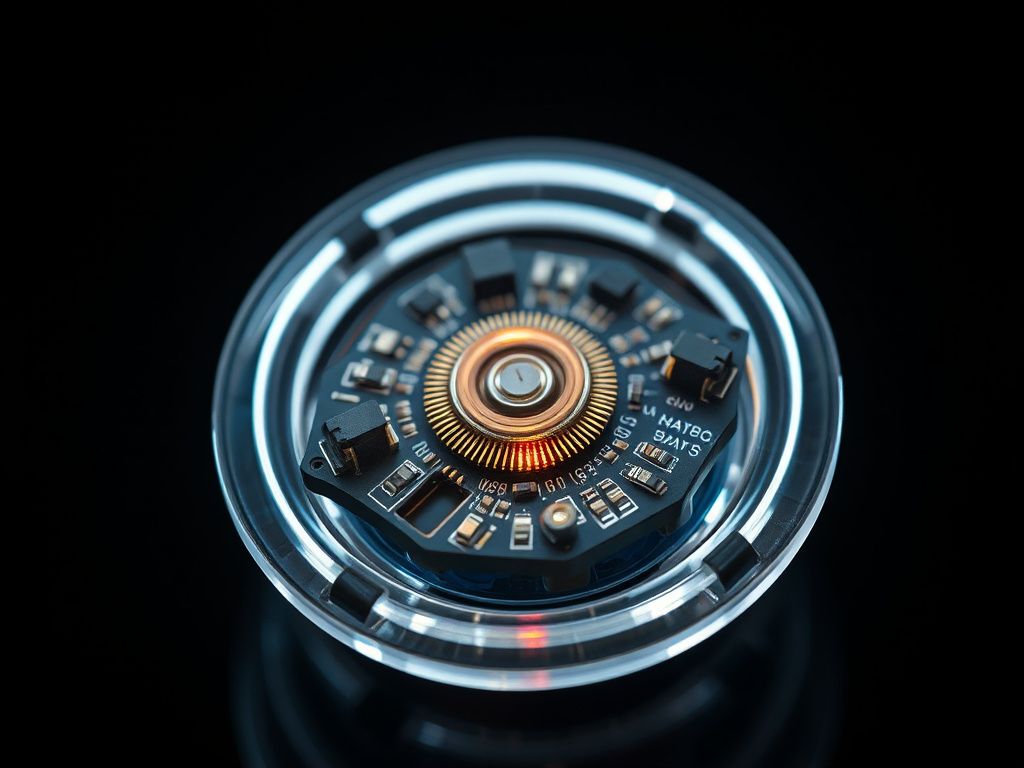
The short answer is no: kinetic energy harvesting will not replace traditional lithium-ion batteries by 2026. While the technology is advancing in niche medical implants and ultra-low-power sensors, the physics of energy density remains a brutal bottleneck. You should view kinetic harvesting as a supplementary bridge to extend battery life, much like how investors view How to Build a Dividend Growth Portfolio for Long-Term Passive Income as a reliable strategy for long-term stability.
The Physics Problem: Why Your Smartwatch Still Needs a Cable
The dream of "battery-free" electronics has been a siren song, much like the promise of energy independence through Why Micro-Modular Reactors Could Be the Future of Energy Independence. The premise is simple: human movement—walking, typing, gesturing—contains energy. If we could capture that, we wouldn't need to anchor ourselves to wall outlets. However, the reality of thermodinamics and material science is significantly more stubborn.
Current kinetic harvesters, relying primarily on piezoelectric materials or electromagnetic induction, generate milliwatts—sometimes microwatts—of power. A standard Apple Watch or Garmin device, even in idle mode, requires hundreds of milliwatts to drive its processor, display, and radio stacks (Bluetooth/Wi-Fi). The energy gap isn't just a hurdle; it’s a chasm, much like the economic shifts impacting Why Smart Investors Are Shifting to Fractional Commercial Real Estate for 2026.

When you look at the forums on platforms like r/ECE or GitHub repositories dedicated to energy harvesting, the sentiment is consistent: "It works on the test bench, but it dies in the wild." The conversion efficiency of these materials—the ability to turn a footstep or a heart pump into usable electrical current—is hampered by impedance mismatching. When you harvest energy, you aren't just capturing power; you are fighting the physics of friction, damping, and the inherent losses in the rectifier circuits that convert AC (from the harvester) to DC (for the battery).
The Operational Reality: Scaling Issues and Structural Integrity
If you’ve spent any time on GitLab or looking at open-source hardware project logs, you’ll notice a recurring theme in energy harvesting: the "mounting problem." To harvest kinetic energy, the device must have a proof mass (a weight that moves) or a flexural strain point. This adds weight, bulk, and complexity to the device’s chassis.
For a wearable, every gram matters. If you add a kinetic harvester to a smart ring, you increase the device’s profile, a design challenge micro-brands are navigating as they shift strategies, as detailed in Why Micro-Brands are Ditching Dropshipping for Hyper-Local Manufacturing. If you add it to a watch, you potentially introduce mechanical points of failure. Hardware engineers must balance durability with innovation, similar to how firms maneuver through The E-commerce Loophole: How Global Retailers Are Dodging Taxes Ahead of 2026.
- Engineering Compromise: You cannot have a perfectly rigid, hermetically sealed casing and an efficient internal kinetic energy harvester. The system needs to breathe or flex.
- The Wear-and-Tear Factor: Piezoelectric materials are brittle. If you bake them into a shoe or a jacket, every step is a stress test. After 10,000 steps, do you still have the same power output? Most field reports indicate that these materials degrade over time, a volatility similar to the assets discussed in How to Turn Reclaimed Wood Gardens Into Profitable Urban Assets in 2026.
Real Field Report: The Industrial Sensor Failure
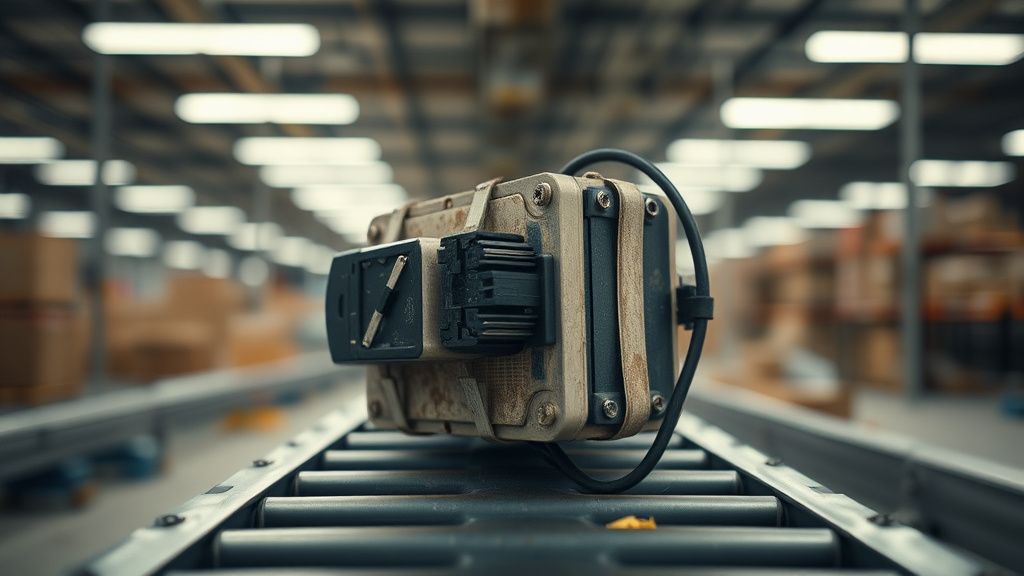
In early 2023, a logistics firm deployed a batch of "self-powered" vibration sensors on conveyor belts in a high-throughput warehouse. The goal was to eliminate battery maintenance for 5,000 nodes. By Q4 2023, the internal project audit revealed a 40% failure rate.
The failure wasn't in the harvesting logic—it was in the storage. The small supercapacitors used to store the harvested energy couldn't handle the extreme temperature fluctuations of the warehouse floor. Furthermore, during a three-day holiday shutdown, the conveyor belts stopped. Without motion, the harvesters stopped, and the sensors died. When the power returned, the sensors required a "cold boot" reset, which many failed to survive. The lesson? Without a battery to act as a buffer, your device is essentially a ghost that disappears whenever the world stays still for too long.
The "Workaround" Culture: Hybridization
Because kinetic harvesting cannot replace the battery, the industry has pivoted toward "energy-aware" systems. Instead of trying to eliminate the battery, engineers are using kinetic harvesters to "trickle charge" devices, allowing them to remain in a semi-active state for longer periods.
This is where the user experience gets messy. If your device is 10% charged and you go for a run, the harvester might add 0.5% back to the battery. Is that useful? For a smartwatch, not really. For an implantable medical device, it’s life-changing. This is the crucial distinction: kinetic harvesting is currently an enabling technology for low-power medical IoT, not a replacement for the battery in your smartphone or high-end wearable.
If you are curious about the technical trade-offs of power consumption in different display technologies, you might want to look at our PPI Calculator to understand how screen resolution and refresh rates directly dictate the power budget that a kinetic harvester would need to meet—a target that is currently unreachable.
Karşılıklı Eleştiri: The Hype vs. The Reality
There is a loud, vocal contingent in the tech press that insists that "energy harvesting is the next battery revolution." This is largely marketing-driven hype designed to secure venture capital.