The summer of 2026 has become a grim benchmark in meteorological history. As I write this, the reservoirs feeding the American Southwest are hitting "dead pool" levels that were previously dismissed as pessimistic modeling, and the Mediterranean basin is grappling with a multi-year agricultural collapse. In the corridors of venture capital and the austere halls of climate NGOs, one acronym has replaced the buzz of the previous decade: AWG (Atmospheric Water Generation).
If you spend time on the engineering forums of Discord or the more granular threads on Hacker News, you’ll see the shift. It is no longer about whether we can pull water from the air—we’ve known how to do that since the days of fog nets in the Atacama Desert—but whether we can scale the thermodynamics of the process without boiling the planet in the effort to quench its thirst.
The Thermodynamics of Desperation
At its core, Atmospheric Water Generation (AWG) is a simple game of heat exchange. You condense water vapor from ambient air. The catch, as any thermodynamics undergrad will tell you, is the energy density. To extract a liter of water from air at 30% relative humidity, you aren't just running a fan; you are fighting the latent heat of vaporization.
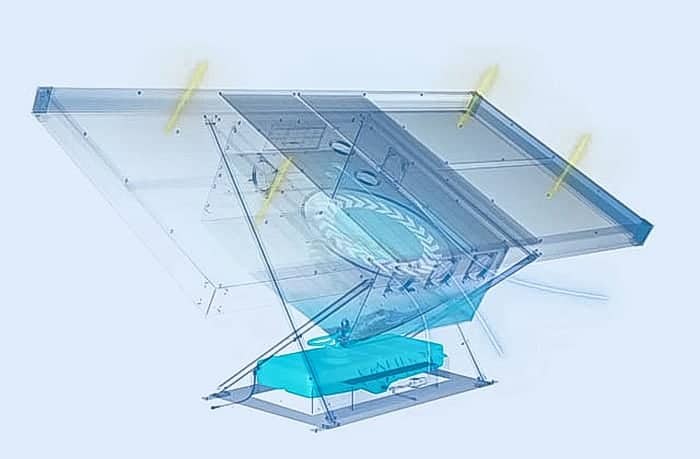
Most "consumer-grade" units currently flooding the market—the ones you see advertised on social media with slick, high-gloss renders—rely on Peltier cooling. They are essentially souped-up dehumidifiers. They work brilliantly in a basement in Seattle or a humid morning in Singapore. But take those same units to a drought-stricken village in inland Spain or the parched plains of the Sahel in 2026, and they become expensive, plastic paperweights—a risk that parallels the financial instability investors face, as detailed in Is Your Savings Account at Risk? The 2026 Deflationary Debt Trap Explained. The energy-to-water ratio is abysmal, often requiring more electricity to run the compressor than the water is worth in local market pricing.
The Infrastructure Mirage
The industry is currently divided between two camps, much like the broader technological landscape where firms are debating how to properly monetize data, as outlined in How to Turn Your Proprietary Data Into a Recurring Revenue Stream. There are the "Distributed Optimists," who believe that every household should have an AWG appliance—a "water-generator" equivalent of a solar panel. Then there are the "Industrial Realists," the firms that are currently signing billion-dollar infrastructure contracts with municipal governments to build "Atmospheric Farms."
The Industrial Realists are currently the ones driving the narrative in the Financial Times and Bloomberg. Their pitch is simple: decentralized water grids. Instead of relying on aging, leaking pipe infrastructure from drying rivers, cities should set up massive, centralized condensation arrays.
However, the field reports coming in from early-adopter cities in the MENA (Middle East and North Africa) region tell a more complex story. In a pilot project implemented in the outskirts of Riyadh, the operational costs for these arrays were underestimated by nearly 40%. The issue wasn't the condensation tech itself—it was the maintenance. Desert dust acts as a constant abrasive on the heat exchangers. The "water farms" require a level of scrubbing and filter maintenance that the local municipal budgets, already stressed by the drought, were ill-equipped to handle.
"We built the thing, and for three months, it was a miracle. We were getting 50,000 liters a day. Then the spring sandstorm hit. The intake fans got jammed, the heat exchangers got coated in fine grit, and the efficiency dropped by 60% overnight. We didn't have the spare parts, and the manufacturer had locked the proprietary interface behind a software key that required a technician from overseas to reset. We were left with a desert tombstone." — Anonymous Municipal Infrastructure Manager, project post-mortem on a private engineering Slack channel.
The "Bug" of Scaling
This brings us to the most pressing issue in 2026: The "Proprietary Ecosystem" trap, a problem echoed across industries where businesses struggle with scaling hardware maintenance, as explored in Scaling a Hardware Upgrade Business: Balancing High Margins and OEM Risks. Much like the right-to-repair movement, the AWG sector faces the same maintenance barriers often found in specialized services, such as those discussed in How to Build a High-Margin Business Restoring Mechanical Keyboards, leading to fragmented ecosystems.gmentation of standards. Companies are deploying "black-box" systems. When a fan bearing fails in the middle of a drought-affected region, you cannot go to a hardware store and buy a replacement. You must wait for the proprietary component from the OEM (Original Equipment Manufacturer), and that wait time is currently measured in weeks.
In a drought, a week is an eternity.

Environmental Impact: The Hidden Cost
There is a growing, yet quiet, discourse among environmental scientists regarding the long-term, large-scale impact of mass-dehumidification. If you deploy thousands of industrial-scale AWG units in a localized region, what happens to the local micro-climate?
While the global atmosphere is massive, the "boundary layer" (the thin slice of air closest to the ground) is not. There is a legitimate fear that by stripping moisture from the air at scale, we are creating "humidity shadows." We are essentially dehydrating the local biome. Insects, vegetation, and soil microbial life—all of which depend on a baseline level of atmospheric moisture—could face a secondary, man-made desiccation event.
It is the "Tragedy of the Commons" played out in the vapor phase. Everyone wants to pull their water from the sky, but if everyone does it, the sky loses its ability to buffer local temperature swings. We are cooling our hardware by heating up the ambient environment. It’s a vicious cycle that, so far, has received very little regulatory scrutiny.
The Workaround Culture
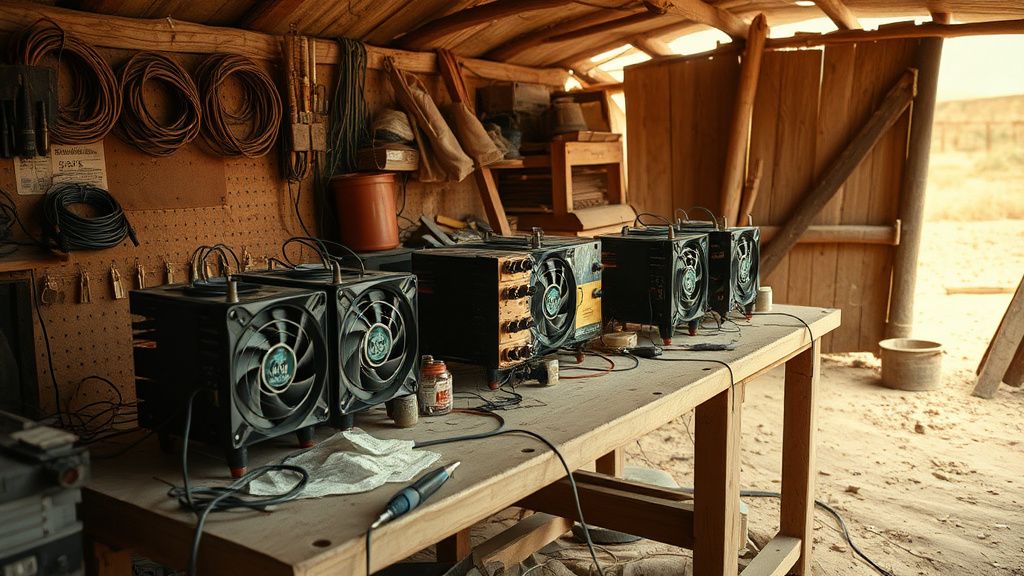
On the ground, in the places where the formal, expensive corporate solutions have failed, a "maker-culture" has emerged. If you look at GitHub, you’ll find repositories for open-source, low-tech AWG designs. These are using Peltier elements harvested from discarded electronics, combined with 3D-printed manifolds and passive solar-thermal collectors.
These units aren't "efficient" by any corporate benchmark. They might produce a liter of water a day—enough for a single person to drink. But they are repairable. They don't require a software key. They don't lock the user into a monthly "water-as-a-service" subscription.