
The ice is melting. The race has begun. And the stakes could not be higher.
Beneath the Arctic's retreating permafrost lies what geologists now estimate to be 13% of the world's undiscovered oil reserves, 30% of its untapped natural gas — and, most critically, vast deposits of rare earth elements that power every electric vehicle battery, missile guidance system, and semiconductor chip on the planet. As climate change strips away centuries of frozen cover at an unprecedented pace, a silent but ferocious competition among the United States, China, Russia, Canada, and the Nordic nations has accelerated from diplomatic posturing to something far more dangerous.
This is no longer a theoretical future conflict. It is happening now.
The Minerals That Run the World
To understand why the Arctic has become the most contested territory on Earth in 2026, you need to understand what rare earth elements actually do. Neodymium powers the magnets in F-35 fighter jets. Dysprosium is irreplaceable in electric vehicle motors. Yttrium forms the backbone of laser targeting systems. Without these 17 elements — many of which are found in alarming concentrations across Greenland, the Russian Arctic shelf, and Canada's Northwest Territories — the green energy transition stops cold, and modern military hardware becomes scrap metal.
China currently controls approximately 60% of global rare earth processing capacity, a stranglehold it spent three deliberate decades building. The West woke up to this dependency roughly five years too late. Now, with Arctic deposits potentially representing the largest untapped rare earth corridor on Earth, every major power is scrambling to plant flags — literally and figuratively.
Russia Moves First, Moves Fast
Moscow didn't wait for geopolitical consensus. Following the 2024 Arctic Military Expansion Act — a package of legislation that quietly passed the Russian Duma with minimal Western press coverage — Russia deployed two new icebreaker-class naval vessels specifically designed to escort mining operations in contested waters. By early 2026, Russian state-owned mining conglomerates had established semi-permanent extraction platforms on the Lomonosov Ridge, a massive underwater mountain range that Moscow claims extends its continental shelf — a claim flatly rejected by both Denmark and Canada.
"Russia is executing a long-game strategy that Western governments frankly underestimated," says Dr. Irina Vasenko, a geopolitical resource analyst at the Stockholm International Peace Research Institute. "They've been mapping these deposits since the 1980s. The military infrastructure followed the geological surveys by about forty years. Everyone else is playing catch-up."
The legal battleground is the United Nations Convention on the Law of the Sea (UNCLOS), a framework that was never designed for a world where the Arctic Ocean becomes navigable for eight months of the year. Competing continental shelf claims overlap in ways that no existing treaty mechanism can cleanly resolve.
America's Counter-Move: The Greenland Gambit Intensifies
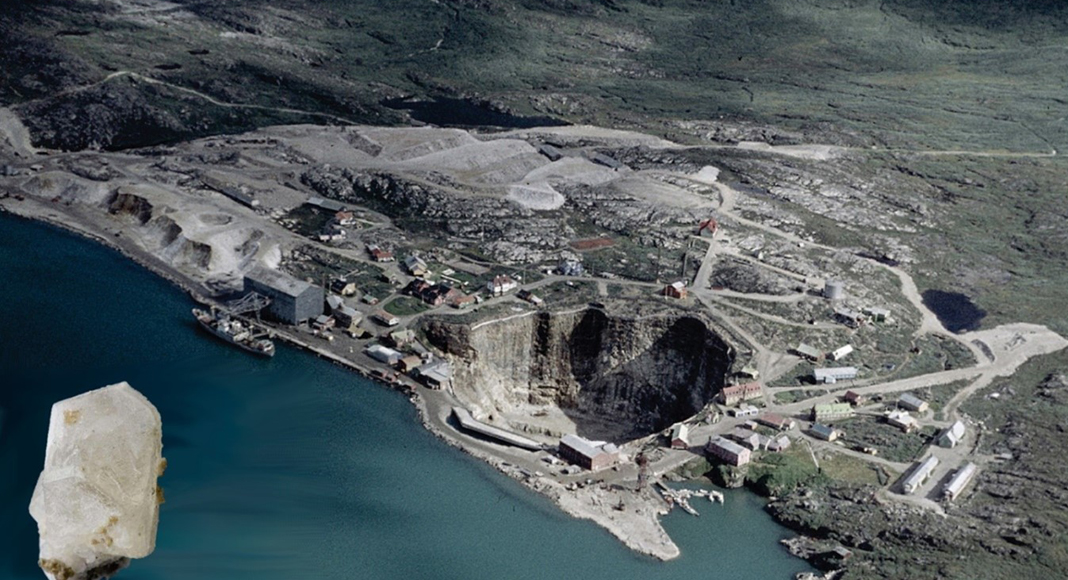
Washington's fixation on Greenland — which erupted publicly during the first Trump administration and never truly subsided — has reached a new level of strategic urgency. In February 2026, the U.S. signed a Bilateral Critical Minerals Partnership with the Greenlandic government, providing $4.2 billion in infrastructure investment in exchange for preferential access to mining concessions in the island's northern regions, where deposits of ilmenite, rare earth oxides, and uranium have been surveyed since the 1990s but never fully exploited.
Denmark, constitutionally responsible for Greenland's foreign affairs despite the island's extensive self-governance, finds itself in an extraordinarily awkward position. Copenhagen is a NATO ally of Washington. It is also an EU member increasingly aware that European strategic autonomy requires its own rare earth supply chains — not American ones.
The contradiction is unresolvable without political pain. Someone will be left out.
China's Arctic Ambitions: The Silk Road Goes North
Beijing designated itself a "near-Arctic state" back in 2018 — a classification that Arctic Council members greeted with polite diplomatic eye-rolls at the time. Nobody is laughing now. Through its Polar Silk Road initiative, China has invested heavily in Arctic shipping infrastructure across Iceland, Norway's Svalbard archipelago, and — most provocatively — in financing agreements with several Russian extraction projects that Washington considers dangerously close to dual-use military applications.
Chinese state media openly frames the Arctic as the next phase of the Belt and Road Initiative. The Northern Sea Route, now commercially viable for roughly 200 days per year due to reduced ice coverage, slashes shipping times between Shanghai and Hamburg by nearly 40% compared to the Suez Canal route. Control of that corridor — or even significant influence over it — represents a strategic prize worth any amount of investment.