
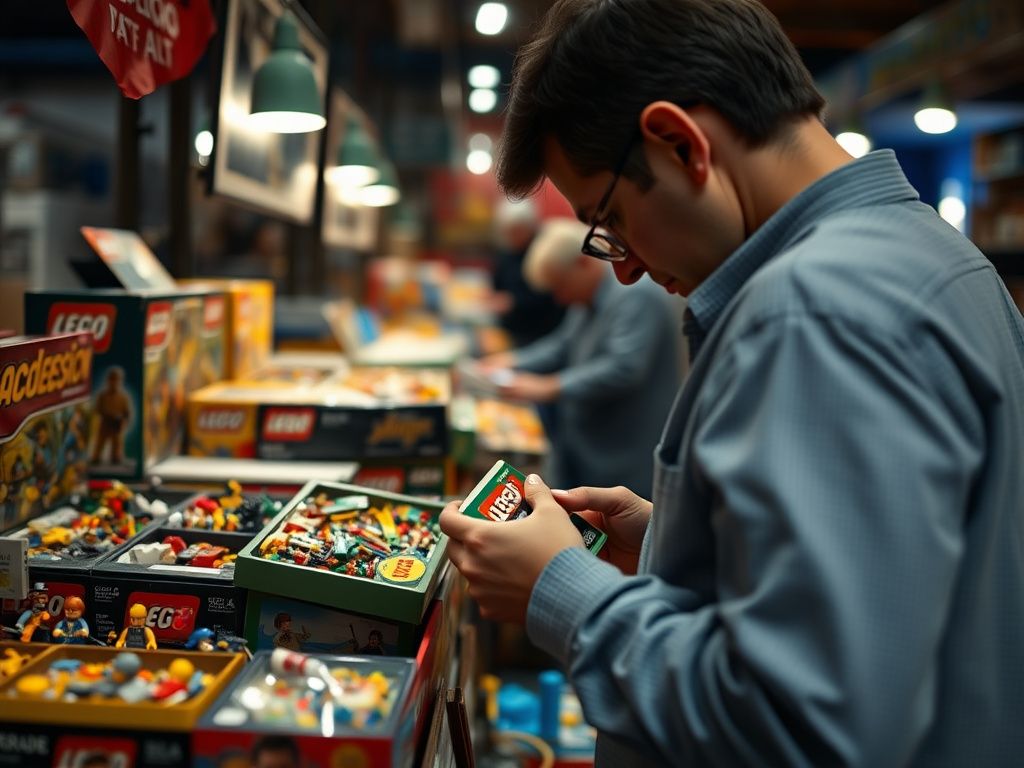
To turn vintage LEGO sets from estate sales into profit, you must source undervalued collections, accurately identify high-value sets and minifigures using databases like BrickLink, and decide whether to sell sets complete or "part them out" on specialized marketplaces for a higher cumulative return. Success hinges on meticulous inventory management and strategic pricing.
The world of alternative assets is filled with esoteric opportunities, from fine art to rare wines. But right under our noses, in dusty attics and forgotten basement bins, lies an asset class that has quietly outperformed gold, stocks, and bonds over the last few decades: vintage LEGO. This isn't about toys. This is about arbitrage, nostalgia-driven market economics, and the art of turning disorganized plastic into a structured, profitable digital commerce operation. Estate sales are the inefficient, often chaotic, marketplaces where the raw materials for this venture are found at a deep discount.
As a digital commerce architect, I see this not as a hobby, but as a business model. You're essentially a value-add reseller operating in a niche with passionate, knowledgeable buyers. The core principle is simple: buy low from an uninformed market (the estate sale) and sell high to an informed one (the global collector community). Let's build the framework for this operation.
The Asset Class: Why Vintage LEGO is a Market Anomaly
Before we even step foot into a sale, we must understand the "why." What gives a 30-year-old plastic brick its value? It’s a powerful cocktail of factors that create a surprisingly resilient market.
- Nostalgia as a Multiplier: The primary driver is nostalgia. Adults who coveted the Black Falcon's Fortress or the Galaxy Explorer sets in the 1980s now have disposable income. They aren't just buying plastic; they're buying a tangible piece of their childhood. This emotional component makes the market less susceptible to rational economic downturns.
- Scarcity and Attrition: LEGO sets have a high attrition rate. Pieces are lost, instructions are torn, boxes are thrown away. A complete, clean set with its original box and instructions from a popular theme like Castle or classic Space is a rare survivor. Experts note that a sealed-in-box (SIB or NISB) set appreciates significantly more, as it's a "mint condition" artifact.
- The Minifigure Economy: Often, the sum of the parts is greater than the whole. Specific minifigures, like the original Boba Fett from 2003 (sw0107) or the knight figures from the 1990s Castle theme, can be worth more than the rest of the set they came in combined. This micro-economy within the larger LEGO market is a critical profit lever.
Phase 1: Sourcing Strategy at the Estate Sale Frontline
This is your acquisition phase. It requires a sharp eye, a prepared mind, and a bit of luck. Estate sales are ground zero for finding collections that haven't been cherry-picked by specialists.
Pre-Sale Intelligence Gathering
Your work starts before the doors open. Scour websites like EstateSales.net and local auction house listings. You're looking for visual cues in the photographs. Don't just look for LEGO boxes. Look for large, clear plastic bins filled with bricks. Zoom in. Can you spot colors or parts from specific themes? Classic Space blue and trans-yellow, Castle gray, or Pirates brown are all excellent signs. A glimpse of a vintage box, even a battered one, is a signal to prioritize that sale.
On-Site Triage: The 5-Minute Assessment
When you're at the sale, you have to move fast. You'll likely encounter a large, messy bin of "bulk LEGO." This is where the money is hidden. Here’s your rapid assessment protocol:
- Dig for Minifigures: Plunge your hands in. The sound and feel are unmistakable. Pull out any minifigure parts you find. Are the torsos printed with classic Space or Castle logos? Are there unique helmets or accessories? A single rare minifigure can justify the purchase of the entire lot.
- Look for Specialized Parts: Scan for unique elements that indicate valuable sets. Large ship hulls from the Pirates theme, printed 1x4 "computer" bricks from Space Police, or castle wall panels are dead giveaways.
- Assess the General Condition: Are the bricks grimy and covered in unknown substances, or are they relatively clean? Check the white, blue, and gray bricks. Are they yellowed from sun exposure? Significant yellowing devalues the parts, but they still hold some value.
- Negotiate with Data (or lack thereof): The seller often sees a "bin of old toys." You see a potential inventory of high-value assets. Never reveal what you know. If the bin is priced at $100, and you've spotted parts you know are worth twice that, just buy it. If it's unpriced, make a reasonable, confident offer based on the weight and your quick assessment. "I'll give you $60 for the whole bin" is a strong opening.
Phase 2: The Back-End Process: From Chaotic Bin to Structured Inventory
You've acquired the raw material. Now the real work begins. This is the manufacturing floor of your operation, turning a chaotic pile into sellable products.
The Cleaning and Sorting Protocol
This is non-negotiable. Dirty bricks are unsellable.
- Pre-Wash: Use a colander to sift out non-LEGO debris (you'd be amazed what you find).
- The Bath: Place the bricks in mesh laundry bags and wash them in a sink of warm water with a mild dish soap. Never use a dishwasher; the high heat can warp the ABS plastic.
- The Rinse & Dry: Rinse them thoroughly and lay them out on towels to air dry for 24-48 hours, using a fan to speed up the process.
Once clean, the sorting begins. At a minimum, sort by minifigures, printed/unique parts, and then basic bricks by color. This allows you to start the valuation process efficiently.
Valuation Architecture: BrickLink as Your North Star
BrickLink is the most critical tool in your arsenal. It is the de facto stock exchange and database for LEGO. You can look up any set, part, or minifigure and see its 6-month sales average for both new and used conditions. This is how you determine the market value of your inventory.