
The ledger at the neighborhood co-op in Berlin doesn’t track Euros. It tracks "Compute-Hours" and "Logistics-Units." Across the Atlantic, a suburban community in Austin is trading excess solar energy for locally grown hydroponic kale, coordinated through a gated, invitation-only matrix of smart contracts that effectively bypasses the volatility of the mid-2026 inflationary spike.
This isn't a return to the Middle Ages. It is the sophisticated, algorithmically-assisted collapse of trust in centralized monetary systems. By the middle of 2026, the "Great Shift" is no longer a fringe movement for crypto-purists; it is an operational reality where savvy investors utilize an institutional liquid staking strategy for yield maximization to hedge against the instability of fiat currencies.
The Mechanics of the New Exchange
At its core, the rise of decentralized barter-based trade alliances (DBTAs) is a reaction to the failure of the "platform economy." For years, we were promised that centralized apps would make trade seamless. Instead, they introduced rent-seeking algorithms and platform fees that left users vulnerable, proving why businesses today must leverage proprietary data as a competitive advantage to avoid total reliance on flawed centralized platforms.
In 2026, the architecture has changed. We are seeing the rise of "Protocol-First" trading. These are not apps you download from an App Store; they are local, containerized node structures running on home servers or low-power edge devices. They operate on a principle of "mutual credit clearing." If I provide you with a home improvement service, like those that show how refinishing hardwood floors can add thousands to your home's resale value, the system logs a credit to my account that functions as a stable, local obligation.
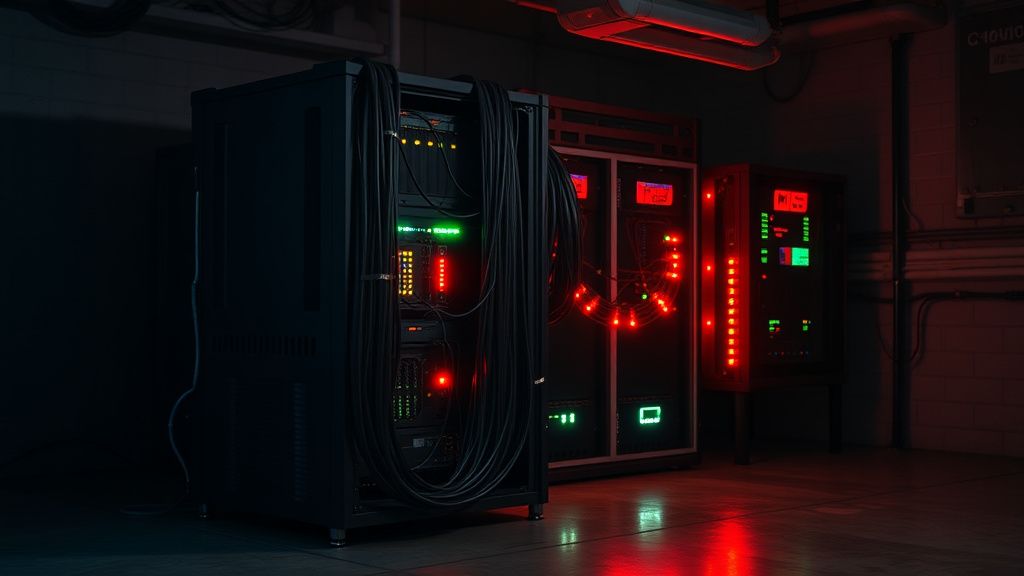
The technical implementation, much like setting up a high-performance network where consumer Wi-Fi fails remote professionals, is where the "messiness" of reality kicks in. Unlike the slick, frictionless UI of a modern fintech app, these interfaces are often clunky, built by volunteer developers who prioritize uptime and security over user experience. On GitHub, the issue trackers for these projects are a testament to the "workaround culture." Users are constantly debating how to handle "reputation decay" in the code—if someone is inactive for six months, does their credit balance stay valid?
Field Report: The "West Side" Alliance (Chicago)
In Chicago, a localized network known as the West Side Commons serves as a textbook study of the scaling problems inherent in these systems. I spent three days observing their coordinator team in March 2026.
The primary struggle? Social friction.
"The algorithm handles the math, but it can’t handle the fact that Dave is a jerk," one of the lead maintainers told me while trying to debug a failed transaction state in a local database. The system had locked a user’s ability to trade because his "reputation score"—calculated based on the perceived quality of his hand-delivered goods—dropped below the threshold of the alliance’s bylaws.
The result was not a graceful notification, but a shouting match in the community discord, followed by a request to the admins to "hard-code" an exception into the ledger. This is the hidden cost of decentralization: when you remove the bank, you replace it with a committee. And committees, by nature, are political, messy, and prone to internal drama.

The Economic Contradiction
Economists are split on the validity of these alliances. From a macroeconomic perspective, the 2026 barter revival looks like a reversion. But from an operational standpoint, it’s a high-efficiency response to market failure. When transaction costs exceed a certain threshold, the "official" economy stops working, leading many to explore how to build a dividend growth portfolio for long-term passive income as a more reliable alternative.
However, there is a dark side to this movement: fragmentation, which is a common challenge for those exploring why more startups are trading full-time CEOs for fractional leadership to maintain agility. By creating isolated, siloed trading alliances, these communities are effectively building "economic islands." The interoperability between these alliances is minimal. If a member of the West Side Commons tries to trade with a member of a similar alliance in Seattle, they hit a wall. There is no unified protocol to bridge them.
"We are building ghettos of trade," remarked a lead researcher at a prominent think tank. "We’ve optimized for local resilience, but we’ve destroyed our ability to leverage global scale."
The Engineering Compromise
One of the most persistent issues in the 2026 DBTA landscape is the "oracle problem." How does a system know that a carton of eggs was actually delivered?
Most alliances use a "peer-attestation" model. After a trade, both parties must sign a message cryptographically. But what happens if the internet goes down? Or if the power grid in a particular district experiences a brownout? These systems are designed to be "offline-first," which means they rely on local mesh networks.