
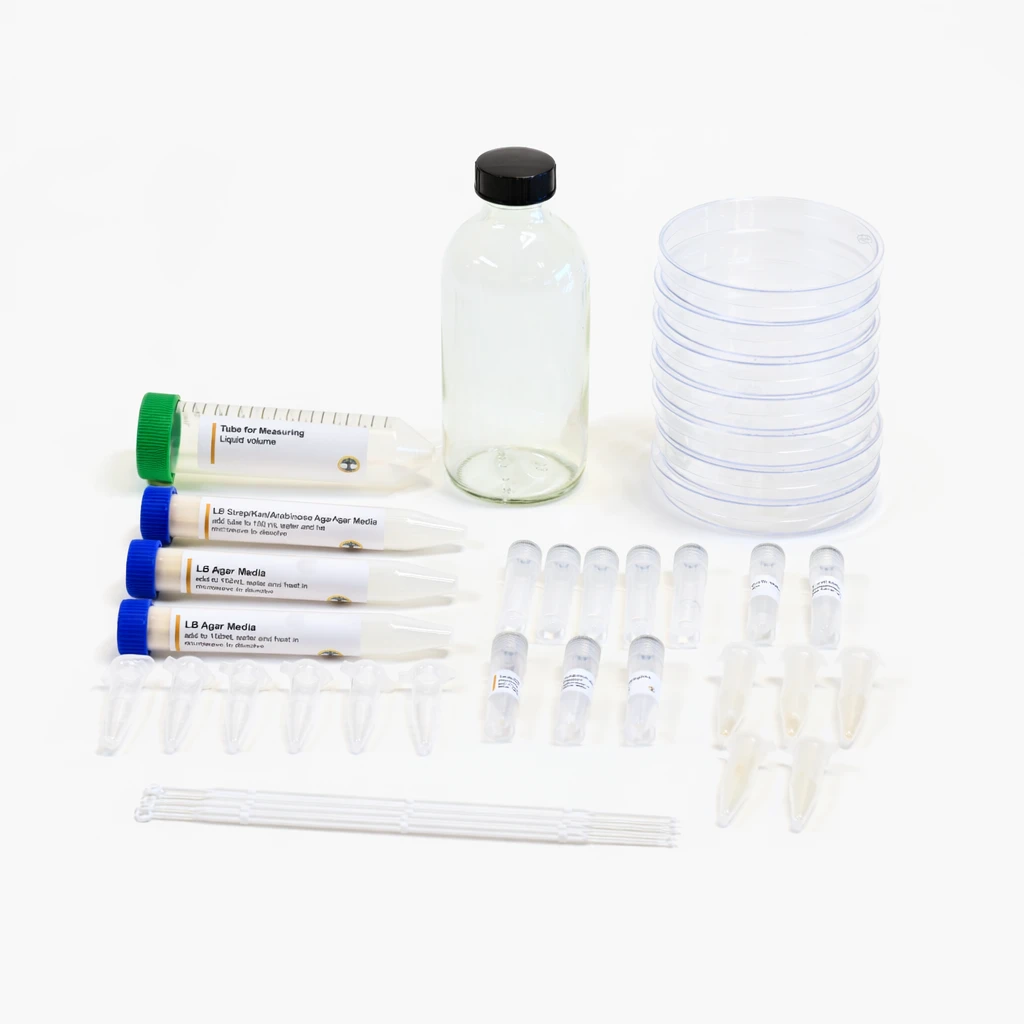
In Rotterdam, a hobbyist pieces together a gene-editing kit, all parts ordered from three different online vendors. In Nairobi, a graduate student quietly conducts unsanctioned protein synthesis experiments inside a refurbished shipping container. Meanwhile, a startup in Shenzhen is openly selling desktop DNA printers – no license required. Welcome to 2026, a world where synthetic biology has well and truly moved beyond the confines of university campuses, and we're just beginning to grasp the full implications.
The widespread availability of biotechnology was once envisioned as a huge win for humanity. Indeed, more affordable CRISPR tools, open-source protocols, and compact tabletop bioreactors have undeniably spurred remarkable advancements in medicine, agriculture, and materials science. Yet, the very same forces that placed powerful gene-editing capabilities into the hands of cancer researchers have also made them accessible to individuals and groups with far less benevolent intentions. The truth is, the regulatory framework built to prevent misuse was designed for a bygone era, a world that no longer exists.
The Lab Has Left the Building
For many decades, serious synthetic biology demanded serious infrastructure: think high-level biosafety facilities, strict institutional review boards, and supply chains meticulously monitored by government agencies. This gatekeeping wasn't flawless, but it did create a necessary friction — a friction that, while slowing down some innovation, also acted as a brake on potential catastrophes.
That friction is now gone.
By early 2026, the global market for biotechnology equipment aimed at consumers and small businesses had soared past $4.7 billion, according to estimates from BioIntelligence Analytics. You can now buy desktop DNA synthesizers for less than $8,000. Reagent kits cross international borders with minimal paperwork. Community biology labs – often called "biohacker spaces" – are active in over 60 countries, and a significant number operate with absolutely no formal regulatory oversight.
"The barrier to entry has collapsed faster than any biosecurity framework could adapt," warns Dr. Amara Osei, a biosecurity policy researcher at the Johns Hopkins Center for Health Security. "We're not talking about abstract, theoretical threats anymore. We're talking about proven capabilities, distributed across thousands of unmonitored points."
What Could Actually Go Wrong
The spectrum of potential threats is far broader than what typically enters public discussion. On the milder end, we have accidental releases – instances where engineered microbes or modified viruses escape from a community lab due to simple containment failures. These aren't dramatic bioterrorism plots; they are often mundane mistakes, yet they carry potentially serious ecological or public health consequences.
At the more severe end, the primary concern is deliberate weaponization. The 2025 U.S. National Biosecurity Assessment — which was declassified, albeit in a heavily redacted form — acknowledged for the first time that non-state actors had successfully created functional equivalents of select agents using equipment readily available on the commercial market. While no such incident progressed to actual deployment, the capability gap that once separated sophisticated nation-state bioweapons programs from independent actors has narrowed with alarming speed.
Between these two extremes lies a murky gray zone that worries experts the most: the accidental engineering of enhanced pathogens. Imagine a researcher diligently working on legitimate antibiotic resistance, only to inadvertently create a far more virulent strain. Or a biohacker experimenting with bacteriophage therapy, unintentionally generating off-target mutations with unpredictable transmission profiles. Crucially, unlike a nuclear accident, a biological one possesses the chilling capacity to self-replicate.
In 2026, biosecurity analysts have highlighted several key risk vectors:
- Synthesis of toxin-producing gene sequences by fragmenting orders across multiple suppliers to bypass detection algorithms.
- Experiments designed to enhance transmissibility conducted without the oversight of institutional biosafety reviews.
- Accidental environmental release from under-resourced community labs that lack proper waste decontamination procedures.
- Dual-use knowledge sharing facilitated by open-access platforms and encrypted biohacker forums.
- AI-assisted pathway design, which enables researchers with limited formal training to devise intricate genetic modifications.
The Regulatory Gap Is Structural, Not Accidental
It's not that governments have entirely ignored this brewing problem. Rather, they've struggled to solve it – and that’s a crucial distinction.
The United States did update its Federal Select Agent Program in 2024, adding eight new sequences to its monitored list. The European Union, in late 2025, passed the Biosafety Digitization Directive, which mandates that registered commercial DNA synthesizers flag synthesis orders against a shared database. And the Biological Weapons Convention, which has been somewhat faltering since 1975, managed to add a voluntary verification protocol that, so far, fewer than 40 nations have signed.
However, none of these efforts fundamentally address the core structural dilemma: jurisdiction stops at borders; biology does not.