The mood inside the sterile, wood-paneled conference rooms of the World Bank’s Washington headquarters has shifted from cautious optimism to a quiet, vibrating anxiety. It is mid-2026, and the "Green Transition" narrative, which for a decade promised a frictionless shift toward sustainable infrastructure in emerging markets, has hit a wall of hard, unyielding arithmetic.
We aren't looking at a traditional currency crisis, nor a classic commodity shock. We are looking at a granular, structural failure of project-level debt that is beginning to bleed into sovereign balance sheets across the Global South. The narrative of the "Green Supercycle" has encountered the reality of "Green Insolvency."
The Anatomy of the Debt-Renewable Trap
To understand why a mid-sized solar farm in Kenya or a wind corridor in Vietnam now threatens the stability of national budgets, you have to look past the macro-level ESG reports. You have to look at the power purchase agreements (PPAs).
In the late 2010s and early 2020s, development finance institutions (DFIs) and private equity firms pushed for rapid renewable energy deployment. The mechanism was usually a take-or-pay PPA, where the state-owned utility guarantees to buy electricity at a fixed price, usually denominated in US dollars, regardless of whether the grid can actually absorb that power.
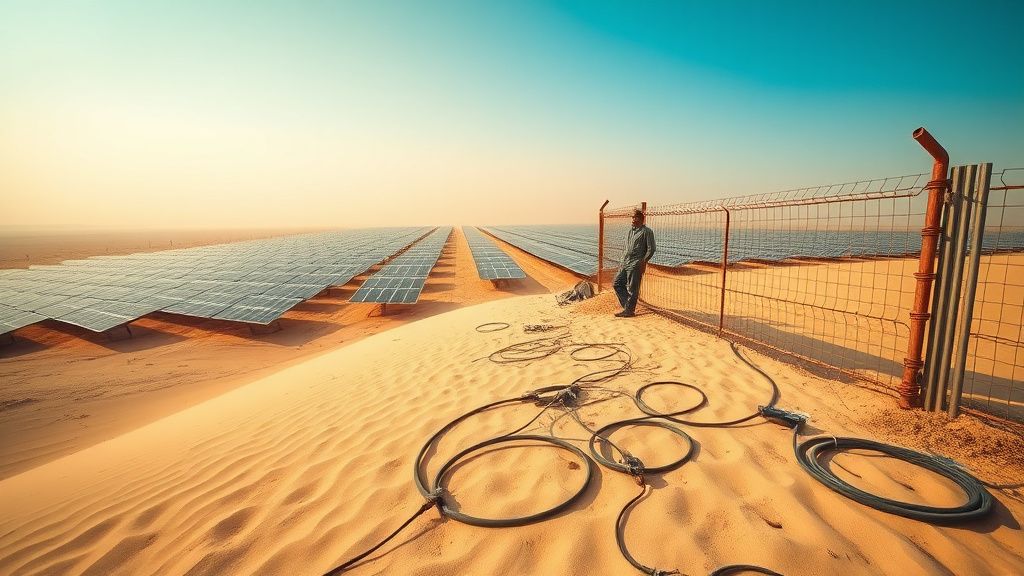
The math was beautiful in a spreadsheet, though many investors failed to see how The Debt-as-a-Service Trap: How P2P Platforms Could Trigger a 2026 Liquidity Crisis was already signaling these systemic risks. It assumed steady growth, stable currencies, and a seamless integration of renewables into national grids. But by 2026, the variables have curdled. Emerging market currencies have faced sustained depreciation against the dollar, doubling the real-cost of these dollar-denominated PPAs for local utilities. Meanwhile, the grids—many of them colonial-era legacies with chronic "last-mile" instability—cannot handle the intermittency of utility-scale wind and solar.
The result? "Curtailment." The utilities are being forced to pay for electricity they cannot move, store, or sell. This is no longer just a project failure; it is a systemic drain on sovereign liquidity.
The Operational Reality: "Held Together with Tape"
Visit a utility control room in a Tier-2 emerging market, and you will find engineers who are essentially playing a high-stakes game of Tetris with failing transformers. On forums like Hacker News and in specialized electrical engineering Discord servers, the sentiment is uniform: the infrastructure simply wasn't ready.
One senior engineer, posting on a private utility discussion group under the handle GridOps_Cairo, lamented:
"We keep signing these massive IPP (Independent Power Producer) contracts because the government wants the 'Renewable Energy' badge for the IMF/World Bank report. But every time the wind picks up in the Northern corridor, our frequency drops because we lack the baseload capacity to balance it. We are paying for power we literally have to throw away. If I disconnect the solar, we breach the contract and the government gets sued in an international arbitration court. If I don't, the substation blows."
This is the hidden cost of the transition. The "curtailment risk" is not priced into the bonds, but it is very much present in the operational reality. We are seeing a "Shadow Default" cycle. Countries aren't technically defaulting on their sovereign bonds yet, but they are defaulting on their underlying infrastructure obligations, leading to a paralysis of new investment.

The Migration Chaos and the "Workaround" Culture
The systemic failure of these energy projects has birthed an underground economy of "workarounds." In Southeast Asia, we’ve seen the rise of behind-the-meter industrial clusters—factories that have effectively seceded from the national grid, installing their own diesel or small-scale battery arrays to ensure stability.
This creates a vicious feedback loop, often mirroring the instability seen in other sectors where Why Corporations Are Moving Manufacturing Closer to Home in 2026 is a reactive strategy to global supply chain volatility. As the largest, most reliable industrial consumers leave the grid, the utility loses its revenue base. The debt for the large-scale, state-backed renewable projects remains, but the utility’s ability to pay that debt evaporates.
This isn't just an inefficiency; it’s an institutional crisis. The political pressure to prioritize household subsidies over paying international renewable energy bondholders is becoming impossible to resist. In several nations, we have seen "regulatory creep"—sudden, arbitrary changes to tariff structures that essentially nullify the protection of the original contracts.
Karşılıklı Eleştiri: The "Predatory" vs. "Prudent" Divide
The debate on why this happened is as polarized as the markets themselves.
On one side, the "Global North institutional" perspective, heavily championed by major investment banks and multilateral development agencies, argues that the crisis is a result of "poor governance" and "lack of institutional capacity." They maintain that the contracts were sound, and the failure lies entirely with the local governments’ inability to manage market risks.
On the other side, a growing coalition of emerging market economists, NGOs, and skeptical infrastructure analysts, often active on platforms like Reddit's r/economics or LinkedIn's specialized project finance groups, argue that these projects were structured as "debt traps by design."
"We are calling it a 'Green Debt Trap,'" says Dr. Aris Thorne, a policy analyst who has been documenting regional defaults since 2022. "The financing was structured to maximize developer profit while offloading 100% of the currency and curtailment risk onto the host country's taxpayer. It’s not just a bad business deal; it’s a form of financial neo-colonialism masked as an environmental necessity."