
Samsung Ice Maker Freezing Up & Not Working (2026)
The Service Bulletins, Lawsuits, Repair Failures, and Engineering Problems Behind Samsung’s Most Controversial Refrigerator Issue
Samsung refrigerator ice maker failures became one of the most discussed appliance reliability controversies of the late 2010s and early 2020s for one reason:
the same symptoms kept appearing across thousands of nearly identical refrigerators.
Owners across the United States repeatedly described:
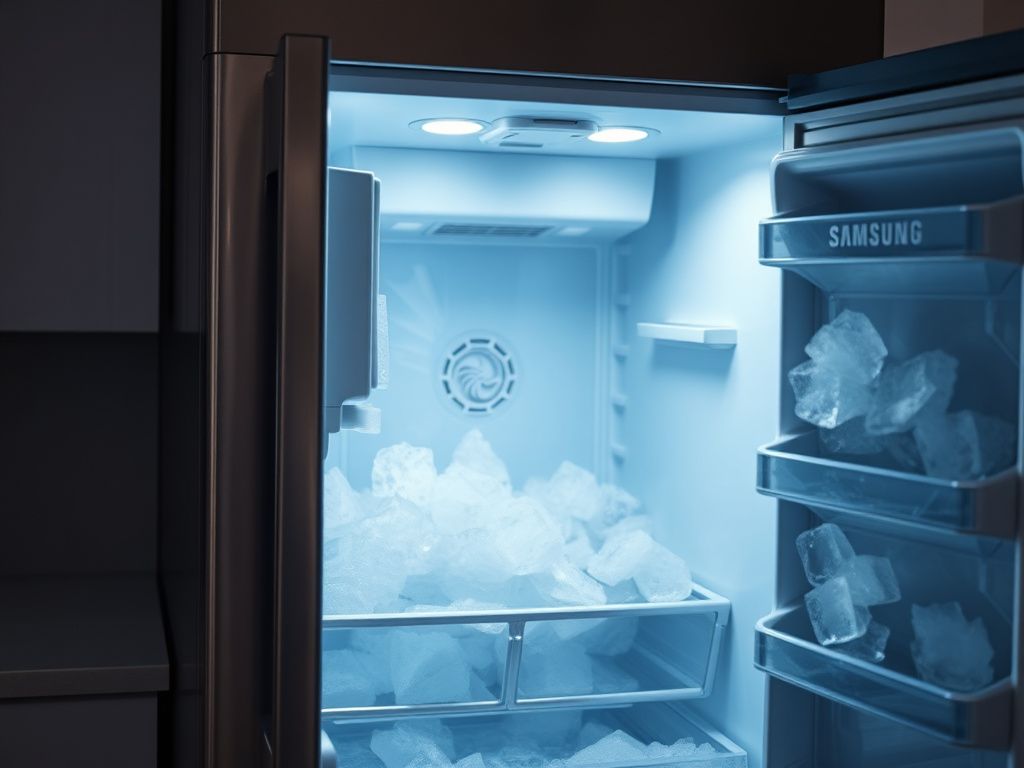
- frost-packed ice rooms,
- grinding evaporator fans,
- leaking water,
- jammed ice buckets,
- repeated service calls,
- and ice makers that froze again only weeks after repair.
What initially appeared to be isolated maintenance failures gradually evolved into a large-scale consumer reliability controversy involving:
- RF-series French-door refrigerators,
- technical service bulletins,
- recurring repair attempts,
- online technician investigations,
- and class action litigation.
Unlike a normal appliance defect involving a single failed component, many Samsung ice maker complaints centered around something more complicated:
repairs often worked temporarily — but the freeze-ups eventually returned.
That repeat-failure pattern became central to the controversy.
The Samsung Refrigerator Models Most Frequently Linked to Ice Maker Failures
While Samsung produced many refrigerator variations during the 2010s, technician forums and consumer complaints repeatedly concentrated around several RF-series French-door platforms.
The most frequently referenced models include:
- RF263BEAESR
- RF28HMEDBSR
- RF28JBEDBSG
- RF267AERS
- RF23M8070SG
- RF24FSEDBSR
- RF25HMEDBSR
- RF260BEAESG
Most of these refrigerators shared similar “ice room” architecture:
- upper refrigerator-mounted ice makers,
- redirected evaporator airflow,
- compact insulated ice compartments,
- adaptive defrost systems,
- and tightly controlled humidity balancing.
According to multiple appliance technicians, this design created a refrigeration environment with extremely small thermal tolerances.
💡 Key Insight: Many Samsung ice maker failures were not caused by the visible ice maker assembly itself. The deeper problem often involved the surrounding refrigeration environment inside the ice room.
The Engineering Design That Changed Everything
Traditional refrigerator ice makers normally operate fully inside the freezer compartment.
Samsung redesigned this concept in many premium French-door refrigerators by placing the ice maker inside a dedicated upper refrigerator ice room.
The goal was to improve:
- storage capacity,
- accessibility,
- and modern exterior design.
But the engineering complexity increased dramatically.
Unlike traditional freezer-mounted systems, Samsung’s ice room depended heavily on:
- redirected cold airflow,
- evaporator fan pressure,
- insulation integrity,
- moisture balancing,
- adaptive defrost timing,
- drain performance,
- and sensor calibration.
Technicians later argued that even small disruptions inside this system could destabilize the entire ice compartment.
Once frost began accumulating:
- airflow weakened,
- humidity increased,
- fan performance deteriorated,
- and ice formation accelerated further.
That cascading failure cycle became one of the most commonly described patterns in Samsung RF-series repair discussions.
The Service Bulletins That Escalated Technician Concern
As complaints increased, Samsung released multiple technical service procedures targeting recurring freeze-up behavior.
One bulletin series frequently referenced by appliance technicians was:
ASC20170602002
Technicians associated this bulletin with:
- ice maker freezing,
- water leakage,
- frost accumulation,
- drain icing,
- and repeat freeze-up behavior in RF-series refrigerators.
Later service revisions reportedly introduced:
- updated Y-clips,
- revised drain routing,
- RTV sealing procedures,
- insulation modifications,
- and updated evaporator repair methods.
Some technicians stated that certain repair procedures specifically targeted warm-air intrusion pathways around the ice compartment.
That detail became important because many repeat failures appeared linked not to a defective ice maker motor, but to recurring moisture infiltration inside the refrigeration cavity itself.
Several field technicians later claimed that early-generation repair kits sometimes reduced symptoms temporarily without fully eliminating repeat freeze-ups.
The Real-World Repair Pattern Technicians Kept Seeing
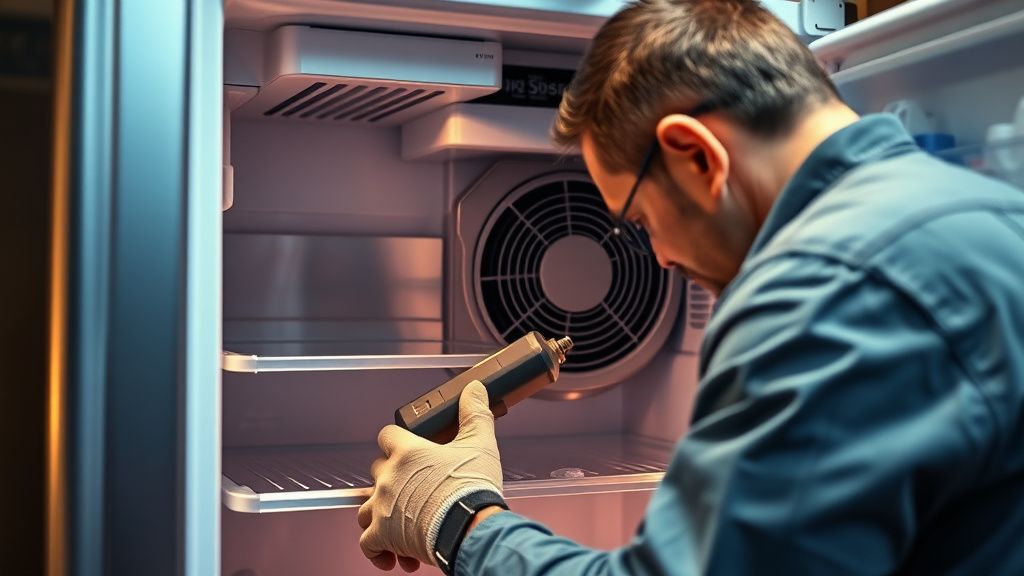
One of the most unusual aspects of the Samsung controversy was how consistently owners described the same repair cycle.
The Typical Failure Sequence
- Ice production slows.
- Frost forms behind the ice bucket.
- Grinding or buzzing noises appear.
- The ice room freezes solid.
- A technician performs a repair or defrost.
- The refrigerator works temporarily.
- The same problem returns weeks or months later.
Independent refrigeration technicians repeatedly described this pattern in repair forums throughout the late 2010s and early 2020s.
One long-running ApplianceBlog technician discussion involving RF263 and RF28 platforms documented recurring:
- evaporator icing,
- fan obstruction,
- and repeat service callbacks.
Several Reddit appliance repair threads involving RF28HMEDBSR owners also described:
- manual defrost procedures every 4–8 weeks,
- repeated ice maker replacements,
- and recurring frost accumulation despite prior repairs.
That recurrence interval became one of the strongest indicators that the problem extended beyond simple component failure.
The Class Action Lawsuits
Samsung refrigerator complaints eventually escalated into legal action in the United States.
One of the most referenced consumer cases involved allegations that certain Samsung French-door refrigerators suffered from chronic ice maker defects despite repeated repair attempts.
The litigation centered around claims involving:
- recurring freeze-ups,
- water leakage,
- excessive frost buildup,
- and allegedly ineffective long-term repairs.
Several law firms collected owner complaints involving: