
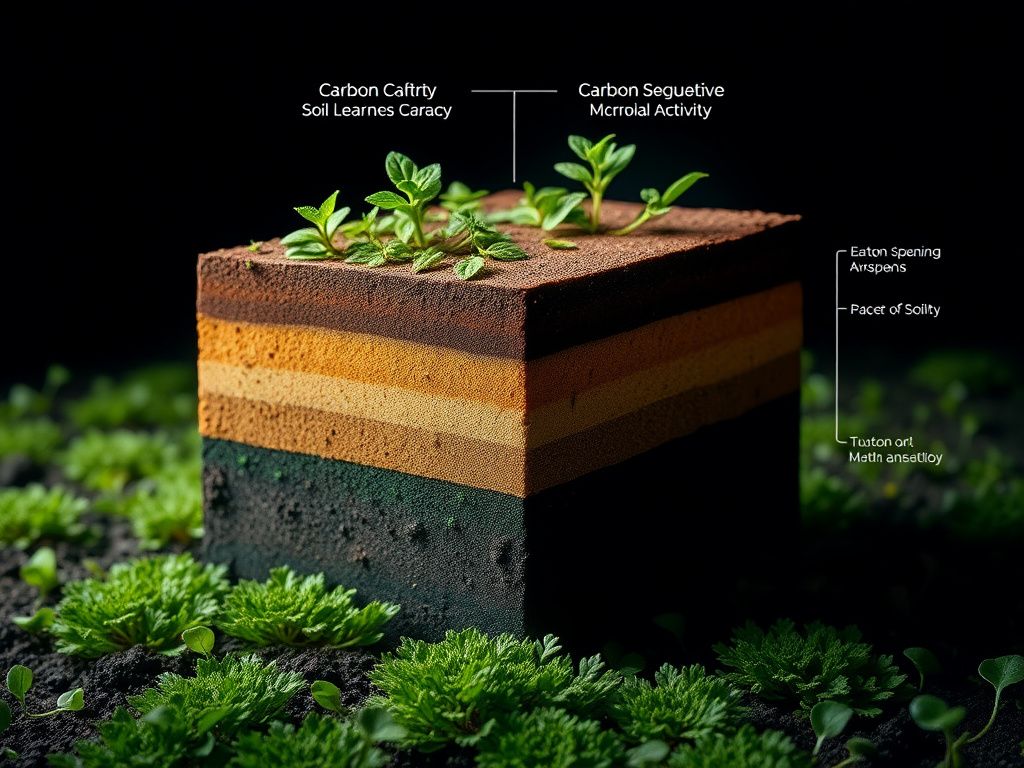
Quick Answer: Regenerative Agriculture 3.0 treats living soil as a financial asset, not a cost center. By rebuilding microbial ecosystems, sequestering carbon, and slashing input dependency, regenerative farms are now generating measurable ROI that attracts institutional capital—making soil health the defining investment thesis of 2026 and beyond.
The global food system is quietly bleeding out. Conventional agriculture has depleted roughly 30% of the world's arable land over the last century, and the economic model propping it up—cheap synthetic inputs, monoculture yields, subsidized water—is fracturing under climate pressure. The question isn't whether the system breaks. It's whether you're positioned on the right side of what replaces it.
Regenerative Agriculture 3.0 isn't a rebranding of organic farming. It's a precise, data-driven discipline that treats soil the way a hedge fund manager treats a portfolio: build the underlying asset, and the returns compound. For investors, landowners, farmers, and conscious consumers in 2026, understanding this shift isn't optional. It's the literacy test for the next decade of food, land, and climate investing.
What Separates "Regenerative 3.0" from Everything That Came Before
Regenerative Agriculture 1.0 was philosophical—rooted in indigenous land stewardship and early permaculture theory. Version 2.0 brought practical techniques: cover cropping, no-till systems, rotational grazing. Both movements were real, but both lacked the measurement infrastructure to speak the language of capital markets.
Version 3.0 is different because it has receipts.
- Soil carbon sequestration can now be verified at sub-meter resolution using satellite hyperspectral imaging and on-ground sensors
- Biological soil health indices (BSHI) provide standardized, auditable benchmarks comparable across farms
- Inset carbon markets (on-farm credits embedded into supply chains) are replacing the speculative voluntary offset markets that collapsed in 2023–2024
The result: regenerative practices now carry auditable financial value. A farmer in Kansas who builds 1% more organic matter per acre has a measurable, monetizable asset—not just a better harvest.
The Soil Science You Need to Understand the Investment Case
Healthy soil isn't dirt. It's a living system with roughly 1 billion bacteria, 120,000 fungi, and thousands of nematodes per teaspoon. This biological community drives every agronomic outcome that matters economically.
The Carbon-Nitrogen Feedback Loop
When soil microbiome diversity is intact, the carbon-to-nitrogen ratio self-regulates. Plants photosynthesize, pump liquid carbon (root exudates) down into the rhizosphere, feed fungal networks, and receive mineral nutrition in return. This is the original circular economy—and it runs without a single bag of fertilizer.
Conventional tillage breaks this loop. Each pass of a plow oxidizes stored carbon, releases CO₂, and kills fungal hyphae that took years to form. The farmer then compensates with synthetic nitrogen, which further acidifies the soil, accelerating the collapse. It's a debt spiral with a natural resource at its core.
Regenerative 3.0 interventions that reverse this:
- No-till or minimal-till cultivation — Preserves fungal networks and soil aggregates
- Polyculture cover cropping — Maintains root exudate diversity year-round, feeding microbial communities through fallow periods
- Adaptive multi-paddock (AMP) grazing — Mimics historical herd movement; hoof action aerates compacted soils, manure inoculates the microbiome
- Biochar and compost applications — Provides stable carbon structures that persist in soil for centuries
Why Institutional Money Is Moving Into Regenerative Land
BlackRock, Nuveen, and Gresham House have all expanded agricultural land holdings since 2022. This isn't philanthropy. The investment thesis rests on three interlocking fundamentals:
1. Input cost reduction compounds dramatically over time. A regenerative system that replaces 60–80% of synthetic fertilizer use (a real number achieved on 5-year-established regenerative farms) creates a cost structure that conventional neighbors simply cannot match as input prices remain volatile.
2. Premium market access is widening. Supply chain transparency requirements from the EU Deforestation Regulation (EUDR) and new USDA Organic 2.0 frameworks are creating a verified premium tier. Regenerative-certified grain commands 15–40% premiums depending on the crop and end buyer.