
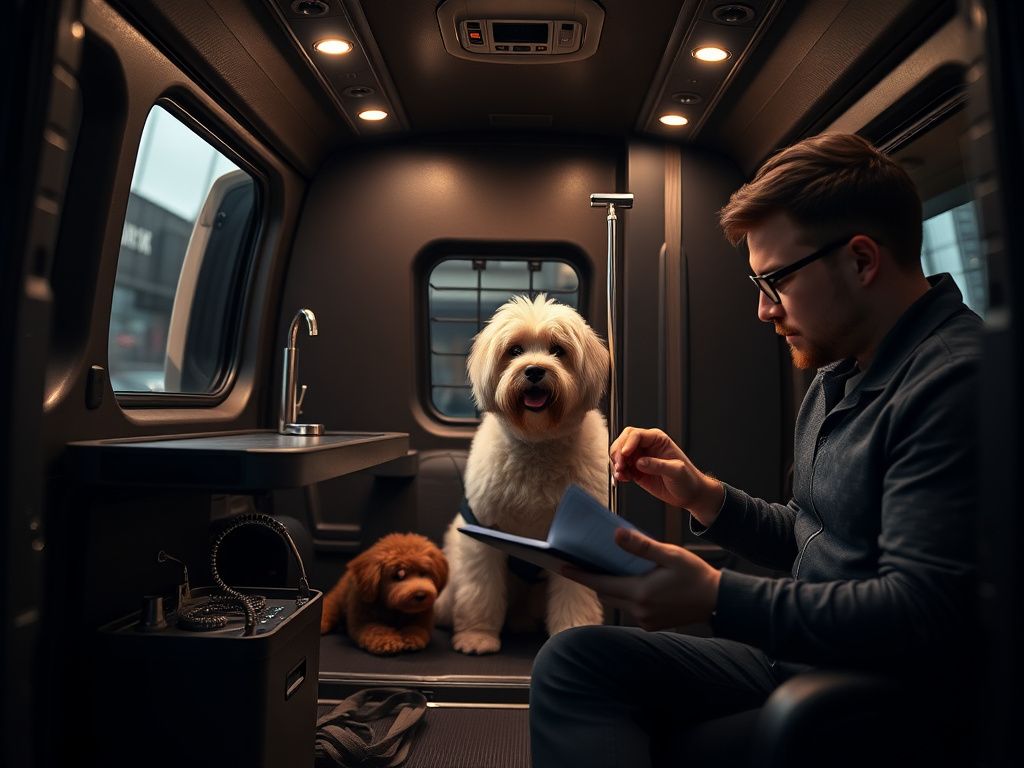
Yes, a mobile dog grooming business can be highly profitable in 2026, even with fierce competition and strict HOA regulations. Success hinges on a robust business plan focusing on operational efficiency through route optimization, a premium service model justifying higher price points, and a proactive strategy for navigating local ordinances.
The pet care industry is not just growing; it's undergoing a fundamental shift towards premiumization and convenience. As a business architect, I see the mobile grooming model as a brilliant answer to this market demand. It eliminates the storefront overhead of a traditional salon and brings a high-value service directly to the customer's doorstep. However, this model's success isn't guaranteed. Profitability is a direct result of meticulous planning and strategic execution, especially when facing the twin challenges of a saturated market and the bureaucratic maze of local regulations. Let's dissect the architecture of a successful mobile grooming operation for 2026.
Deconstructing the Profitability Matrix of Mobile Grooming
Before you even think about the color of your grooming van, you must understand the financial engineering behind a profitable mobile service. It’s a game of margins, efficiency, and maximizing revenue per operational hour.
The Revenue Engine: Beyond the Basic Wash
Your revenue isn't just the sum of your grooming appointments. A sophisticated revenue model includes tiered services and high-margin add-ons.
- Core Grooming Packages: These are your bread and butter. Base your pricing on breed, size, and coat condition. A simple bath and brush for a short-haired dog might be your entry-level offer, while a full haircut, de-matting, and style for a Standard Poodle sits at the premium end. Industry data shows average grooming fees range from $60 to well over $150 per pet.
- High-Margin Add-Ons: This is where you significantly boost your average ticket value. Think dental care (ultrasonic teeth cleaning), paw pad treatments, luxury shampoos and conditioners, flea and tick treatments, and de-shedding services. These often have low material costs but high perceived value.
- Subscription Models: The holy grail for any service business is recurring revenue. For 2026, offering a monthly or bi-monthly "Wellness Plan" with a slight discount is a powerful customer retention tool. It smooths out cash flow and locks in your client base.
The Operational Cost Structure: A Tale of Two Expenses
Profit is what’s left after your costs are paid. In mobile grooming, these fall into two main buckets.
Capital Expenditures (CapEx): This is your significant upfront investment.
- The Vehicle: A new, professionally converted grooming van (like a Ford Transit or Mercedes Sprinter) can cost anywhere from $70,000 to $120,000. Used or self-converted options can lower this, but may come with higher maintenance risks.
- The Equipment: This includes a high-end grooming tub, electric or hydraulic grooming table, high-velocity dryers, clippers, blades, shears, and initial inventory of supplies. Don't skimp here; quality tools increase efficiency and safety.
Operating Expenses (OpEx): These are your ongoing monthly costs.
- Fuel: Your single most variable cost, directly tied to your service area and route efficiency.
- Insurance: This is non-negotiable and complex. You'll need commercial auto insurance, general liability, and crucial "animal bailee" or professional liability coverage, which protects you if a pet is injured in your care.
- Supplies: Shampoos, conditioners, ear cleaners, etc.
- Booking & Payment Software: A modern system for scheduling, route optimization, and payment processing is a critical efficiency tool.
- Maintenance: Regular oil changes, generator servicing, and blade sharpening are essential to prevent costly downtime.
Experts note that successful mobile groomers maintain a profit margin between 20% and 40% after all operating expenses are accounted for. This is achievable only through disciplined financial management and operational excellence.
Navigating the Gauntlet: HOAs and Local Ordinances
Homeowner Associations (HOAs) and city ordinances can be the silent killers of a mobile grooming business. A single complaint about your generator's hum or where your van is parked can jeopardize your ability to service an entire neighborhood.