
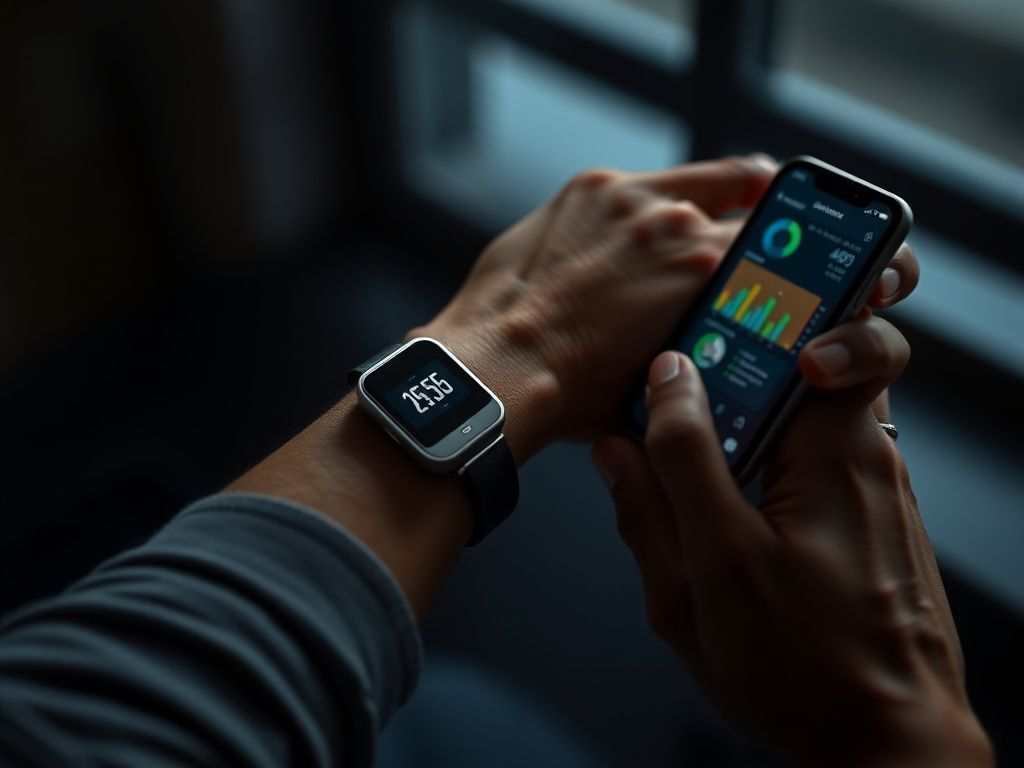
Quick Answer: Continuous glucose monitors (CGMs), once exclusive to diabetic care, are now rewriting metabolic science for healthy individuals. By tracking real-time blood sugar responses to specific foods, sleep, and stress, CGMs reveal that two people eating identical meals can have wildly different glucose reactions — fundamentally challenging the one-size-fits-all nutrition model.
The era of generic dietary advice — "eat less sugar," "follow the food pyramid," "count your calories" — is quietly collapsing under the weight of precision data. What's replacing it is something far more sophisticated: hyper-personalized nutrition, driven by wearable biosensors that measure metabolic responses in real time.
At the center of this transformation is the continuous glucose monitor (CGM) — a small sensor worn on the arm or abdomen that measures interstitial glucose every few minutes, transmitting data wirelessly to a smartphone. Originally developed for Type 1 and Type 2 diabetic management, CGMs are now being adopted by athletes, biohackers, longevity researchers, and everyday health-conscious consumers who want to understand their bodies at a granular level.
The science behind this shift is not trivial. And the implications for how we think about metabolism, food, and disease prevention are profound.
Why Individual Glucose Responses Shatter the Standard Nutrition Model
The landmark study that set this field in motion was published in Cell in 2015 by researchers Eran Segal and Eran Elinav at the Weizmann Institute of Science. Their study — the Personalized Nutrition Project — monitored 800 non-diabetic individuals over one week using CGMs, tracking over 46,000 meals.
The findings were striking:
- Identical foods produced dramatically different glycemic responses across individuals.
- White bread caused massive glucose spikes in some participants but minimal reaction in others.
- One participant had a severe glucose spike from bananas — often considered a "healthy" food — while experiencing a flat, controlled response to cookies.
- Gut microbiome composition was identified as one of the strongest predictors of personalized glucose response, outperforming traditional dietary glycemic index tables.
This research established a critical truth: the glycemic index of a food is a population average, not an individual guarantee. A food labeled "low GI" may cause a high spike in your specific metabolic context, while a "high GI" food might barely register.
What CGMs Actually Measure — and Why It Matters Beyond Diabetes
CGMs measure interstitial glucose — the concentration of glucose in the fluid surrounding cells — as a proxy for blood glucose. Modern devices like the Abbott Freestyle Libre 3, Dexcom G7, and Levels Health-integrated sensors update readings every 1–5 minutes, providing a continuous waveform of metabolic activity.
For non-diabetic users, the key metrics tracked include:
| Metric | What It Reveals |
|---|---|
| Glucose peak | How high blood sugar spikes after a meal |
| Time in range | % of time glucose stays between 70–140 mg/dL |
| Glucose variability | Stability of blood sugar across the day |
| Recovery rate | How quickly glucose returns to baseline |
| Nocturnal baseline | Fasting glucose trends during sleep |
High glucose variability, even within technically "normal" ranges, has been associated in peer-reviewed literature with increased oxidative stress, fatigue, cognitive impairment, and long-term cardiovascular risk. A 2019 study in PLOS Biology found significant glycemic variability in 57% of participants classified as metabolically healthy by standard clinical tests.
This means millions of people walking around with "normal" fasting glucose levels may still be experiencing damaging metabolic swings — completely invisible without continuous monitoring.
The Four Key Variables That Alter Your Glucose Response
CGM data from population-scale studies and platforms like Levels, January AI, and Zoe (which combines CGMs with gut microbiome testing) have identified four consistent modulators of personal glucose response:
1. Food Composition and Sequencing
The order in which you eat macronutrients matters significantly. Research from Weill Cornell Medicine demonstrated that eating vegetables and protein before carbohydrates reduced post-meal glucose peaks by up to 73% compared to eating carbohydrates first — using the same total meal.
2. Sleep Quality
Even a single night of poor sleep (under 6 hours) measurably degrades glucose regulation the following day. CGM users consistently report higher post-meal spikes and slower recovery rates after disrupted sleep. This is mediated through elevated cortisol and reduced insulin sensitivity.
3. Physical Activity Timing
A 10–20 minute walk after a meal has been shown in multiple randomized controlled trials to significantly blunt glucose spikes — more effectively than a longer walk taken before eating. CGMs make this feedback loop immediate and visible, reinforcing behavioral change in real time.
4. Stress and Cortisol
Acute psychological stress triggers cortisol release, which stimulates hepatic glucose production — causing blood sugar to rise with no food consumed at all. CGM users working high-stress jobs often observe afternoon glucose surges that correlate precisely with meeting schedules or deadline pressures.