
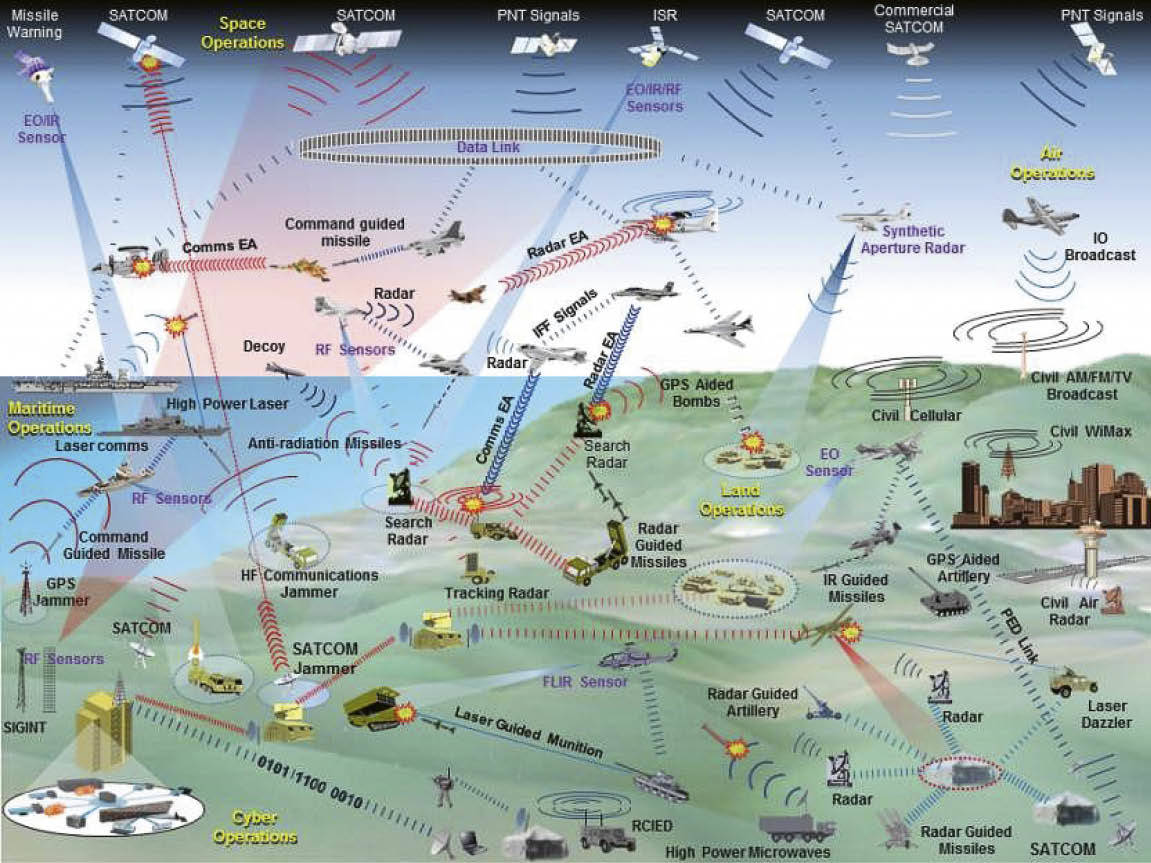
The quiet hum of the global aerospace monitoring network has shifted from a rhythmic baseline to a jagged, erratic waveform. Since the first quarter of 2026, NORAD and its international counterparts—from the ESA’s space situational awareness bureaus to the growing sensor grids in the Indo-Pacific—have logged an unprecedented uptick in "High-Altitude Anomalous Signal Events" (HASE). These aren't the classic "UFO" tropes of the 20th century. These are metadata ghosts: encrypted, burst-transmission signals originating from the mesosphere, operating at frequencies that technically shouldn't exist in a natural atmospheric environment.
The Signal-to-Noise Problem
In the early months of this year, the initial chatter on platforms like Hacker News and specialized signal intelligence subreddits was dismissed as signal reflection, or perhaps the byproduct of an increasingly congested Low Earth Orbit (LEO). But as the incidents mounted, the discourse shifted.
The core issue isn't just the existence of these signals; it’s the operational friction they cause. When a regional air traffic control grid or a regional power management system encounters a HASE, it doesn't just trigger a log entry; it induces a "brownout" of automated diagnostic protocols. Engineers are calling it "sensor blindness." The system essentially logs an undefined input and triggers a reboot—a classic, if frustrating, legacy software response to an unexpected edge case.
"The problem isn't that we don't know what they are. The problem is that our current architecture—designed to filter out clutter—cannot categorize these events without crashing the diagnostic kernel. We are seeing thousands of lines of 'unknown entity' errors in the logs, and nobody in management wants to touch the configuration for fear of destabilizing the grid." — Comment from a senior network engineer on a restricted aerospace dev forum, March 2026.
The Geopolitical Brinkmanship
The security implications are, predictably, being exploited as a weapon of statecraft. By mid-2026, the lack of transparency regarding these signals has morphed into a "blame-game" architecture. Washington points toward the expansion of clandestine high-altitude drone programs by near-peer rivals; Beijing and Moscow, meanwhile, circulate white papers suggesting these anomalies are the byproduct of Western "electronic surveillance overreach."
The reality is likely more fragmented. While the intelligence community debates whether these signals are signals intelligence (SIGINT) probing or genuine atmospheric phenomena, the infrastructure stress is real. We are seeing a divergence in how nations handle the data. The U.S. is moving toward a "black-box" classification, effectively burying the raw data deep within classified silos, which—ironically—prevents the scientific community from performing the signal processing necessary to debunk the "alien" hysteria.
Engineering Compromise vs. Reality
From a purely technical standpoint, the hysteria is outpacing the capability. Most of the "anomalous" spikes are appearing in civilian sensors that were never calibrated for high-altitude spectrum analysis. When you take a cheap, software-defined radio (SDR) rig and push it to the limits of its sampling rate, you get noise. When you correlate that noise across a continent, you get patterns. Some of these "anomalies" are simply aliasing artifacts—digital ghosting caused by poorly filtered hardware struggling with the sheer density of modern satellite traffic.
Yet, the trust erosion is profound. When official channels remain silent or issue generic "weather balloon-style" denials, the void is filled by high-fidelity analysis from independent researchers. GitHub repositories are popping up, hosting thousands of hours of crowdsourced sensor logs. The maintainers of these projects are finding themselves in a strange, precarious position: they are essentially doing the job that national governments are too paralyzed by political risk to undertake.