
Quick Answer: In 2026, biometric data laws cover facial recognition, fingerprint scanning, and gait analysis used by retailers. Several U.S. states, the EU, and parts of Asia now mandate explicit consent, data minimization, and breach notification. Retailers violating these laws face fines up to $25,000 per violation. Knowing your rights is the first line of defense.
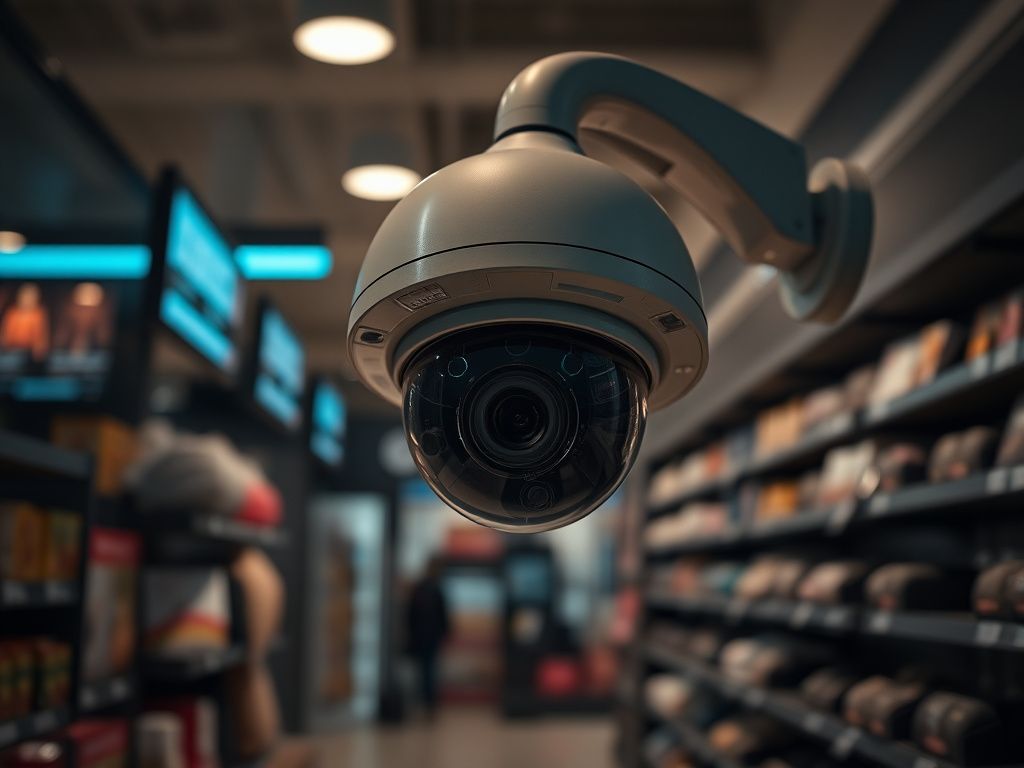
The checkout counter has become a data collection checkpoint. What looks like a standard security camera above the entrance of your favorite clothing store may actually be running real-time facial recognition software, mapping the geometry of your face, estimating your age and emotional state, and linking that biometric profile to your purchase history — all without your knowledge or meaningful consent.
This is not speculative. It is the documented operating reality of retail technology in 2026.
What Counts as Biometric Data in Retail Environments?
Before assessing whether your retailer is in violation, it's essential to understand what legally qualifies as biometric data under current frameworks.
Under the Illinois Biometric Information Privacy Act (BIPA) — still the most litigated biometric privacy law in the world — biometric identifiers include:
- Retina and iris scans
- Fingerprints and voiceprints
- Face geometry (the spatial mapping of facial features)
- Hand and gait geometry
The EU's General Data Protection Regulation (GDPR), under Article 9, defines biometric data as "personal data resulting from specific technical processing relating to the physical, physiological or behavioural characteristics of a natural person, which allow or confirm the unique identification of that natural person."
By 2026, at least 19 U.S. states have enacted biometric privacy legislation at varying levels of strength. Washington's My Health MY Data Act (2023), Texas's Capture or Use of Biometric Identifier Act (CUBI), and New York's pending Biometric Privacy Act all extend this regulatory patchwork further.
The critical insight: Most retailers deploy technologies that clearly fall within these definitions — yet compliance audits consistently reveal major gaps.
The Technologies Retailers Are Actually Using
Understanding what you're up against requires a technical view. Here are the primary biometric systems operating in retail spaces today:
1. Facial Recognition at Entry Points
Systems like NEC NeoFace, Clearview AI's commercial API, and proprietary in-store surveillance from major retail tech vendors use convolutional neural networks (CNNs) to generate a 128-dimensional facial embedding. This embedding is compared against watchlists, loyalty databases, or third-party data brokers in near real-time.
Accuracy rates for top-tier systems now exceed 99.7% under controlled lighting — making misidentification claims harder, but consent violations easier to commit.
2. Emotion and Behavioral Analytics
Startups like Emotient (acquired by Apple) and enterprise platforms like Affectiva offer emotion inference from facial micro-expressions. Retailers use this to measure in-store engagement, dwell time near product displays, and frustration at checkout queues.
Under GDPR Recital 51, inferring psychological states from biometric data is classified as special category data processing — requiring explicit consent, not just implied consent through a posted sign.
3. Gait Recognition and Floor Sensors
Less discussed but equally significant: pressure-sensitive flooring and overhead LiDAR systems can identify individuals by their walking pattern. A 2023 paper published in IEEE Transactions on Biometrics, Behavior, and Identity Science demonstrated gait identification accuracy of 94.3% at distances up to 50 meters, even when subjects were unaware of monitoring.
4. Fingerprint and Palm Scanning at Point of Sale
Amazon's Amazon One palm-scanning payment system operates in over 500 locations in the U.S. as of 2025. While Amazon states enrollment is voluntary, Illinois courts have scrutinized whether the framing of "optional" services in contexts of consumer convenience constitutes coercion — a nuanced legal question still being litigated.
Where Retailers Are Falling Short: The Compliance Gap
A 2024 compliance audit by the Future of Privacy Forum surveyed 200 mid-to-large retailers in the U.S. and EU. The findings are striking: