
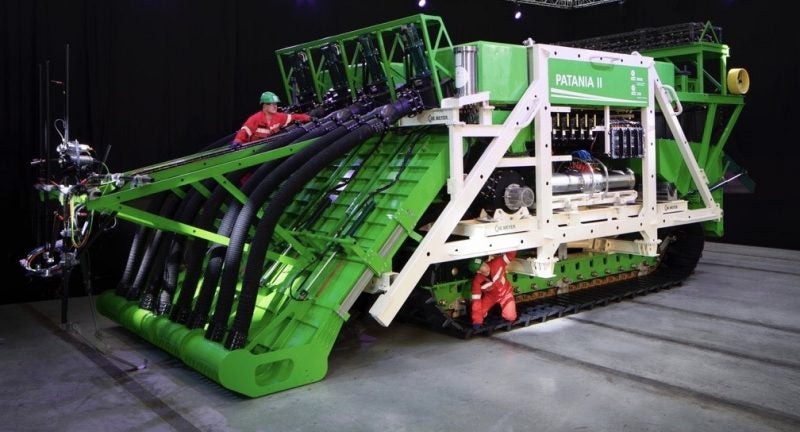
The seafloor, it turns out, is not as quiet as we once assumed. Three miles beneath the surface of the Pacific Ocean, in a region called the Clarion-Clipperton Zone stretching roughly from Hawaii toward Mexico, the ocean floor is carpeted with fist-sized potato-shaped nodules. They've been sitting there for millions of years, slowly accreting layers of manganese, cobalt, nickel, and copper around ancient shark teeth or bits of shell. They look almost organic, these nodules — like something growing rather than something mined. And right now, they are at the center of one of the most contested resource debates the tech industry has ever quietly funded.
The question of whether to mine the deep ocean for rare earth elements and critical minerals is no longer a fringe conversation held in obscure maritime law conferences. In 2026, it has broken into mainstream industrial and geopolitical reality with a force that's difficult to overstate.
Why Now
The pressure driving this moment is almost embarrassingly simple. China controls somewhere between 60 and 85 percent of global rare earth processing capacity, depending on how you count and which minerals you're talking about. After years of escalating trade restrictions, Beijing tightened export controls on germanium, gallium, and several rare earth compounds in 2023 and 2024. By late 2025, the downstream effects were being felt in EV battery supply chains, defense contractors, and semiconductor fabs across the U.S., Japan, South Korea, and the EU.
The response from Western governments was a predictable scramble — investment in domestic mining, partnership agreements with Australia and Canada, and accelerated interest in alternatives. Deep-sea mining became the option that certain voices in the tech-industrial complex started whispering more loudly about, then funding, then lobbying for openly.
The Metals Company (TMC), a Vancouver-based firm, has spent the better part of a decade positioning itself as the primary commercial applicant for nodule extraction in the Clarion-Clipperton Zone under sponsorship from the small island nation of Nauru. It has collected nodules in pilot tests. It has published environmental baseline studies. It has lobbied the International Seabed Authority, the U.N.-affiliated body that regulates the high seas, with considerable institutional persistence.
"The nodules are sitting there. The technology to retrieve them exists. The minerals inside them are exactly what the energy transition requires. What we're waiting on is not engineering. It's political will." — Gerard Barron, CEO of The Metals Company, in a February 2026 interview with Bloomberg
That framing — clean, urgent, solvable — is exactly what critics find dangerous.
The Environmental Argument Is Not Simple
Marine biologists are not uniformly opposed, but many are deeply alarmed. The Clarion-Clipperton Zone, despite being dark and cold and three miles underwater, is biologically active in ways science is still mapping. Sediment plumes generated by nodule collection vehicles could drift hundreds of kilometers, smothering filter feeders and disrupting ecosystems that may take centuries to recover, if they recover at all.
A 2024 study in Nature Geoscience found that sediment disturbance from a 1989 experimental mining test in the Pacific had not recovered 35 years later. The seafloor where nodules had been removed remained largely barren. That data point keeps surfacing in environmental impact hearings, and it's uncomfortable because it's not speculation — it's observation.
The ISA has been under sustained pressure to finalize its mining code, a regulatory framework that would set extraction standards, environmental protections, and benefit-sharing rules. As of mid-2026, the code remains incomplete after years of negotiation, procedural delays, and outright political disagreement. Several member states — including France, Germany, Chile, and New Zealand — have called for a moratorium or a precautionary pause on commercial licensing until scientific understanding of deep-sea ecosystems improves substantially.
The U.S., which is not even a member of the ISA because the Senate never ratified the UN Convention on the Law of the Sea, sits awkwardly outside this entire framework while American companies remain intensely interested in the outcome.
The Tech Industry's Fingerprints
It's worth being specific about whose supply chain pressure is driving this. Battery manufacturers, EV makers, and the defense supply chain all need cobalt, nickel, and manganese. Apple, Google, and Microsoft have all made commitments to responsibly sourced minerals. None of those commitments technically prohibit deep-sea sourced materials, and several corporate sustainability teams have quietly evaluated whether deep-sea nodules might actually represent a lower human rights footprint than cobalt from the Democratic Republic of Congo, where artisanal mining operations have long been associated with child labor and dangerous conditions.