
Imagine this: A teenager, working out of a rented garage just outside Rotterdam, has successfully synthesized a brand-new protein sequence. They did it with a $400 desktop bioreactor and an open-source gene-editing toolkit, downloaded straight from a Discord server. No one approved it. No one supervised it. And fundamentally, no one even knows.
This isn't a scene from a sci-fi movie anymore. This is happening today.
The Democratization Paradox
For decades, synthetic biology was an exclusive club, locked away behind university walls, guarded by federal funding gates, and confined within BSL-3 containment facilities. Then, something shifted. The tools became incredibly affordable, the protocols started flowing freely online, and suddenly, the community labs movement absolutely exploded. By 2026, we're looking at an estimated 4,200 active decentralized, or "community," biology labs operating worldwide — a staggering number that has actually tripled since just 2022, according to compelling data gathered by the Johns Hopkins Center for Health Security.
The benefits are truly significant: citizen scientists have dramatically accelerated diagnostics research, created affordable biosensors crucial for agriculture, and made substantial contributions to open-source vaccine platforms. Yet, this very openness has inadvertently created an enormous, largely unprotected attack surface. We're talking about dual-use experimentation — work that might appear as harmless research on the surface, but can subtly, dangerously, drift into the realm of biosecurity threats.
"The genie actually left the bottle sometime around 2023, and it seems nobody really wants to admit it," remarks Dr. Priya Mehrotra, a biosecurity policy researcher at the Nuffield Council on Bioethics in London. She explains, "Our current regulatory frameworks were built with institutional players in mind — universities, major pharmaceutical companies, certified research facilities. They were simply never designed for a world where sophisticated gene synthesis can now occur in someone's spare bedroom."
What the Hardware Revolution Actually Enabled
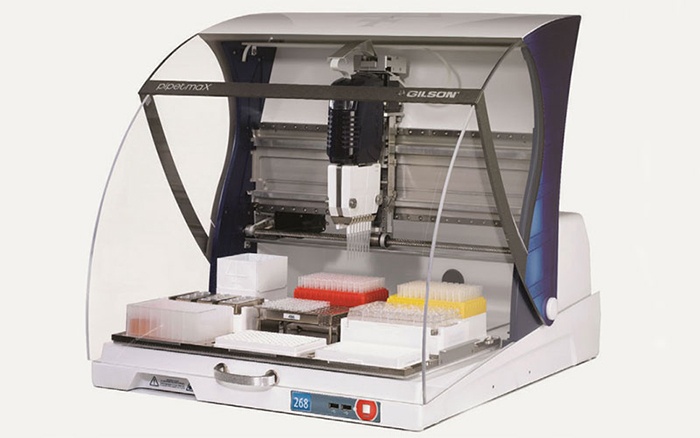
The real game-changer? The commoditization of hardware. Just imagine: desktop bioreactors that would have set you back $60,000 in 2018 are now readily available for less than $800. You can literally order portable nanopore sequencers on Amazon Prime. And automated CRISPR delivery systems — once the exclusive privilege of hugely well-funded labs — are now packaged into educational kits, sold directly to high school biology students.
Even more critically, AI-assisted sequence design has completely flattened the expertise barrier. We now have platforms, meticulously trained on vast, publicly available genomic databases, that can suggest functional protein structures, accurately predict how genes might behave, and even highlight entire synthesis pathways. The astonishing part? You don't need a PhD in molecular biology to use them. Worryingly, many of these powerful tools operate in regulatory gray zones throughout Southeast Asia and parts of Eastern Europe, with virtually no oversight on who accesses them or the nature of the queries they submit.
This powerful convergence — cheap hardware, freely shared protocols, and sophisticated AI co-pilots — has ushered in what biosecurity analysts now chillingly refer to as the "capability flatline." It's a state where, for certain specific and potentially dangerous experiments, the technical gap between a highly credentialed researcher and a completely untrained enthusiast has shrunk to almost nothing.
The Regulatory Dead Zone
Here's the fundamental issue at play: international biosecurity law was specifically written with states in mind.
Take the Biological Weapons Convention, for example. It was last significantly updated in 1975, and today it completely lacks any verification mechanism, possesses no enforcement body, and — most critically — offers absolutely no provisions for non-state actors who operate below a commercial threshold. Then there's the Australia Group, which helps coordinate export controls on dual-use biological materials among its 43 member nations. While it can restrict the sale of specific pathogen cultures and synthesis reagents, it's utterly powerless to monitor a biohacker downloading a CRISPR protocol at two in the morning.
Looking nationally, the United States has its Select Agent Program, which requires registration and strict oversight for labs working with a specific list of dangerous pathogens. The catch? It only applies to those recognized agents already on a defined list. Novel synthetic sequences — exactly the kind an AI tool could help design — fall completely outside its jurisdiction until their danger is proven. And this creates a profound logical trap: you often only discover the true danger by experiencing the harm it causes.
Similarly, the EU's biosafety directives primarily concentrate on contained-use regulations for genetically modified organisms (GMOs) within commercial environments. This means that community labs not dealing with listed organisms are effectively operating in what Brussels quietly admits is a deep compliance shadow.
Marcus Hellweg, a former BND analyst now lending his expertise to the European Centre for Disease Prevention and Control, powerfully argues, "The regulatory architecture we have today faces a fundamental timing problem. Oversight only really kicks in after a substance has been classified. But the entire threat model of synthetic biology is centered around creating things that simply haven't been classified yet."
Case Studies in Near-Miss Incidents
To truly grasp what's at stake, without resorting to worst-case speculation, consider three documented incidents that occurred in 2025: