
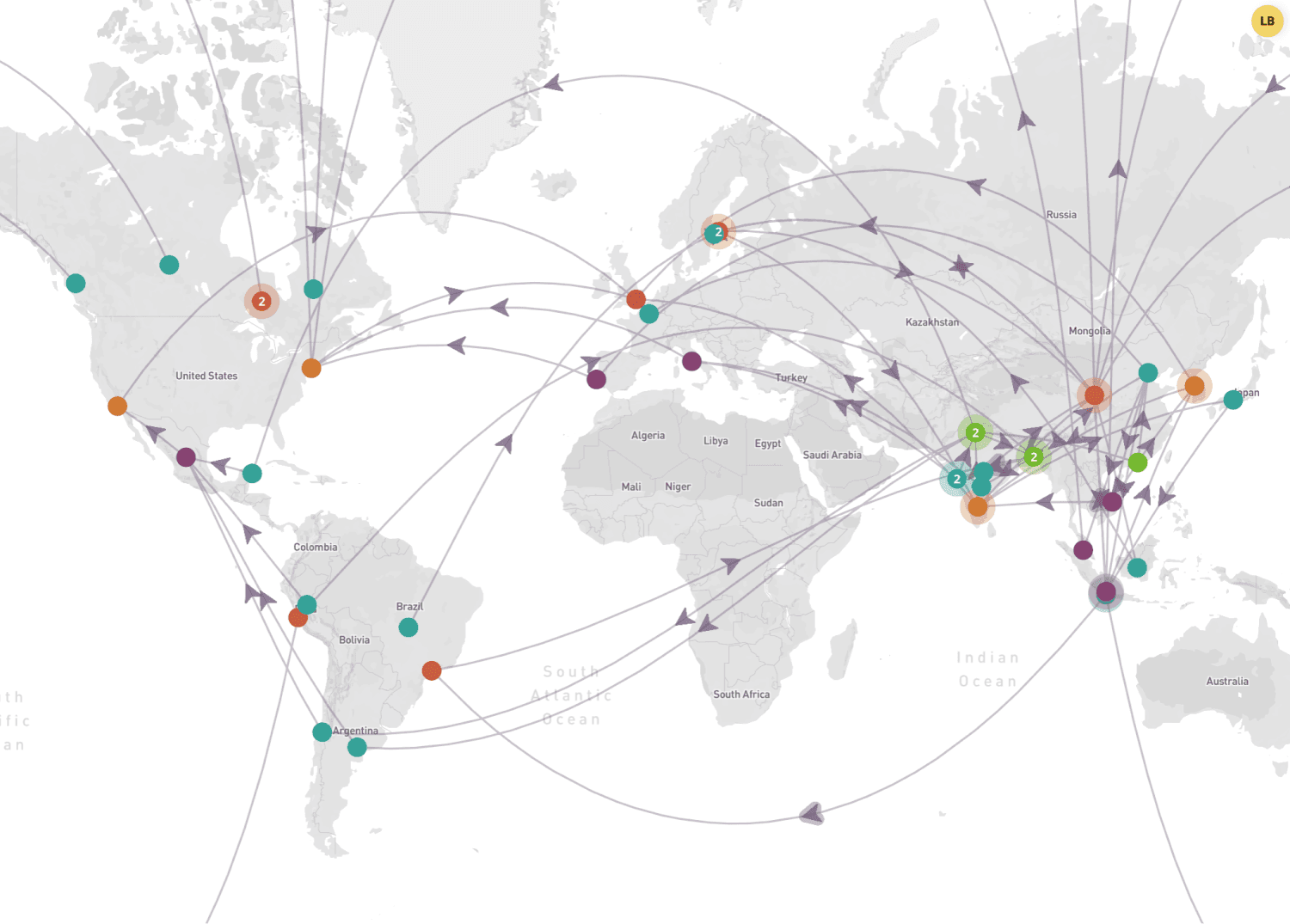
The world doesn't break all at once. It fractures — slowly, then suddenly. By mid-2026, global trade fragmentation has accelerated beyond most risk models' worst-case scenarios, and the insurance industry is scrambling to keep pace. Tariff walls have thickened, nearshoring mandates have reshuffled supplier maps across three continents, and the concept of a "trusted" supply chain partner has been redefined by geopolitical allegiance as much as contract law.
For corporate risk officers and supply chain directors, one question has become urgent: Is your supply chain insurance actually built for this world?
The Architecture of Fragmentation
The term "De-Globalization 2.0" distinguishes the current era from the modest supply chain reshuffling that followed COVID-19. That earlier phase, roughly 2020–2023, was largely reactive — companies diversified single-source dependencies and added buffer inventory. What's happening now is structural.
According to the IMF's April 2026 World Economic Outlook, global trade growth has slowed to 1.8% annually, compared to a pre-pandemic average of 3.6%. More tellingly, the share of trade occurring between geopolitically aligned blocs — the so-called "friendshoring" phenomenon — has risen to 38% of total goods trade, up from 26% in 2022. The U.S.-China bilateral goods trade volume fell a further 14% year-on-year in Q1 2026, driven by expanded Section 301 tariffs and retaliatory measures on semiconductor-adjacent materials.
These aren't abstract policy statistics. They translate directly into new categories of supply chain risk that legacy insurance policies were never designed to cover.
What Traditional Supply Chain Insurance Actually Covers (And Doesn't)
Most standard supply chain or contingent business interruption (CBI) policies were architected in an era of hyper-globalization. They were calibrated for disruptions that were:
- Physical in nature (floods, fires, port closures)
- Temporary in duration (weeks to months)
- Localized in geography (a single facility or region)
De-Globalization 2.0 introduces a fundamentally different risk topology. Consider the following emerging scenarios that most current policies do not adequately cover:
- Regulatory fragmentation losses: A European automaker's Tier-2 supplier in Vietnam is blacklisted under new U.S. CHIPS-adjacent export controls. Production halts. No physical damage occurred — and no payout triggers.
- Forced re-routing cost exposure: A South Korean electronics firm must divert shipments from Shanghai to Busan due to new port-of-origin verification rules, adding $4.2 million in logistics costs per quarter. Standard marine cargo policies don't cover rerouting-driven cost escalation.
- Nearshoring transition risk: A mid-size U.S. consumer goods company spends $18 million migrating production from Guangdong to Monterrey, Mexico — only to discover the new facility can't meet contractual output volumes for 14 months. Bridge insurance products for this transition gap barely exist in the market.
"We had what we thought was a comprehensive policy — $50 million in supply chain coverage — and then our legal team spent three months trying to find the trigger clause for a regulatory delisting event. There wasn't one." — Chief Risk Officer, mid-cap industrial components manufacturer, Chicago (identity withheld per source request)
The Insurance Market's Response: Fast, But Uneven
Lloyd's of London published its 2026 Supply Chain Risk Outlook in February, acknowledging that geopolitical fragmentation now represents the #1 systemic peril for commercial insurers, surpassing climate risk for the first time. Several syndicates have begun offering modular "geo-political supply chain riders" that can be appended to CBI policies, covering scenarios including:
- Sanctions-triggered supplier loss (coverage up to 18-month revenue impact)
- Forced localization compliance costs (capped typically at 12% of insured value)
- Critical mineral supply disruption linked to trade-bloc realignment
However, premiums for these riders have climbed sharply. Marsh's Global Insurance Market Index for Q1 2026 reported that specialty supply chain coverage costs rose 22–31% year-on-year in North America and 17–24% in Europe. In Asia-Pacific, where fragmentation exposure is most acute, some manufacturers are facing premium increases of 40%+ for equivalent coverage.