
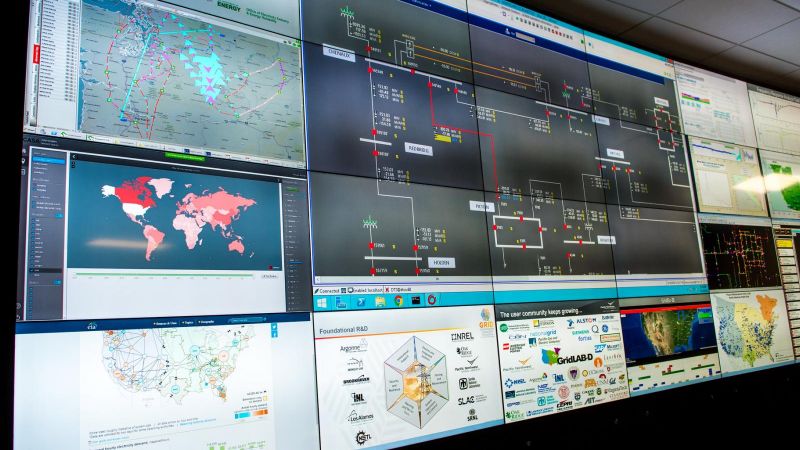
The lights flicker for 0.3 seconds. Somewhere in a municipal water treatment facility in the American Midwest, a SCADA terminal reboots without warning. A pressure valve in a natural gas distribution hub in Central Europe registers an anomalous command. None of these events make the evening news — but each one is a data point in what cybersecurity analysts are now calling the most dangerous convergence in modern infrastructure history: the marriage of advanced malware with physical-world consequences.
This is cyber-physical warfare. And by most expert assessments, the world's critical infrastructure is not ready for what 2026 is bringing.
The Threat Landscape Has Fundamentally Shifted
In 2024, the global cost of cybercrime surpassed $9.5 trillion, according to Cybersecurity Ventures projections. By 2026, that figure is expected to breach $12 trillion annually. But raw financial cost obscures the more alarming trend: attacks are no longer aimed primarily at stealing data. They are aimed at stopping things. Pumps. Turbines. Pipelines. Transformers.
The pivot began in earnest with the 2021 Oldsmar, Florida water treatment attack — where an attacker remotely raised sodium hydroxide levels to 111 times the safe threshold before an operator caught it. That was a relatively unsophisticated intrusion. What researchers are documenting in 2026 is categorically different.
CISA's 2025 Critical Infrastructure Threat Assessment identified a 340% increase in malware specifically engineered to target Operational Technology (OT) and Industrial Control Systems (ICS) compared to 2022 baselines. More concerning: roughly 67% of those samples contained dormant modules — code that sits silently inside systems for months before activation.
What 2026 Malware Actually Looks Like
The new generation of cyber-physical weapons shares several characteristics that make them qualitatively distinct from their predecessors:
- AI-augmented lateral movement: Modern strains use machine learning micro-models embedded within the payload itself to map OT network topology without triggering anomaly detection thresholds.
- Protocol-aware exploitation: Unlike older malware that bluntly attacked IT networks, 2026-era tools speak native ICS languages — Modbus, DNP3, IEC 61850 — allowing them to issue plausible-looking commands that appear legitimate to engineers.
- Physics-model deception: Some advanced persistent threat (APT) groups, particularly those linked to state-sponsored actors in Eastern Europe and East Asia, have begun deploying malware that models the physical behavior of the targeted system — so that sensor readings fed to operators appear normal even as underlying parameters deviate dangerously.
"What we're seeing is malware that understands engineering," says Dr. Renata Hovsepyan, a former NATO cyber-defense advisor and current senior researcher at Dragos Inc. "It doesn't just compromise a system. It learns that system's rhythm, then exploits the physics."
Power Grids: The Most Exposed Frontier
North America's bulk electric system operates across roughly 450,000 miles of high-voltage transmission lines, managed by a patchwork of over 3,000 utilities — many of which are rural co-ops operating on decade-old legacy SCADA platforms that were never designed for internet connectivity.
According to the North American Electric Reliability Corporation (NERC) 2025 State of Reliability Report, approximately 58% of medium-tier utilities have not completed full OT network segmentation from their IT environments. That means a single phishing email to an office administrator can, under the right conditions, serve as a vector into a substation control system.
The Volt Typhoon campaign — first publicly attributed to Chinese state actors in 2023 — demonstrated exactly this pathway. By 2025, follow-on investigations revealed the group had maintained persistent access inside at least 23 U.S. utility networks for periods ranging from 8 to 26 months without detection.
The 2026 risk isn't just disruption. It's synchronized disruption. A simultaneous attack on 9 critical transmission substations, according to a 2022 FERC analysis that remains valid today, could cause cascading blackouts affecting 70% of the continental U.S. for up to 18 months — a timeline driven not by repair difficulty but by the 12-to-18-month lead time for replacing high-voltage transformers, most of which are manufactured in Germany, South Korea, and India.
Water Systems: Chronically Underfunded, Chronically Exposed
If power grids are the headline risk, water systems are the quiet catastrophe in the making.
The U.S. alone has approximately 148,000 public water systems, of which the EPA estimates 70% serve populations of fewer than 10,000 people. These small systems typically operate with annual cybersecurity budgets under $50,000 — in many cases, zero dedicated cybersecurity staff. The technology governing chlorination, filtration, and pressure management in these facilities often runs on unpatched Windows 7 systems or proprietary controllers with no vendor support.
A 2025 Water Sector Cybersecurity Risk Assessment, jointly published by the EPA and CISA, found that 1 in 5 water utilities surveyed had experienced at least one unauthorized access event in the previous 24 months. Of those, 43% could not confirm whether the intrusion had reached their operational systems.