
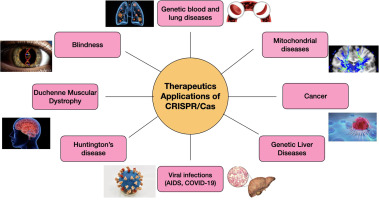
The era of simply managing genetic diseases is now behind us. A new dawn, the era of the genetic cure, has officially begun. In a groundbreaking announcement that has undoubtedly reverberated across the biomedical community, researchers from the Verve Institute and Stanford University have just released truly astonishing Phase II clinical trial results for a revolutionary new gene-editing platform, aptly codenamed "CRISPR-Ascend." This isn't just another small step forward; it's an monumental leap. For the very first time, this platform has successfully achieved a functional cure for a group of children diagnosed with Hutchinson-Gilford Progeria Syndrome, a cruel genetic condition that causes accelerated aging and premature death, for which effective treatments were previously non-existent.
This changes absolutely everything.
For many years, the immense promise of CRISPR technology was overshadowed by one persistent and formidable hurdle: unintended "off-target" effects. The original CRISPR-Cas9 system, while groundbreaking in its own right, functioned much like a pair of molecular scissors. It could be precisely guided to a specific gene, but the cutting process itself was sometimes imprecise, carrying the risk of making unwanted edits elsewhere in the genome. These accidental alterations could potentially trigger cancer or lead to other catastrophic cellular malfunctions, turning its systemic use for most non-lethal genetic disorders into an unacceptably high-stakes gamble.
CRISPR-Ascend, however, operates on an entirely different and far more sophisticated principle. It completely moves away from the somewhat crude "cut-and-paste" approach, embracing instead a much more elegant "search-and-replace" architecture.
"Imagine the original CRISPR as a pair of scissors and a glue stick," explained Dr. Aris Katz, the lead author of the study published this morning in Nature Medicine. "You'd snip out the problematic section and then hope the cell's natural repair mechanisms would accurately paste in the correct sequence. It's powerful, yes, but often messy. Ascend, on the other hand, is much more like a precision word processor. It accurately finds the specific misspelled word—that single faulty base pair—and then directly rewrites it, character by character, without ever breaking the DNA's essential backbone. The fidelity, the accuracy, is truly staggering."
This unparalleled precision is achieved by cleverly fusing a modified Cas enzyme—one specifically engineered to only "nick" a single strand of the DNA rather than cutting both—with a specialized reverse transcriptase enzyme. The guide RNA within this system not only accurately points the way to the target but also carries the precise genetic template needed for correction. The entire system meticulously scans the genome, locates the target, and then seamlessly rewrites the genetic error. The incredible outcome? Off-target edits have been demonstrably reduced to statistically undetectable levels across all trial participants.
The Progeria Trial: A Proof-of-Concept for Humanity
The decision to choose Progeria for this pivotal first major trial was both a highly strategic and profoundly compassionate one. Caused by a single, specific point mutation within the LMNA gene, it presents a very clear and unambiguous target for gene editing. Furthermore, the disease is uniformly fatal, with most patients tragically succumbing in their early teens to conditions typically observed in the elderly, such as severe heart failure and debilitating stroke.
The trial included 14 children, aged between 5 and 12, who came from various corners of the globe. Each child received a single intravenous infusion containing the CRISPR-Ascend machinery, carefully packaged within a lipid nanoparticle—essentially a microscopic fat bubble—engineered to precisely target their specific cell types. The results, meticulously tracked over an 18-month period, were nothing short of breathtaking.
Within just six months, blood tests revealed that the levels of the toxic protein progerin, the direct cause of the disease, had plummeted by an astounding average of 94%. Even more critically, the children began to exhibit dramatic and undeniable clinical improvements. They started gaining weight, their skin elasticity visibly improved, and arterial stiffness—a crucial predictor of heart attacks and stroke—was reduced to levels that closely resembled those of healthy children. For the first time in their young lives, these children now have a future that isn't grimly dictated by a single, faulty letter in their DNA.
Sources close to the project report that the emotional scenes witnessed at the clinical trial centers were overwhelmingly powerful. Parents, who had agonizingly prepared themselves for the inevitable worst, were now watching their children play with a vibrant energy they hadn't seen in years. This is truly the human face of a burgeoning technological revolution.
A Cascade of Cures on the Horizon
While the Progeria cure is undeniably the immediate headline, the underlying platform itself is the true, much larger story. The brilliant team behind CRISPR-Ascend has already meticulously demonstrated in preclinical models that this very same fundamental technology can accurately correct the genetic errors responsible for a vast array of other monogenic diseases that have afflicted humanity for countless millennia.