
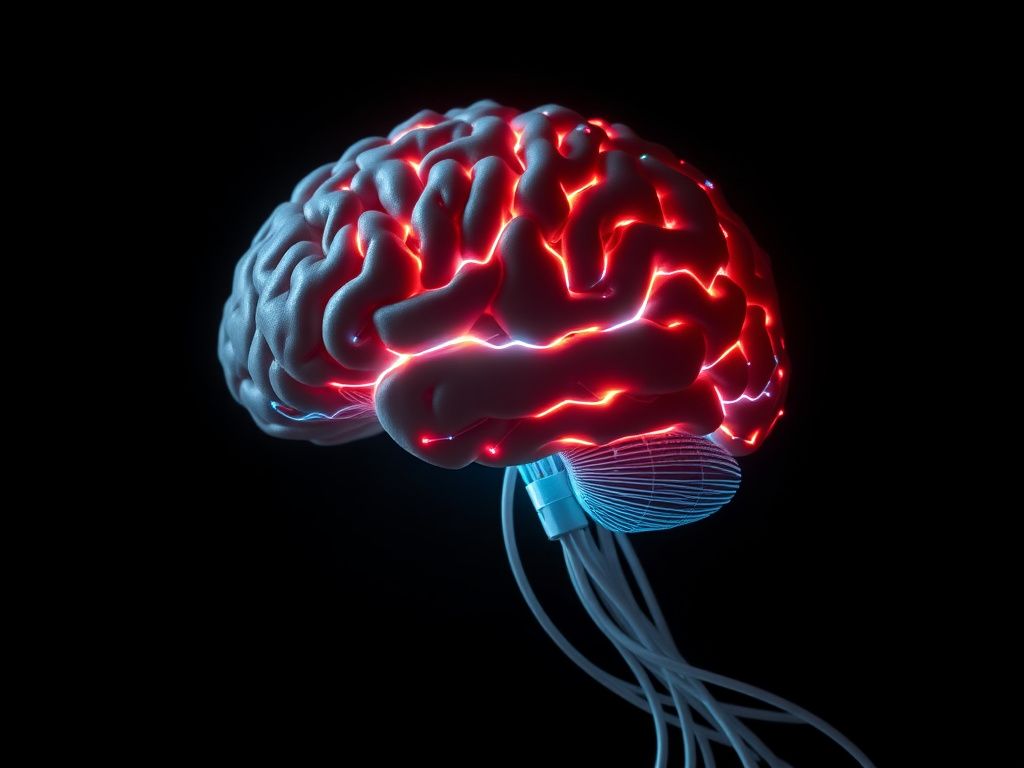
Quick Answer: Cognitive offloading — using external tools like smartphones and AI to store and process information — does not inherently destroy memory. However, habitual reliance on digital tools without active recall practice measurably weakens hippocampal engagement. The key is intentional use: leverage AI for efficiency while protecting the neural habits that build deep, lasting knowledge.
The question isn't whether you've Googled something you once knew by heart. You have. We all have. The real question is whether that small act of digital delegation is quietly reshaping your brain's architecture — and whether that change is something you should actually be worried about.
Cognitive science has been building a case for years. And now, with generative AI accelerating the offloading process to an entirely new scale, the conversation has never been more urgent.
What Is Cognitive Offloading, Exactly?
Cognitive offloading refers to the practice of using external resources — physical or digital — to reduce the mental effort required to perform a task. Writing a shopping list, setting a phone alarm, or asking ChatGPT to summarize a 50-page report are all forms of offloading.
Psychologists Risko and Gilbert (2016), in a landmark review published in Trends in Cognitive Sciences, formalized the term and identified two primary types:
- Bodily offloading: Using your physical body or gestures to aid cognition (e.g., counting on fingers)
- Environmental offloading: Delegating cognitive work to the external environment (e.g., digital calendars, GPS, AI assistants)
This is not a new phenomenon. Humans have offloaded cognition since the invention of writing. Socrates famously warned that writing would weaken memory — he wasn't entirely wrong, but he missed the bigger picture.
The Neuroscience Behind Memory and Digital Dependency
To understand what's actually at risk, you need to understand how memory consolidation works.
The hippocampus is the brain region primarily responsible for encoding new declarative memories — facts, events, and knowledge. When you actively retrieve information from memory, the hippocampus strengthens that neural pathway through a process called memory reconsolidation. This is why testing yourself is more effective than re-reading notes.
A critical 2011 study by Betsy Sparrow at Columbia University — widely known as the "Google Effect" study — found that when participants expected to have access to information later via computer, they showed weaker memory encoding of the information itself but stronger memory for where to find it. The brain adapted its strategy.
This is not degradation. It's delegation.
But here's the nuance most popular articles miss: the brain's investment in a memory pathway depends heavily on perceived future need. If your brain detects that you will not need to retrieve a piece of information independently, it simply doesn't commit the metabolic resources to consolidate it deeply.
AI Acceleration: A Qualitative Shift
Previous cognitive offloading tools — GPS, search engines, calculators — handled specific, bounded tasks. Generative AI is different in a structurally important way: it can offload open-ended reasoning, synthesis, and judgment — the cognitive processes most tightly linked to deep learning and knowledge construction.
When a student uses an AI to draft an essay rather than struggling through the first draft themselves, they bypass a process neuroscientists call productive failure — a state of effortful, imperfect work that paradoxically produces stronger learning outcomes (Kapur, 2016, Educational Psychologist).
The concern isn't that AI answers questions. It's that AI may eliminate the struggle that makes answers stick.
Consider three practical scenarios:
| Scenario | Cognitive Engagement | Memory Outcome |
|---|---|---|
| Reading AI summary of a book | Low | Shallow encoding |
| Reading book + discussing with others | High | Deep encoding |
| Using AI to check your own analysis | Medium-High | Reinforced encoding |
The third scenario is where the intelligent use of AI lives.
What the Research Actually Shows (And What It Doesn't)
Let's be precise about the evidence:
- A 2023 study from MIT found that knowledge workers who heavily used AI for writing tasks showed reduced activity in language-processing brain regions over time in fMRI scans — but the study size was small (n=25) and effects were short-term.
- Research from the University of Waterloo (2015) found that individuals with higher "cognitive offloading tendency" scored lower on working memory tasks — but correlation ≠ causation. People with lower working memory may prefer to offload more.
- Longitudinal data is still scarce. Most alarming headlines are extrapolating from short-term experiments, not decade-long studies.
The honest scientific position: we don't yet have definitive proof that AI use causes permanent memory decline in healthy adults. What we have is strong mechanistic reasoning and early-stage behavioral data that warrant serious attention.
What You Are Genuinely Losing (And Gaining)
Rather than catastrophizing, let's map the actual trade-off:
What habitual offloading may cost you: