
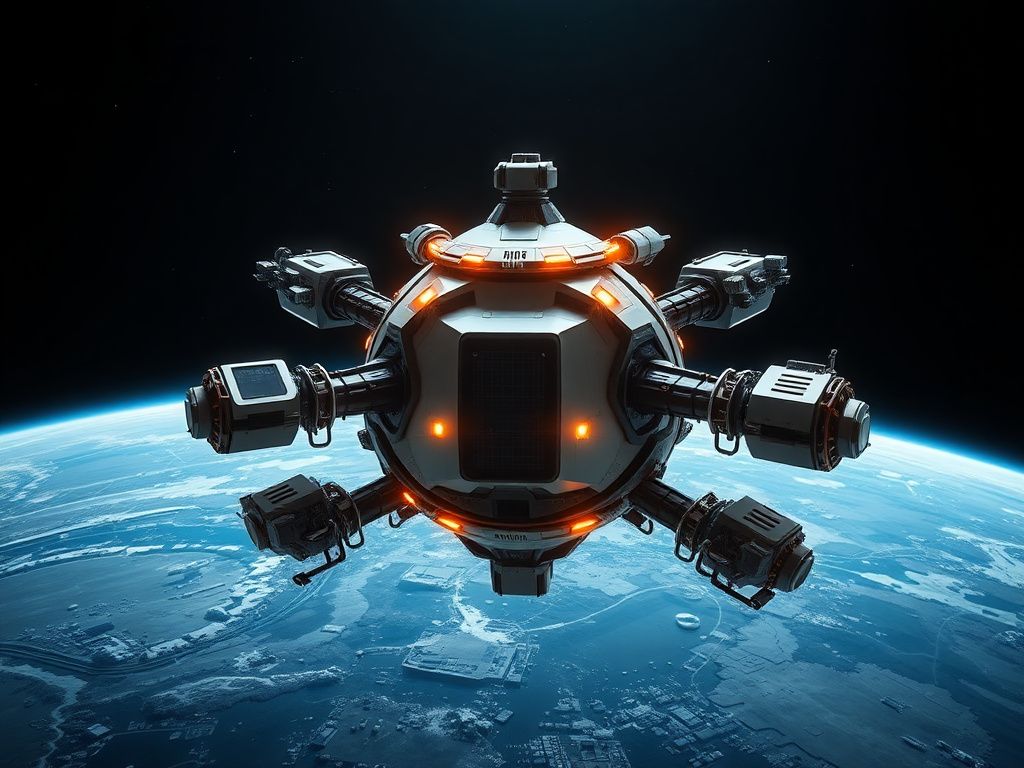
The transition toward autonomous space logistics isn't a sci-fi dream; it is an emerging, messy, and capital-intensive shift in the global supply chain. By 2030, the integration of automated orbital transfer vehicles (OTVs) and autonomous cargo vessels is moving from R&D labs to active service. This transition shifts the focus from "reaching space" to "operating in space," turning the orbital environment into an extension of terrestrial logistics networks.
The Shift from Launch-Only to In-Orbit Logistics
Historically, the supply chain to space was a unidirectional, single-use pipe. You built a payload, you launched it, and if it broke or ran out of propellant, it was essentially space debris or a dead asset. The new reality, driven by companies like Astroscale, Orbit Fab, and a host of stealth startups, is moving toward "orbital servicing."
This is not a clean, seamless transition. It’s currently defined by fragmented standards. If you look at the discussion threads on Hacker News or the SpaceX-related subreddits, the technical community is divided. We have proprietary docking interfaces, incompatible refueling protocols, and a lack of regulatory consensus on "who owns the right of way" when a robotic arm is manipulating a satellite. The engineering reality is that we are trying to build an interstate highway system in a place where there are no traffic lights and every vehicle is built by a different manufacturer using different materials.
The Economic Friction of Orbital Autonomy
The trillion-dollar valuation attached to this sector is based on the assumption that we can aggregate small-sat constellations and maintain them autonomously. However, the operational reality is grittier.
- The "Dead Asset" Tax: Currently, telecommunications and Earth-observation firms write off assets once they run out of propellant. Autonomous logistics aims to change this via life-extension missions.
- The Latency Trap: Autonomous does not mean "unsupervised." While the AI agents handle the micro-adjustments for docking, the human-in-the-loop requirement for high-stakes maneuvers remains a critical bottleneck.
- Insurance Nightmares: Actuaries are struggling to model risk in an environment where an autonomous tug might accidentally collide with a multi-billion dollar government asset. The "liability profile" of an autonomous vehicle hitting a satellite is currently uninsurable in many conventional markets.
The Hidden Costs of Standardization
We are witnessing a "format war" in space logistics. Much like the early days of personal computing, different players are pushing for their own docking interfaces. If you want to understand the impact of technical debt in space, look at the recent GitHub discussions regarding open-source flight software standards. Engineers are exhausted by the lack of interoperability.
When a company like Northrop Grumman or a startup launches a servicer, they are essentially betting that their "plug" will become the industry standard. If they lose that bet, they are left with expensive hardware that can only service a tiny fraction of the active fleet. This creates a "walled garden" effect in low-Earth orbit (LEO), which is the exact opposite of what a global, efficient supply chain should be.
"The hardest part of space logistics isn't the rocket science; it's the agreement on who turns the wrench when the object doesn't belong to you. We are building the railroads, but we haven't agreed on the track gauge." — Commentary from a Lead Systems Engineer on an industry-standardization forum.
Human Factors and Remote Operations
The popular image of space logistics is a sleek, AI-driven drone seamlessly fixing a solar panel. The reality inside a mission control center involves frustrated operators navigating 4-second latency loops while debugging code that was pushed to the vehicle after it reached orbit.
The reliance on remote monitoring tools is massive. If you are calculating the mission window for an orbital transfer, you aren't doing it on a napkin; you are relying on precise orbital mechanics calculators. While we don't have a specific "Orbital Delta-V Calculator" in our suite today, understanding the underlying math is critical for anyone entering this space. For those interested in the foundational physics, exploring our Engineering Tools can provide a sense of the precision required for these calculations.