
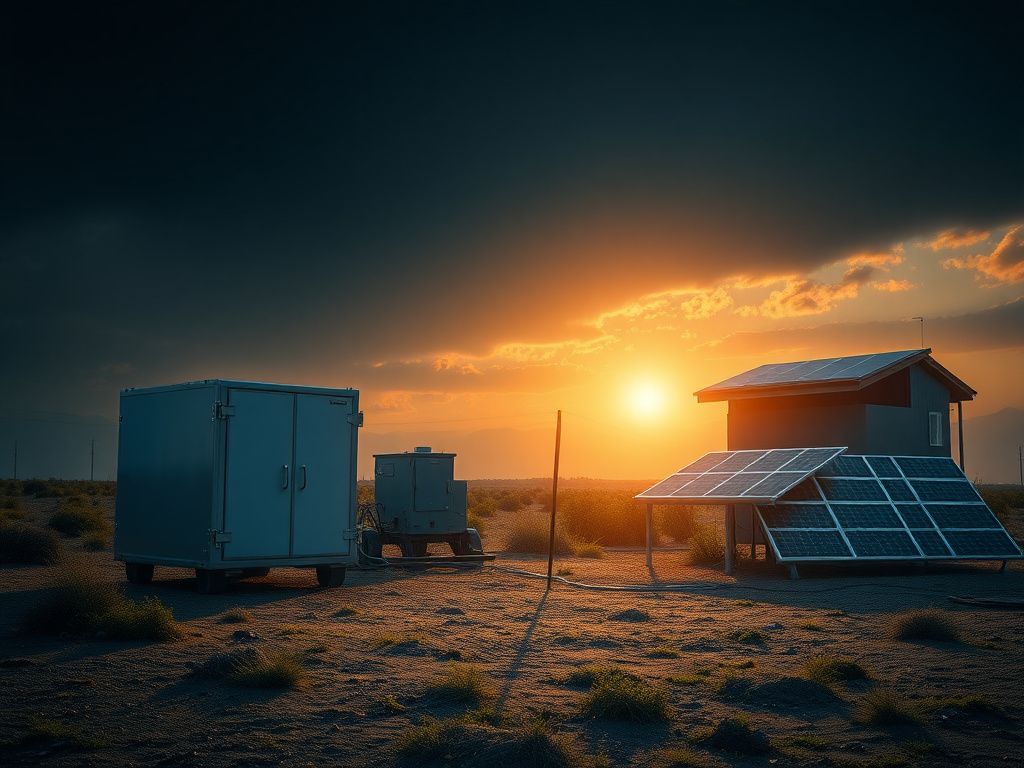
Atmospheric Water Generation (AWG) promises a seductive vision of independence: pulling life-sustaining liquid out of thin air. While the technology has matured since the early 2020s, the gap between the polished marketing brochures of startups and the gritty, humid, energy-sapping reality of the field remains wide. As of 2026, we are no longer in the phase of "proof of concept," but rather in a brutal phase of "scaling and reliability." If you are considering an AWG system for off-grid living, you aren't just buying an appliance; you are taking on the role of a junior maintenance engineer for a complex thermodynamic system.
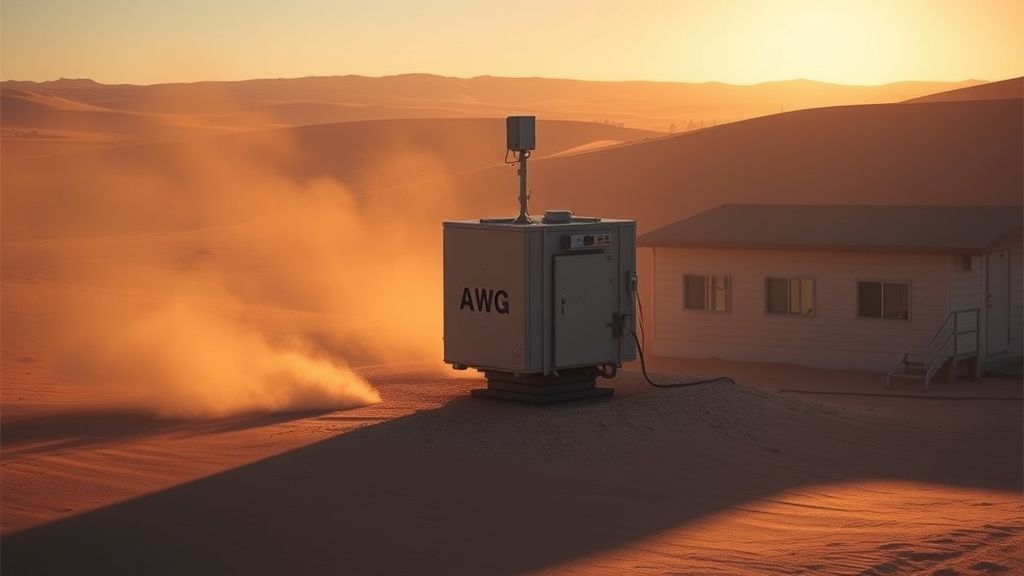
Atmospheric Water Generation works by condensing water vapor from ambient air. Most consumer and industrial units use refrigeration-based condensation (the "dehumidifier" model) or desiccant-based adsorption (using materials like silica gel or MOFs—Metal-Organic Frameworks). The reality is that the higher the humidity and temperature, the higher the efficiency. The moment you move these units into arid environments—exactly where you need them most—the energy cost per liter skyrockets, often to a point where a solar-powered system requires a battery bank that would make an EV owner blush.
The Thermodynamic Trap: Energy vs. Reality
The primary critique of AWG, frequently voiced in technical forums like r/OffGrid and Hacker News, is the "Energy-to-Water Ratio." For refrigeration-based units, cooling the air to the dew point is an energy-intensive process. When you factor in the peripheral energy draws—fans to pull air through filters, pumps to move water to storage, and UV-C light systems for sterilization—the math often falls apart for low-budget setups.
In 2026, we are seeing a shift toward "hygroscopic" materials—solids that sponge up moisture at night and release it via low-grade heat during the day. This reduces energy consumption but introduces a new failure point: the longevity of these materials. Many "miracle" MOFs degrade after a few thousand cycles. If you’re looking to calculate how much power your solar array needs to sustain a specific AWG output, you can use our Solar Load Calculator to see the hard trade-offs between your battery capacity and your daily water consumption.
Field Report: The "Coastal vs. Continental" Divide
Consider the experiences of two separate off-grid communities documented in a 2025 sustainability case study.
Community A is located in the Pacific Northwest, near the coast. The high humidity ensures that their AWG units perform at 110% of the manufacturer’s rated capacity. Their only issue? Bio-fouling. The constant moisture encourages mold growth inside the air intake housing, leading to a "musty" taste that forced them to install expensive, specialized carbon filtration blocks.
Community B is in the interior high-desert. They purchased the same units. Their result? Total failure. During the dry season, the system spends 80% of its energy cycle just trying to reach a condensation point, resulting in about 2 liters of water for 4kWh of electricity. They abandoned the units within six months, opting for a traditional well and storage system.

The Hidden Maintenance Debt
If you browse the GitHub repositories or Discord channels dedicated to DIY atmospheric water, you will find a common refrain: "It works great until it doesn't." The "it" usually refers to the sensor array. AWG units are fragile. They rely on hygrometers and thermostats to manage the condensation cycle. In an off-grid environment, these sensors fail—frequently due to vibration, thermal cycling, or sheer dust ingress.
Most consumer units are not designed for longevity. The internal pumps are often generic, cheap plastic components meant for light indoor use. When these fail in the middle of a remote site, you are left with a 50kg hunk of metal and plastic that produces zero water. The "workaround" culture has led to a surge in 3D-printed repair parts and community-led firmware hacks to bypass overly restrictive safety shut-offs, which were often programmed to make the unit stop working the moment a filter light turns on—a classic dark pattern.
The Desiccant Debate: The Future or a Hype Bubble?
There is significant hype surrounding the move to desiccant-based atmospheric water generators. Proponents argue these are the "true" off-grid solution because they can function in lower humidity. Skeptics, however, point to the "Regeneration Problem." To release the water from a desiccant, you need heat. If you’re using electricity to generate that heat, you’ve essentially recreated the energy-efficiency problem of the cooling-based systems.
The only way this works is via solar thermal—using the sun's rays to heat the desiccant directly. While elegant in theory, it is physically fragile. You are essentially putting a complex chemistry project on your roof and hoping it doesn't crack or get covered in bird droppings. When the surface of the thermal collector degrades, your water production drops significantly.
Economic Realities: Is it Cheaper than Rainwater?
Let’s be honest: AWG is rarely the most economical choice. If you live in an area with any rainfall, a well-managed roof-catchment system will always provide more water for less money. AWG is an insurance policy or a specialized tool for places where no other water source exists.