
Andes Virus & Hantavirus in 2026: The Outbreak That Quietly Alarmed Global Health Officials
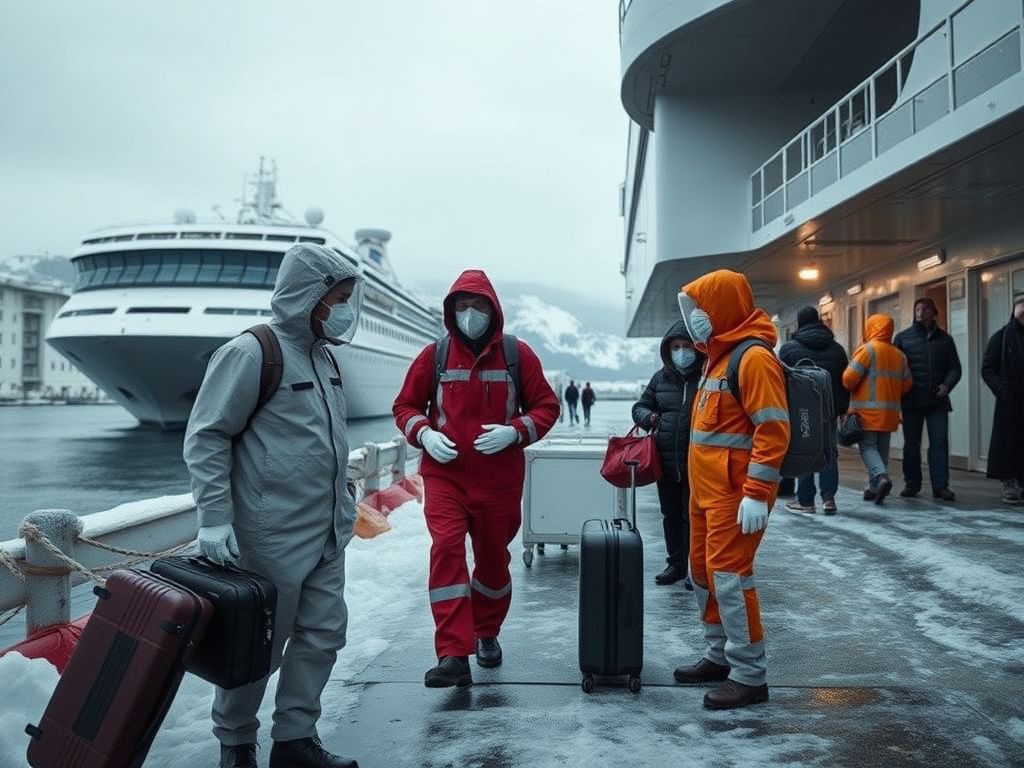
At Ushuaia’s port terminal in May, passengers from the MV Hondius stood in small groups near their luggage while health officials moved back and forth between temporary screening areas.
People were tired. Some had been awake for nearly a full day because schedules kept changing.
One crew member carried boxes of bottled water through the terminal while a woman near the boarding area kept asking in English whether passengers were actually allowed to leave or not. Nobody seemed completely sure yet.
The atmosphere was not panic exactly.
More like the strange confusion that happens when people realize something medical has become international before anyone has had time to explain it properly.
A Dutch passenger later told NRC that travelers onboard initially assumed authorities were responding to another routine cruise outbreak.
“Then someone said hantavirus,” he recalled. “After that everybody started Googling.”
Source: https://www.nrc.nl/
By then, several passengers linked to the Antarctic voyage had already developed symptoms associated with Andes hantavirus after traveling through parts of southern Argentina and Chile.
Some were hospitalized.
Others entered temporary isolation.
Health agencies in multiple countries started tracing passenger contacts almost immediately.
Source: https://www.reuters.com/business/healthcare-pharmaceuticals/us-says-18-passengers-flown-back-after-hantavirus-outbreak-ship-2026-05-11/
The outbreak itself remained relatively limited numerically.
But the virus involved was not ordinary.
Why Andes Virus Still Makes Epidemiologists Nervous
Most hantaviruses spread through contact with infected rodents or contaminated dust particles.
Humans usually become infected after inhaling aerosolized particles from:
- rodent urine,
- saliva,
- droppings,
- or contaminated enclosed environments.
For decades, public-health systems treated hantaviruses primarily as environmental exposure diseases.
Andes virus complicated that framework.
The World Health Organization reiterated again in May 2026 that Andes virus remains the only hantavirus with confirmed human-to-human transmission.
Source: https://www.who.int/news-room/fact-sheets/detail/hantavirus
Transmission appears relatively inefficient compared to influenza or COVID-19. Most experts emphasize that carefully.
Still, even limited interpersonal spread changes outbreak response calculations significantly.
Especially when the disease involved can kill quickly after respiratory deterioration begins.
Doctors in Patagonia Still Talk About Epuyén
You hear the name often in Argentine infectious-disease circles.
Epuyén.
Small mountain town. Tourism economy. Wood cabins. Forested terrain.
In late 2018, the town experienced one of the most important Andes virus outbreaks ever documented.
Eventually:
- 34 confirmed infections,
- 11 deaths,
- multiple linked transmission chains.
Source: https://www.nejm.org/doi/full/10.1056/NEJMoa2009040
Researchers later published genomic evidence supporting person-to-person transmission during the outbreak.
A CDC Emerging Infectious Diseases investigation confirmed viral sequencing patterns consistent with interpersonal spread among clustered cases.
Source: https://wwwnc.cdc.gov/eid/article/26/4/19-0799_article
One funeral gathering became part of the epidemiological investigation after several attendees later developed symptoms.
That detail still comes up repeatedly in outbreak discussions because it changed how many clinicians emotionally understood the virus.
Before Epuyén, many doctors still associated hantavirus almost entirely with rodent exposure: cabins, dust, barns, storage spaces.
After Epuyén, close human contact could no longer be ignored completely.
A physician involved in the outbreak response later told Argentine newspaper Página/12 that local healthcare workers initially struggled to believe transmission chains were happening between people rather than through shared environmental exposure.
Source: https://www.pagina12.com.ar/
That hesitation cost time early in the outbreak.
The Symptoms Can Look Almost Ordinary
Part of the problem is how unspectacular the early phase often appears.
Patients usually develop:
- fever,
- muscle pain,
- headaches,
- nausea,
- abdominal discomfort,
- fatigue.
Nothing there immediately screams “high-fatality zoonotic disease.”
Several clinicians involved in Argentine outbreak investigations described patients appearing stable initially before respiratory decline accelerated rapidly over the next one or two days.
A Chilean ICU physician interviewed during earlier outbreak coverage told La Tercera that severe hantavirus cases were frightening partly because “sometimes the patient is talking normally and then suddenly they are drowning in front of you hours later.”
Source: https://www.latercera.com/
The CDC estimates hantavirus pulmonary syndrome fatality rates at roughly 38% in the United States.
Source: https://www.cdc.gov/hantavirus/hps/index.html
Certain Andes virus outbreaks in South America historically reported fatality estimates above 30%.
Source: https://anrs.fr/en/disease-outbreak/emergence-units/hantavirus/
There is still no universally approved antiviral treatment specifically targeting hantavirus pulmonary syndrome.
Treatment remains supportive: oxygen, ventilation, critical-care stabilization, fluid management.
Timing matters enormously.
Some Cruise Passengers Were Still Unsure What They Had Been Exposed To
One thing that appears repeatedly in interviews from the MV Hondius outbreak is uncertainty.
Passengers described receiving different guidance depending on which country contacted them first.
Some were advised to isolate temporarily.
Others were monitored remotely.
Several travelers interviewed by French and Dutch media said they struggled to get clear explanations about transmission risk during the first days after disembarkation.
Source: https://www.lemonde.fr/en/environment/article/2026/05/12/hantavirus-how-great-is-the-transmission-risk-as-each-country-sets-its-own-quarantine-rules_6753368_114.html