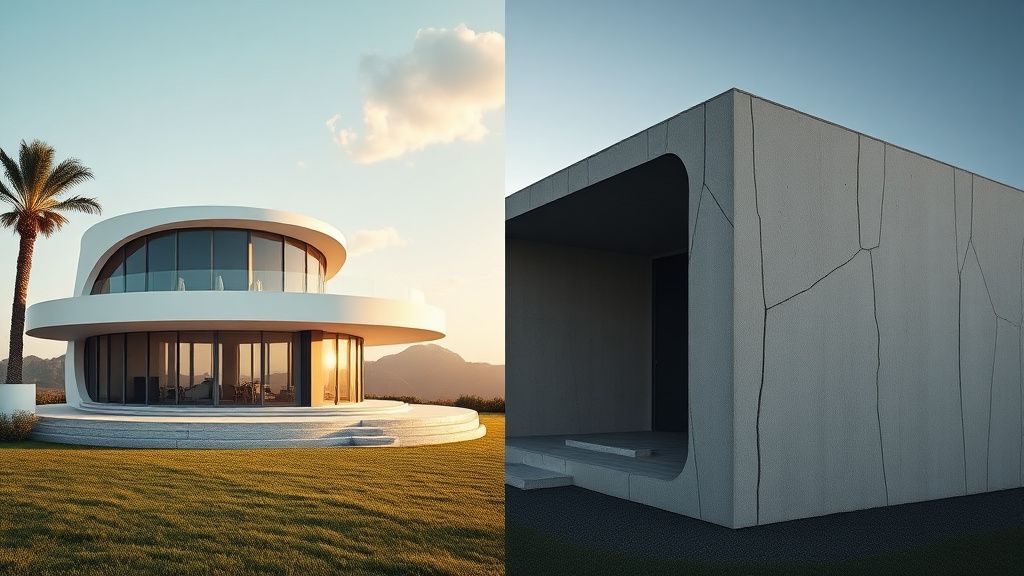
3D-printed earth-concrete is not a panacea for the housing crisis, nor is it the only way to modernize infrastructure, similar to how HVAC contractors are boosting profits by retrofitting legacy buildings with smart sensors, but it represents a disruptive shift in architectural materiality. While it promises reduced carbon footprints and faster deployment, it remains constrained by fragmented regulatory frameworks, high capital expenditure for equipment, and the inherent inconsistency of raw, localized soil-based composites. It is a nascent, often experimental transition from manual craft to automated precision.
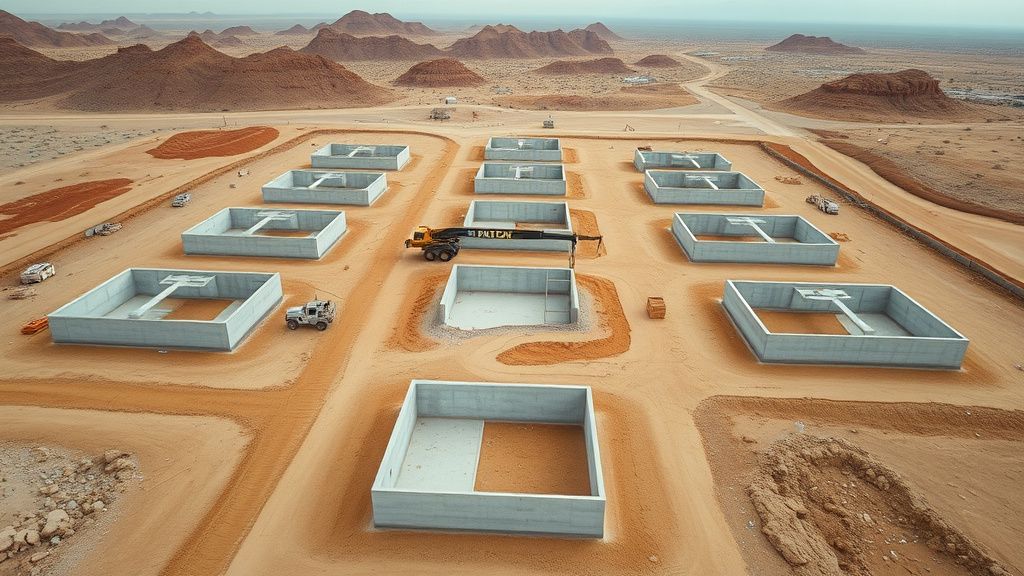
The narrative surrounding 3D-printed construction (3DPC) is often hijacked by the "Silicon Valley" gloss, much like the hype surrounding why institutional capital is moving to Layer-2 liquidity pools in 2026, featuring sleek, white-walled houses rising from the ground in 48 hours. However, if you strip away the venture capital-backed press releases and look at the actual construction sites—places like the dusty outskirts of Austin, Texas, or the humid, resource-constrained zones of rural Africa—a much more visceral, human, and messy reality emerges.
The Materiality of Earth-Concrete: A Chemistry Problem
Traditional concrete is the second most consumed substance on Earth after water. It is an environmental disaster, accounting for roughly 8% of global CO2 emissions. Earth-concrete, or "earth-based mortar," attempts to solve this by replacing carbon-heavy Portland cement with geopolymer binders or stabilized soil.
But here is the engineering friction: soil is not a standardized product. If you are printing in Arizona, your aggregate composition is fundamentally different from a site in Normandy. This lack of standardization is the industry's "hidden" bottleneck, a challenge mirrored in sectors like agriculture, where researchers explore how epigenetic editing is rewriting the future of farming. You cannot simply upload a G-code file to a printer and expect the same structural integrity everywhere.

The Reality of Deployment: When the Print Fails
There is a profound disconnect between the "perfect print" simulations seen in trade shows and the reality of a job site, which is why why top professionals are ditching online courses for human mentorship to gain real-world application insights. Engineering forums like Reddit’s r/3Dprintingconstruction are filled with anecdotes that don't make it into company brochures. We are talking about "cold joints," where the nozzle clogs due to an aggregate clump, leading to a structural discontinuity that can compromise a wall’s compressive strength.
In 2022, a project in a European development zone reportedly had to pause for three weeks because the humidity levels shifted overnight, changing the curing rate of the proprietary earth-binder. The software predicted a 20-minute layer-over-layer interval, but the physical reality required 45 minutes to prevent the base layers from slumping under the weight of the new extrusions. This is not just a bug; it is an "operational tax" on the technology.
The Human Element: Labor Displacement vs. Evolution
The industry argument is that 3D printing removes the need for highly skilled masonry, a shift in professional reliance that parallels the trend of why zero-knowledge identity is finally changing how we own our data. This is only half-true. It shifts the skill requirement from "bricklaying" to "mechatronic maintenance."
When a printer goes down on a remote site, you don't need a mason; you need a robotics engineer who is also comfortable working in a mud pit. This creates an adoption friction: the existing workforce feels threatened, and the new workforce is prohibitively expensive to recruit.
"The printer didn't replace the mason, it just made the mason stand around and watch a machine fail for six hours while the project manager tried to figure out why the pump was cavitating." — Comment from an anonymous field engineer on a construction tech forum.
Economic Realities: The Capex vs. Opex Trap
The hype suggests that 3D-printed homes are "dirt cheap" because they use dirt, an economic simplification that misses the nuance found in scaling micro-farms: how to turn vertical hydroponic systems into profitable urban businesses. In reality, the capital expenditure (CapEx) for a professional-grade gantry printer is astronomical. Between the hardware cost, software licensing for specialized BIM (Building Information Modeling) plugins, and the specialized binders required to keep the mix "pumpable," the break-even point for a single-family home is often higher than a traditional wood-frame structure.
The economic model only becomes viable at scale—tract housing developments where the printer runs 24/7. This brings us to the "cookie-cutter" critique. Does the efficiency of the printer force us into a future of repetitive, brutalist-lite aesthetics? Or can we leverage the machine to create non-Euclidean, structurally optimized forms that would be impossible to build by hand?
Case Studies: Successes and "Structural Regrets"
Take, for example, the 14 Trees project in Kenya. It is often hailed as a triumph of affordable, sustainable housing. By using soil-based mixes and localized, small-scale printing, they successfully navigated the supply chain issues that plague international building firms.
Contrast this with several North American "printed" startups that collapsed in the last three years. The failure mode was almost always the same: Scaling Prematurely. They promised customizability and speed, but when the logistics of moving a 5-ton printer to a new site hit reality, they found that traditional framing crews were still faster and more reliable.