
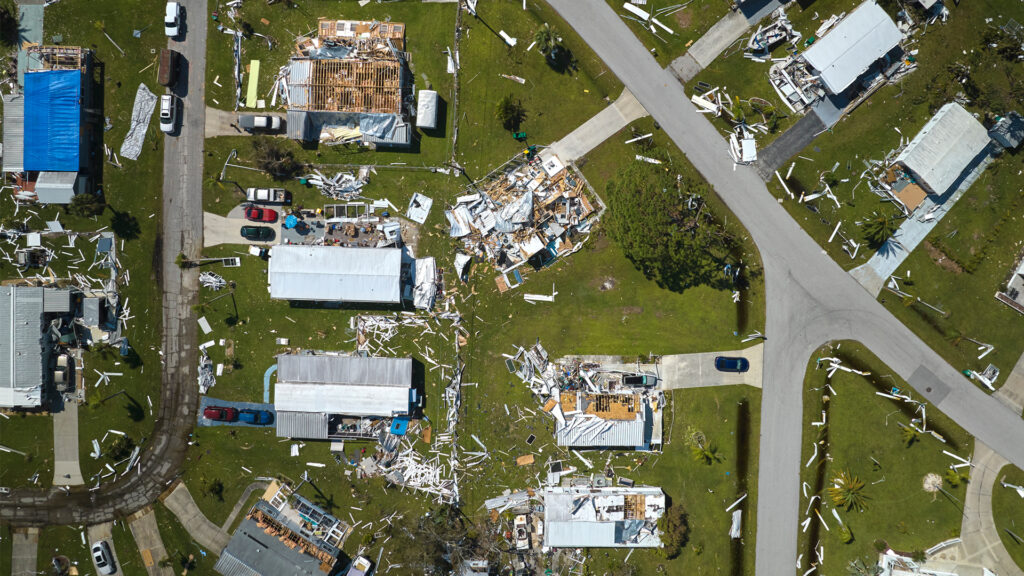
The warning signs were there for years. Insurers quietly exited. Premiums tripled. Then quadrupled. And now, in 2026, the collapse of corporate climate insurance in tropical high-risk zones is no longer a slow-moving crisis — it is a full-scale market emergency with cascading consequences for global supply chains, sovereign debt, and the $94 trillion corporate asset base that once assumed risk transfer was infinite.
This is the story of how the insurance industry's most ambitious product line — purpose-built to handle the 21st century's defining threat — is failing precisely when it is needed most.
The Numbers Don't Lie: A Market in Structural Retreat
Between 2022 and 2025, at least 23 major commercial insurers reduced or fully withdrew their corporate climate risk coverage from tropical exposure zones spanning Southeast Asia, Sub-Saharan Africa, Central America, and the Pacific Island corridor. According to the Swiss Re Institute's 2026 Global Risk Barometer, the protection gap in these regions has expanded to $168 billion annually — up from $112 billion in 2023.
The numbers are sharper at the corporate level. A survey of 1,400 multinational firms operating across ASEAN and West Africa, published by the Marsh McLennan Climate Risk Desk in February 2026, found that 61% reported being unable to renew full climate peril coverage at their 2023 policy terms. Of those, 38% accepted coverage gaps exceeding 40% of their total insured value.
"We renewed at 290% of our 2021 premium — and that was after accepting exclusions on cyclone surge and inland flood. The coverage we got barely covers the coffee plantation itself, let alone the processing infrastructure." — Regional Operations Director, Major Arabica Exporter, Vietnam (interviewed March 2026)
This is not a market correction. It is a structural market failure accelerated by three compounding forces.
Force 1 — Actuarial Models Are Broken
The foundational problem is that climate risk models were built on historical loss data that is now statistically irrelevant. Standard actuarial tables used by Lloyd's syndicates and Munich Re's tropical portfolios were calibrated primarily on 1980–2015 hurricane and typhoon loss records. That 35-year dataset no longer reflects current atmospheric behavior.
The 2025 Pacific typhoon season alone produced six Category 5-equivalent storms making landfall — double the 1990–2020 average. The 2025 Central American wet season triggered simultaneous flooding in 14 river basins across Honduras, Guatemala, and Belize, exceeding 100-year return period thresholds in four separate events within 11 weeks.
In short: the "100-year event" is now arriving every 8 to 12 years in some tropical zones. Insurers cannot price this without either charging premiums that customers cannot afford or accepting underwriting losses that regulators will not tolerate.
Force 2 — Reinsurance Capacity Has Evaporated
Corporate insurers don't absorb risk — they transfer it upstream to reinsurers. And in 2025–2026, that upstream market has fundamentally repriced tropical catastrophe risk.
Munich Re reported a 37% reduction in its tropical property catastrophe reinsurance book during its Q4 2025 earnings call, citing "unsustainable loss-to-premium ratios in Southeast Asian wind and flood segments." Hannover Re followed with a similar announcement in January 2026, pulling back from Caribbean agricultural reinsurance entirely.
The Guy Carpenter World Reinsurance Renewals Report (January 2026) documented average tropical catastrophe reinsurance rate increases of 48% year-on-year at the January 1 renewal cycle — the steepest single-year climb since Hurricane Andrew in 1993. Without affordable reinsurance backstop, primary insurers are mathematically unable to offer affordable coverage to corporate clients.
Force 3 — Legal and Regulatory Complexity Is Exploding
A third, less-discussed accelerant is the litigation environment. Since 2024, a wave of corporate climate litigation has created "silent liability" clauses in insurance contracts, with insurers now fearing that paying out on climate events could expose them to secondary liability if the insured corporation is simultaneously facing regulatory action over emissions non-compliance.