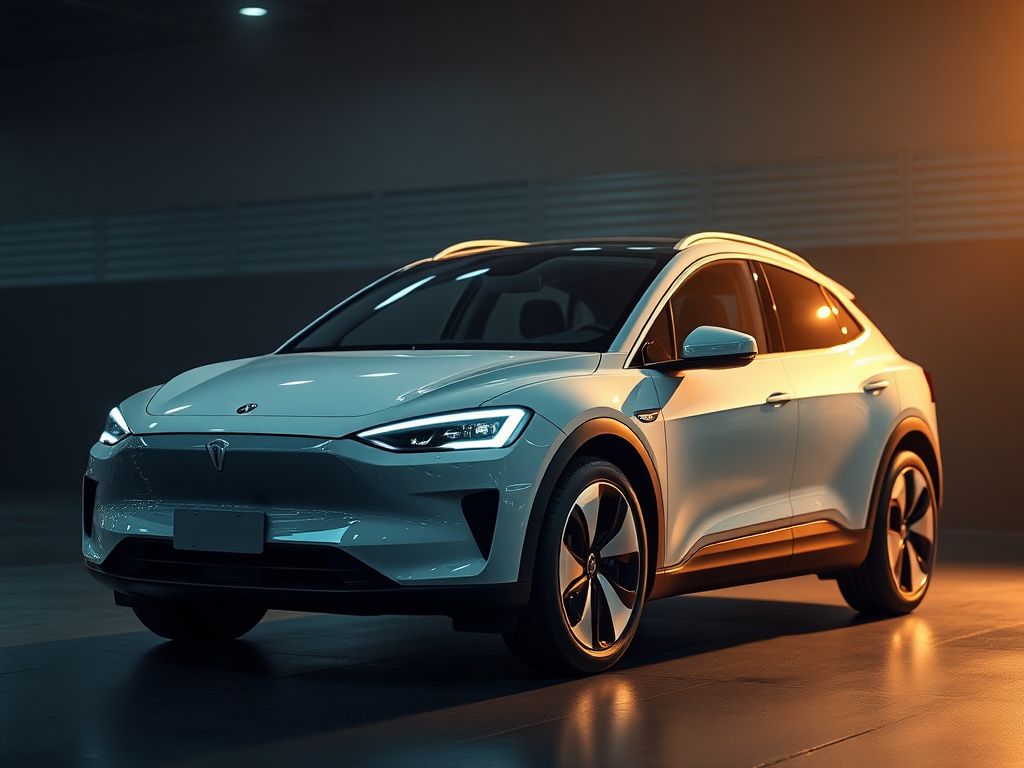
The electric vehicle (EV) market is rapidly maturing, presenting both exciting opportunities and complex financial considerations for prospective buyers. The core challenge for the 2026 EV buyer lies in accurately assessing the total cost of ownership (TCO) beyond the sticker price, while simultaneously strategizing to maximize the vehicle's residual value in a fast-evolving technological landscape. Understanding factors like charging infrastructure costs, evolving battery health metrics, and strategic financing options will be paramount to making a sound financial decision.
The Evolving Landscape of Electric Mobility: A Financial Reckoning
The year 2026 marks a pivotal moment in the electric vehicle revolution. What began as a niche market is now mainstream, with a dizzying array of models, battery chemistries, and charging solutions. Yet, for the discerning buyer, the decision isn't merely about environmental consciousness or cutting-edge technology; it's a sophisticated financial calculation. As a veteran in financial markets, I've observed firsthand how quickly the goalposts can shift. The immediate allure of lower fuel costs and government incentives often overshadows a deeper dive into the total cost of ownership (TCO) – a metric absolutely critical for any substantial asset acquisition.
Ignoring these nuances can turn an exciting purchase into an unexpected drain on personal or corporate capital. Let's peel back the layers and uncover the financial realities of EV ownership in 2026, focusing keenly on both the hidden expenditures and the strategic moves that can preserve your investment's value.
Beyond the Sticker Price: Deconstructing EV Total Cost of Ownership
The initial purchase price is merely the entry fee. True financial acumen demands a comprehensive look at the ecosystem of expenses.
Charging Infrastructure: The Home & Away Investment
One of the most significant "hidden" costs for new EV owners is the charging setup. While public charging networks are expanding rapidly, the convenience and cost-effectiveness of home charging remain unparalleled for most.
- Home Charger Installation (Level 2): A dedicated Level 2 charger, which uses a 240-volt outlet, can cost anywhere from $500 to $2,000 for the unit itself, plus another $500 to $2,500 for professional installation, depending on your home's electrical panel capacity and wiring complexity. This is a one-time capital expenditure often overlooked in initial budget planning.
- Public Charging Network Fees: While some manufacturers offer complimentary charging periods, long-term reliance on public fast chargers (DCFC) can be surprisingly expensive. Rates can vary wildly based on location, time of day, and subscription models. According to recent industry observations, DCFC rates can sometimes approach or even exceed the per-mile cost of gasoline for efficient internal combustion engine (ICE) vehicles, especially during peak demand.
- Electricity Rates: The cost of "fuel" for an EV is your local electricity rate. These rates fluctuate and can significantly impact your operational costs. Savvy buyers will investigate time-of-use (TOU) tariffs in their area, which often provide cheaper overnight charging.
Battery Longevity and Replacement: A Long-Term Consideration
The battery pack is the heart – and often the most expensive component – of an EV. While most manufacturers offer robust battery warranties (typically 8 years/100,000 miles or more, guaranteeing a certain capacity retention), the long-term prospect of battery degradation warrants attention.
- Degradation: Over time, all lithium-ion batteries lose some capacity, impacting range. While full battery replacement is rare within the warranty period, understanding the projected depreciation curve of battery performance is crucial for long-term financial planning. Experts note that sophisticated battery management systems (BMS) in newer EVs significantly mitigate rapid degradation, but it remains a factor.
- Replacement Cost: Should a battery need replacement outside of warranty, costs can range from $5,000 to $20,000+, depending on the vehicle model and battery capacity. This is a considerable contingent liability.
Insurance Premiums: Assessing the Risk Profile
EVs often command higher insurance premiums than comparable ICE vehicles. Why?
- Higher Purchase Price: More expensive vehicles generally cost more to insure.
- Repair Complexity: Specialized components, particularly the battery pack, often require trained technicians and specialized tools for repairs, potentially leading to higher labor and parts costs for collision damage.
- Newer Technology Factor: As a newer technology, insurers are still refining their actuarial tables for EVs, sometimes errantly pricing in higher risk. However, as data matures, these costs are beginning to stabilize for some models.
Maintenance and Servicing: A Mixed Bag
While EVs generally require less routine maintenance (no oil changes, spark plugs, or complex exhaust systems), there are specific considerations:
- Brake Wear: Regenerative braking significantly reduces wear on conventional friction brakes, potentially extending their lifespan.
- Tires: The heavier weight and instant torque of EVs can lead to faster tire wear. Specialized, low-rolling-resistance tires designed for EVs can also be more expensive.
- Specialized Diagnostics: While fewer moving parts mean fewer points of failure, when issues do arise, they often require specialized diagnostic equipment and technicians, potentially leading to higher labor rates for specific repairs.
Fortifying Your Investment: Strategies for Maximizing EV Resale Value
Just as critical as understanding TCO is adopting strategies to bolster your EV's residual value. In a market characterized by rapid technological advancement, predicting future value is challenging but not impossible.
Battery Health Management: Your Foremost Task
The battery's condition will be the single most influential factor in your EV's resale value.
- Optimal Charging Habits: Avoid habitually charging to 100% or discharging below 20%. Many manufacturers and industry best practices suggest keeping the charge level between 20% and 80% for daily use to extend battery lifespan.
- Temperature Control: Extreme hot or cold temperatures can stress batteries. Parking in shaded areas or garages can help mitigate this. Some EVs offer pre-conditioning features that warm or cool the battery before charging or driving, which is beneficial.
Trim Level, Optionality, and Software Updates
Strategic choices at the point of purchase can significantly impact future desirability.