
Japan’s “Herbivore” Architects Are Designing Cities for People Who Quietly Walked Away From the Old Urban Dream
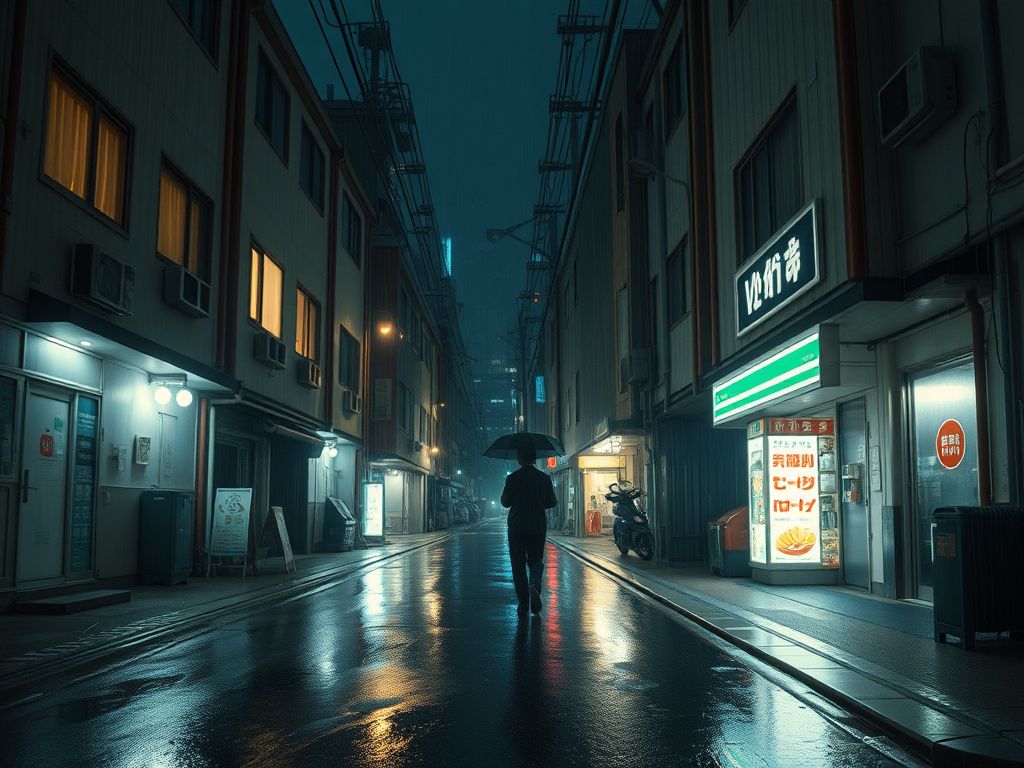
Around 11 p.m. in western Tokyo, the city starts splitting into different versions of itself.
Near Shibuya Station, there are still giant LED screens, tourists photographing intersections, music leaking from upper-floor bars. But fifteen minutes away by train, places like Koenji or Nakano settle into a different rhythm entirely. Narrow streets. Small apartment blocks with bicycles lined almost perfectly outside. Convenience stores glowing under white fluorescent light. Tiny restaurants where nobody speaks above a murmur.
One rainy evening in Koenji, I remember watching a man in a dark suit sit alone inside an Ichiran ramen booth for almost forty minutes after finishing his meal. He wasn’t looking at his phone. Wasn’t reading anything either. Just sitting there quietly while staff moved around him.
Nobody seemed to think it was unusual.
That detail stayed with me longer than most of Tokyo’s futuristic imagery.
Because underneath all the neon and infrastructure efficiency, modern Tokyo increasingly feels like a city designed around people trying to lower the emotional volume of everyday life.
Not disappear from society entirely.
Just reduce friction with it.
And Japanese architects have been adapting to that shift for years already.
Why Younger Japanese Adults Started Distrusting the Old Success Formula
The phrase sōshoku danshi — “herbivore men” — entered Japanese popular culture after columnist Maki Fukasawa used it in a 2006 series for Nikkei Business Online describing younger men who seemed detached from aggressive career ambition, status competition, and conventional relationship expectations.
Western coverage simplified the idea almost immediately into cultural spectacle. Articles about Japanese men “losing interest in sex” spread quickly because they sounded strange enough to travel internationally.
Inside Japan, though, the conversation was always tied more closely to economics than outsiders realized.
After Japan’s asset bubble collapsed in the early 1990s, wage growth slowed dramatically. According to OECD wage data, Japan’s real wage growth remained largely stagnant for much of the late 1990s through the 2010s compared to other developed economies.
Source: https://data.oecd.org/earnwage/average-wages.htm
At the same time, stable employment structures weakened. Japan’s Statistics Bureau reported that non-regular employment rose significantly among younger workers during the 2000s and 2010s as temporary contracts became more common.
Source: https://www.stat.go.jp/english/data/roudou/results/annual/index.html
A lot of younger Japanese adults stopped trusting the older social script: work constantly, buy property, build a family, move upward slowly, retire securely.
That future started looking less guaranteed.
Architectural historian Jordan Sand has written that post-bubble Japan produced “new forms of urban modesty” shaped partly by shrinking expectations around ownership and permanence.
Source: https://www.ucpress.edu/book/9780520280375/tokyo-vernacular
That shift became visible physically before many politicians seemed willing to admit it socially.
Why Tokyo’s Apartments Feel So Different From Western Urban Apartments
Western micro-apartment discourse usually focuses on size.
Tokyo’s apartments are small. Everybody already knows that part.
What is more interesting is how carefully many of them are engineered psychologically.
A few years ago, I visited a one-room apartment near Shin-Nakano that measured barely over 18 square meters. The kitchen was tiny. The bed folded partially into the wall. There was almost no decorative furniture at all.
But the lighting was warm and indirect. Storage compartments disappeared almost invisibly into the walls. The bathroom felt strangely insulated acoustically despite the building itself being narrow and inexpensive.
The apartment did not feel luxurious.
It felt protective.
That distinction matters.
According to Japan’s Ministry of Land, Infrastructure, Transport and Tourism, demand for compact urban housing increased significantly among younger single-person households during the late 2010s, especially in Tokyo and Osaka.
Source: https://www.mlit.go.jp/report/press/house02_hh_000161.html
Meanwhile, Japan’s 2020 national census showed single-person households accounted for roughly 38% of all households nationwide.
Source: https://www.stat.go.jp/english/data/kokusei/2020/summary.html
Architecture adapted accordingly.
Architect Yoshiharu Tsukamoto and Atelier Bow-Wow documented this transformation for years through studies of what they called “pet architecture” — tiny buildings squeezed into leftover urban fragments across Tokyo.
Source: https://bow-wow.jp/publications/pet-architecture-guide-book/
The projects became internationally famous because they looked inventive and slightly eccentric.
But underneath the visual creativity was something more revealing: a city reorganizing itself around smaller personal lives.
Tokyo Quietly Became a City of Controlled Exposure
One thing visitors often misunderstand about Tokyo is that the city is not actually designed around maximum social interaction.
It is designed around manageable interaction.
There is a difference.
You notice it in places like:
- Ichiran ramen booths separated by wooden dividers,
- capsule workspaces rented by the hour,
- cafés designed around silence,
- tiny bars holding five customers at most,
- commuter etiquette discouraging phone calls on trains,
- bookstores functioning almost like sensory shelters.
Researchers sometimes describe this pattern through concepts related to selective sociability or “soft isolation,” although the terminology itself is still academically inconsistent.
The sociologist Chie Nakane argued decades earlier that Japanese social systems often prioritize contextual boundaries and controlled group interaction rather than constant openness.
Source: https://www.ucpress.edu/book/9780520273575/japanese-society
That older cultural tendency now overlaps with newer urban pressures: long work hours, high density, economic uncertainty, digital overstimulation.
The result is not full isolation exactly.
More like adjustable proximity.
A lot of younger Tokyo residents seem to want access to society without being emotionally consumed by it.
Capsule Hotels Used to Symbolize Corporate Exhaustion
Now some of them feel almost therapeutic.
Older capsule hotels were associated heavily with overworked salarymen missing the last train home after mandatory drinking sessions with coworkers. They often felt bleak, cramped, vaguely nicotine-stained.
Then brands like Nine Hours redesigned the concept entirely.
The interiors became clinically minimal: soft lighting, muted acoustics, clean white sleeping pods, almost no visual clutter.
The company’s own design philosophy described the experience as reducing accommodation to its “essential functional elements” — showering, sleeping, dressing.
Source: https://ninehours.co.jp/
Foreign journalists sometimes describe these spaces as dystopian.
But many users describe something closer to relief.
No maintenance. No possessions. No performance. No obligation to host anybody.