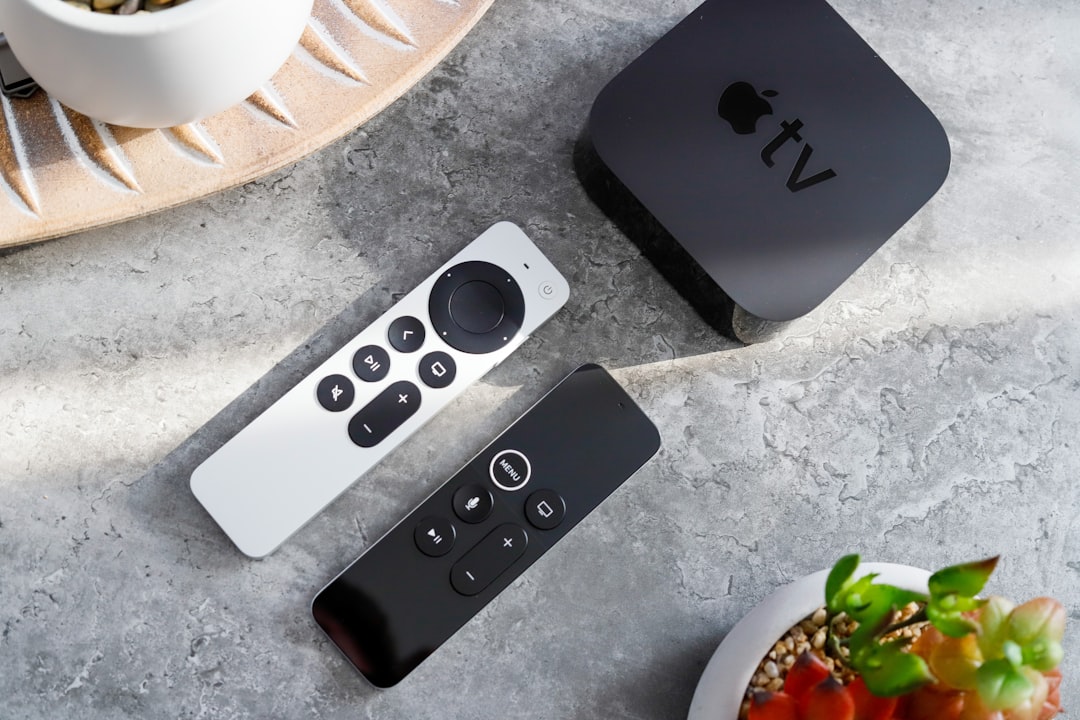
Quick Answer: Apple TV 4K Error 5013 is a streaming server communication failure — typically triggered by Apple's media servers being unreachable, corrupted local authorization tokens, DNS resolution breakdowns, or router firewall interference. Rebooting both your Apple TV and router—which can also help if you are troubleshooting Wi-Fi 7 router packet loss—is a great first step, alongside signing out of your Apple ID and flushing your DNS.
There's a particular kind of frustration that hits differently when you've settled in for a movie, the room is dark, the snacks are ready, and a white error screen surfaces instead of your content. Apple TV 4K Error 5013 belongs to that category of failures — it's not catastrophic, but it's persistently annoying, poorly documented by Apple, and frequently misunderstood even by people who work in IT.
The error sits at the intersection of several systems: Apple's authorization infrastructure, your local network, and your router's firewall behavior—which is also critical to consider if you've encountered other hardware issues like the TP-Link Archer BE800 dropping connections. When any one of these layers misbehaves, Error 5013 appears. The problem is that Apple's error message gives you almost nothing to work with — no subcode, no log excerpt, no actionable suggestion. Just a vague "cannot connect to iTunes Store" or "server error" wrapper depending on which app surfaces it.
This is a well-worn complaint on the Apple Support Communities forum, much like the niche hardware troubleshooting discussions found in guides for fixing common issues like PS5 DualSense stick drift. Thread after thread, going back years, shows users running into the same wall: they try the obvious stuff, it doesn't work, they search for more specific guidance, and they find a graveyard of half-answers.
This guide acts as a comprehensive resource, similar to how expert repair guides help owners troubleshoot specific appliance failures, such as when a Philips airfryer makes loud grinding noises.
What Error 5013 Actually Is — and What It Isn't
The number "5013" belongs to Apple's internal error taxonomy for media services and iTunes Store authorization failures. It is specifically a server-side communication error in the sense that the Apple TV initiated a request to Apple's licensing or streaming servers — and that request either timed out, was rejected, or returned a malformed response the device couldn't handle.
This is distinct from:
- Error 3905 – General network connectivity loss
- Error 1202 – SSL certificate validation failure
- Error 3906 – iTunes Store service unavailability (Apple's own servers are down for everyone)
Error 5013 tends to be client-environment specific. Meaning: Apple's servers are probably fine. Your neighbor's Apple TV is probably streaming right now. Something in your specific path—your network, your credentials, or your device's cached state—is broken, much like how a faulty sensor might trigger a Dreame L20 Ultra Error 14.
This distinction matters because it changes the diagnostic approach entirely. You're not waiting for Apple to fix a server. You're hunting a local or semi-local failure.
The Three Most Common Failure Modes
Through aggregated reports on Apple Support Communities, Reddit's r/appletv, and third-party forums like MacRumors, three distinct failure patterns account for the overwhelming majority of 5013 errors:
1. Stale or Corrupted Authorization Token Apple TV maintains local tokens for your Apple ID that authorize content playback. These tokens expire if interrupted by account changes or sleep cycles, causing 5013 errors—a technical nuisance similar to managing smart home stability, such as resolving why SmartThings Zigbee devices keep disconnecting.
2. DNS Resolution Breakdown Apple's streaming infrastructure relies heavily on CDN routing via DNS. If your router is using a slow, cached, or broken DNS resolver — or if your ISP's DNS is returning stale records for Apple's media delivery endpoints — the Apple TV's authorization requests never reach the right server. The error surfaces as a "server failure" even though the underlying issue is purely a DNS problem.
3. Router Firewall or NAT Interference Certain consumer routers, particularly those with aggressive "security" features enabled by default — Netgear Armor, ASUS AiProtection, TP-Link HomeCare — will intermittently block or throttle outbound requests to Apple's authorization servers if they pattern-match against certain traffic signatures. This is one of the more infuriating failure modes because the behavior is inconsistent: streaming works fine for an hour, then breaks, then works again.
Real Field Reports: What Users Actually Experience
This is where official documentation usually stops, and where reality gets more complicated.
On the Apple Support Communities thread "Apple TV 4K error 5013 — tried everything" (a thread that accumulated responses across multiple years and at one point ran to over 200 replies), the pattern of user experience is telling. The modal user reports:
- Error appears after a period of working fine, not during initial setup
- Rebooting the Apple TV alone doesn't fix it
- The error affects specific apps (typically iTunes/Apple TV+ content) but not others like Netflix or YouTube, which confirms the issue is authorization-specific, not network-wide
- Signing out and back in works — but the fix is often temporary, with the error returning within days or weeks
- A significant subset of users report the error appearing specifically after an Apple TV software update, suggesting the update process may corrupt the local credential store
One user on MacRumors (forum thread circa 2022-2023) described it bluntly: "Signed out, signed back in, worked for two days, back to 5013. This has been going on for months. Apple Support just tells me to reset the device which I've done three times."
Another from Reddit's r/appletv: "The fix that actually worked for me was changing my router's DNS to 8.8.8.8. No idea why, but the Apple TV's DNS was pointing at my ISP's resolver which apparently was having issues routing Apple's CDN. Two weeks stable now."
These are not isolated experiences. The DNS fix in particular has an unusually high success rate in community reports, which points toward DNS-layer failures being significantly underdiagnosed.
The Step-by-Step Fix: Ranked by Effectiveness
Not all fixes are equal. Based on community-aggregated success patterns, here's the diagnostic and resolution sequence ordered from most-likely-to-work to most-disruptive:
Step 1: Force Restart the Apple TV 4K
This is not the same as putting it to sleep and waking it. A force restart clears volatile memory states including pending failed requests.
Method:
- Hold both the TV/Home button and the Back button simultaneously on the Siri Remote for about 6 seconds until the status light blinks rapidly
- Alternatively: go to Settings → System → Restart
- Do not use the TV's input switching as a proxy restart — the Apple TV needs to fully cycle
If the error persists after a clean restart, move on.
Step 2: Check Apple's System Status
Before doing anything else to your local environment, verify Apple's own infrastructure isn't having a moment.
Visit Apple System Status and check:
- Apple TV
- iTunes Store
- App Store
- iCloud services
If any of these show yellow or red indicators, your 5013 error may genuinely be a server-side issue. In that case, waiting is the correct action. Apple's streaming infrastructure has had documented outages, and error messages during these windows often manifest as 5013 rather than more informative codes.
Step 3: Sign Out of Apple ID and Sign Back In
This is the single most effective fix for the token-corruption failure mode.
Path: Settings → Users and Accounts → [Your Apple ID] → Sign Out
Wait 60 seconds — don't rush this. Apple TV needs time to clear its credential cache fully. Then sign back in. If you have Two-Factor Authentication enabled (and you should), have your iPhone nearby for the approval prompt.
Important edge case: If you recently changed your Apple ID password, changed your payment method, or had any billing issue on your account, Apple's authorization infrastructure may have invalidated your Apple TV's tokens proactively. Signing back in regenerates them.
Step 4: Change DNS to a Public Resolver
This step is underrated and frequently skips resolution in cases where DNS is the silent culprit.
On Apple TV:
Settings → Network → [Your Wi-Fi Network] → Configure DNS → Manual
Enter either:
- Google DNS:
8.8.8.8and8.8.4.4 - Cloudflare DNS:
1.1.1.1and1.0.0.1
After saving, force-restart the Apple TV again. This forces fresh DNS resolution for all Apple service endpoints.
Why this works when it works: ISP-provided DNS resolvers sometimes maintain stale TTL records for Apple's CDN endpoints, or route traffic to geographically suboptimal servers that increase latency beyond Apple's request timeout thresholds. Public DNS resolvers, particularly Cloudflare's 1.1.1.1, generally have faster resolution times and more current records.
Step 5: Restart Your Router (Full Power Cycle)
Not just a router reboot through the admin panel — an actual power cycle. Unplug from the wall for 30 seconds, then reconnect. This clears:
- NAT tables
- DHCP leases
- Firewall state tables
- Any stuck connection tracking entries
After the router is fully back online (2-3 minutes for most units), restart the Apple TV again.
Step 6: Disable Router Security Features Temporarily
If you're running Netgear Armor, ASUS AiProtection, TP-Link HomeCare, or similar "intelligent" router security suites, try temporarily disabling them and testing playback.
This sounds counterintuitive, but multiple documented cases on community forums show these features aggressively intercepting Apple's DRM authorization traffic. The pattern: video content from Netflix streams fine, but Apple TV+ and iTunes purchased content throws 5013, because the DRM handshake traffic pattern triggers the router's heuristic blocking.
Specific known issue: ASUS AiProtection powered by Trend Micro has been documented in multiple GitHub and community threads as occasionally blocking Apple's init.itunes.apple.com endpoint traffic. Disabling it resolves the error.
Step 7: Check for Apple TV Software Update
Sometimes the error resolves after tvOS updates that patch credential handling bugs. Conversely, some updates introduce them.
Path: Settings → System → Software Updates → Update Software
If an update is available, install it and test. If the error started after a recent update, document the tvOS version — this is useful if you need to contact Apple Support and worth checking against community reports for known regressions.
Step 8: Factory Reset the Apple TV
This is the nuclear option and should not be your first move, despite what Apple Support may suggest. A factory reset wipes everything — credentials, installed apps, Home configuration, display calibration settings — and requires full reconfiguration.
Path: Settings → System → Reset → Reset and Update
This resolves the error in virtually all cases except genuine server outages, because it eliminates every possible local state corruption. The problem is it's disproportionately disruptive for what is usually a fixable issue through less destructive means.
The Deeper Problem: Why This Error Exists at All
Error 5013 is, in a sense, a design artifact. Apple's content authorization architecture requires ongoing communication between the device and Apple's servers for playback of purchased or subscription content. This is the DRM infrastructure — FairPlay in Apple's case — and it's inherently network-dependent.
Unlike Netflix's download-and-play offline model or even Amazon's more forgiving DRM handshake behavior, Apple's implementation has historically been more stringent about real-time authorization checks. This means a wider attack surface for exactly the kind of transient failures that generate 5013 errors.
The irony is not lost on users who have purchased — not rented, not subscribed to, but genuinely purchased and own — content on iTunes, only to find it unplayable because a credential token expired or a router blocked a DRM handshake. This is the practical consequence of DRM architecture applied to ostensibly permanent digital purchases.
There's a persistent thread on Hacker News and in privacy-focused forums arguing that this represents a fundamental problem with digital ownership models — you don't own the movie, you own the license, and the license requires ongoing server cooperation to exercise. Error 5013 is what happens when that server cooperation breaks down. Whether that's a "bug" or an "intended feature of the business model" is a debate that has no clean resolution.
Counter-Argument: Apple's Authorization Architecture Is Reasonably Robust
To be fair to Apple's engineering: FairPlay DRM, across billions of device activations, operates with a very high success rate. The users experiencing Error 5013 are a small fraction of total Apple TV users. The architecture is designed to handle network interruptions gracefully with retry logic and cached credentials.
The failures tend to cluster around edge cases: unusual router configurations, ISP anomalies, account security events, or post-update credential store states. These are genuinely hard problems to test for at scale.
The counter-criticism, however, is that Apple's error messaging is inexcusably opaque. A more descriptive error — "authorization token expired, please sign out and back in" or "DNS resolution failed for media.apple.com, check network settings" — would resolve the vast majority of cases without users needing to find a community forum and scroll through 200 replies. The investment in better diagnostic messaging is low; the user experience improvement would be significant. Apple has not made this investment.
Platform-Specific Edge Cases
Family Sharing Complications
If your Apple TV is configured under a Family Sharing setup, Error 5013 can appear when the organizer's account has a billing issue even if your account is in good standing. Apple ties content authorization to the purchase account, not the viewing account. If someone in your Family Sharing group has a declined payment method, it can cascade authorization failures to other family members' devices.
This is documented in Apple's own support pages but buried, and it's an infuriating edge case — your account is fine, your payment is fine, but you can't watch because someone else's payment lapsed.
Fix: The Family Sharing organizer needs to resolve their billing issue. Signing out of Family Sharing on the Apple TV and back in after the billing issue is resolved usually regenerates clean authorization tokens.
Multiple Apple IDs on One Apple TV
Households where multiple people share an Apple TV but have separate Apple IDs for their own purchases run into 5013 errors after user profile switches more frequently than single-account setups. The credential cache doesn't always flush cleanly between profile switches, particularly on older tvOS versions.
VPN Configuration
If you're running a VPN through your router or have configured a VPN client directly (some third-party apps on tvOS support this), Apple's geographic license checks during DRM authorization can fail. This generates a 5013 that looks identical to a network failure but is actually a geo-restriction enforcement. Disabling the VPN and testing directly is worth adding to the diagnostic checklist.
When Nothing Works: Escalation Paths
If you've worked through all of the above and Error 5013 persists, you're in one of a few remaining scenarios:
Scenario A: Apple's servers are actually degraded for your region Not all outages show up cleanly on Apple's System Status page. Regional CDN issues can affect a subset of users without triggering global status indicators. Tools like Downdetector sometimes show regional clustering of Apple TV issues before they appear on official status pages.
Scenario B: Your account has an authorization flag Account-level authorization problems — flagged accounts, disputed purchases, unusual access patterns triggering fraud prevention — can generate persistent 5013 errors. Apple's front-line support can check account authorization status in ways you cannot from the device. Contacting Apple Support via the Apple Support app (on iPhone) and requesting an account authorization review is the appropriate path.
Scenario C: Hardware issue Rare, but Apple TV 4K units with failing storage chips can develop corrupted credential stores that no software fix addresses. If you're on an older unit and have factory reset multiple times without resolution, hardware failure is worth raising with Apple Support, especially if still under warranty or covered by AppleCare.
Preventing Recurrence
Once resolved, a few practices reduce the likelihood of Error 5013 returning:
- Keep tvOS updated — Apple patches credential handling bugs in
Bu makale affiliate linkleri içermektedir.